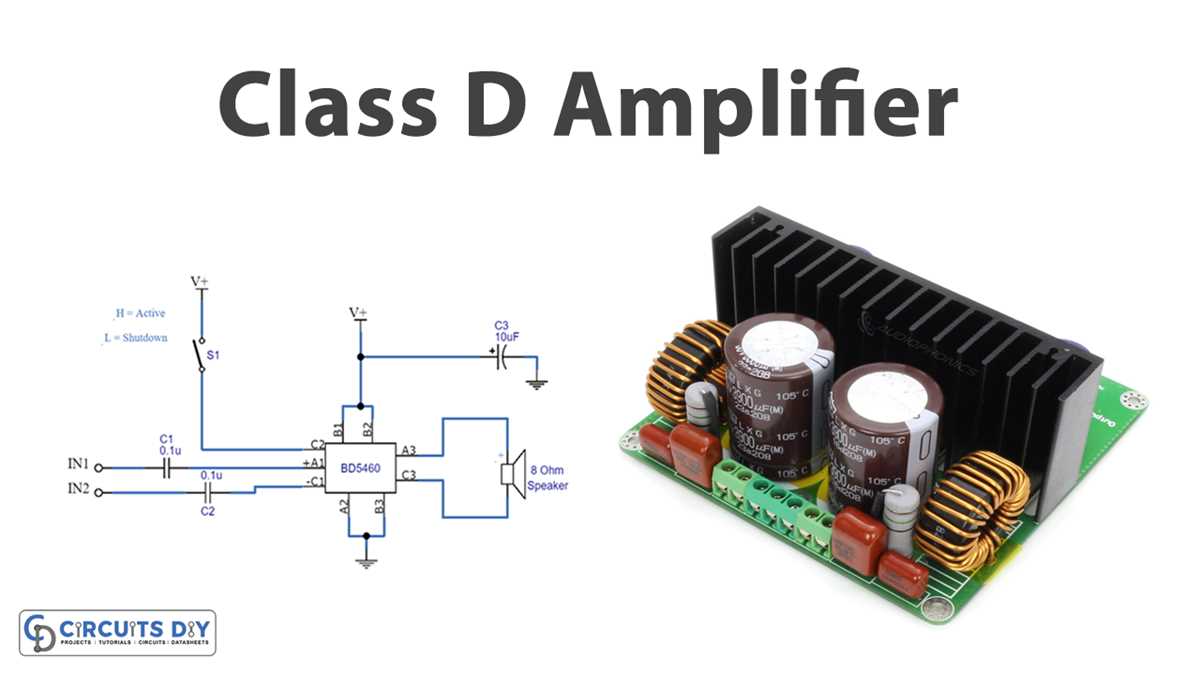
To build a high-performance energy-efficient amplifier, focus on using the right components and layout. Begin with selecting a high-speed switching device, which will convert the input signal into a pulse-width modulated (PWM) signal. The key to achieving clear sound reproduction lies in the quality of the filtering system that smoothens the PWM output, converting it back into an analog signal with minimal distortion.
For the output stage, ensure that your transistors or MOSFETs are rated for high current capacity. Consider using low on-resistance components to reduce losses and improve thermal efficiency. Integrating a feedback loop to monitor and adjust the signal in real-time helps in maintaining stability and improving overall performance. Proper grounding and careful component placement are also crucial to avoid electromagnetic interference (EMI).
If you’re troubleshooting, pay attention to power supply noise as it can lead to significant distortion. A well-designed layout with short, direct signal paths and separate grounds for analog and switching stages can help minimize unwanted effects. Ensure that thermal management is considered, as high-efficiency devices can generate significant heat under load, which may affect the reliability and longevity of the device.
Class D Amplifier Schematic Design
Start with selecting a high-frequency oscillator as the first stage. This component generates a pulse-width modulated (PWM) signal based on the input audio. A fast switching transistor or MOSFET will then convert the signal into a series of pulses, modulating the width of each pulse in response to the audio waveform. The key here is to ensure that the oscillator’s frequency is high enough to avoid audible distortion.
The next stage is the driver circuit, which amplifies the weak PWM signal before it reaches the switching elements. A driver IC often includes features like built-in protection and can help reduce the complexity of the design. Ensure that the voltage ratings of the driver are compatible with the input requirements of the switching components to avoid reliability issues.
Once the signal is amplified, it is sent to the output stage. This section consists of transistors or MOSFETs that switch at the PWM frequency, powering the load. Low on-resistance transistors are ideal here to minimize conduction losses. Using MOSFETs with a low gate threshold voltage allows for faster switching and reduces the heat generated in the output stage.
A critical part of the design is the filtering stage, which converts the high-frequency PWM signal back into a smooth analog output. Typically, a low-pass filter composed of an inductor and capacitor is used. The cutoff frequency of the filter must be set below the switching frequency to effectively smooth out the pulses while preserving the integrity of the original signal.
Thermal management is an often overlooked but critical aspect. During operation, the output devices generate heat due to the switching process. Using heat sinks or active cooling can help maintain stability and prevent damage to the components. Additionally, the grounding layout should be carefully designed to minimize noise and avoid oscillations that could degrade performance.
Understanding the Key Components of a Class D Power Amplifier
The first critical component in the design of a high-efficiency system is the modulator. This circuit takes the input signal and converts it into a pulse-width modulation (PWM) signal. It is vital to use a modulator with low distortion and precise frequency control. For accurate signal reproduction, ensure that the modulation frequency is high enough to be beyond the audible range, reducing the risk of audible noise and distortion.
The second key component is the driver stage. This part amplifies the low-level PWM signal generated by the modulator to a level that is capable of driving the switching transistors. A robust driver IC can help minimize power loss and ensure that the transistors are switched on and off cleanly. It is important to select a driver with fast switching capabilities to match the modulator’s frequency and prevent signal degradation.
The switching transistors or MOSFETs play a pivotal role in the operation of the system. These components act as the on/off switches that convert the modulated signal into a high-power output. Choose transistors with a low gate threshold voltage and low on-resistance to minimize switching losses. This will directly contribute to reducing heat generation and improving the overall efficiency of the system.
The filtering stage is another key element. A low-pass filter smooths the PWM signal, converting it back to an analog signal. Typically, this consists of an inductor and a capacitor. Pay attention to the cutoff frequency of the filter, as it must be low enough to filter out the PWM frequency without affecting the integrity of the original signal.
Feedback loops are integral for maintaining stability and controlling distortion in the output. These loops monitor the output and adjust the modulator to ensure that the output signal stays accurate. Use a feedback mechanism that is fast and responsive to changes in the signal to prevent any instability, especially under load conditions.
The power supply is another critical factor. A clean, stable power supply ensures that the switching elements receive the correct voltage without fluctuation. It is advisable to use a well-regulated supply with low ripple to avoid introducing noise into the signal. The supply should also be capable of delivering enough current for the output stage without excessive voltage sag.
Finally, the heat dissipation system cannot be overlooked. The transistors in the switching stage generate heat during operation, and improper cooling can lead to thermal runaway or component failure. Implement heat sinks or fans where necessary, and ensure that the layout of the components allows for efficient airflow to dissipate heat.