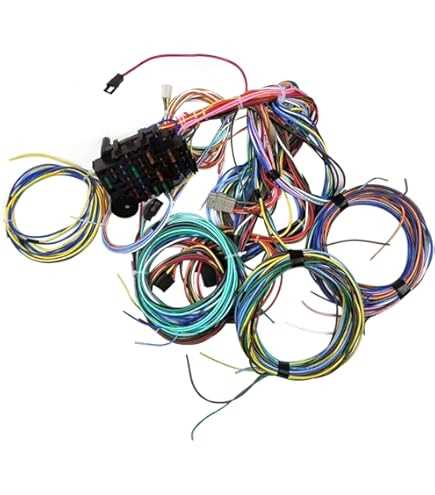
Use the 21-channel EZ electrical kit layout as the primary reference before connecting any conductor. The chart supplied with the kit assigns a dedicated line for ignition feed, lighting groups, fuel sender, cooling fan, horn relay, and accessory power. Each line is color-coded and labeled along the insulation every few inches, which removes guesswork during installation. Route the red ignition feed directly from the fuse panel to the starter solenoid post, while the yellow lead typically supplies the alternator charge path. Maintaining these color assignments prevents cross-connections that can damage gauges or switches.
The 21-line distribution panel included in the EZ system contains pre-terminated fuse positions rated between 15A and 30A. Lighting branches usually occupy mid-range protection (around 20A), while heater blower and electric fan feeds require higher ratings near 30A. Keep high-draw devices on separate fused paths rather than combining them through a single lead. When routing conductors through the firewall, install rubber grommets and maintain at least 25–30 mm clearance from exhaust components to prevent insulation breakdown.
Ground paths receive less attention than power leads yet determine whether gauges and relays behave correctly. Attach the main ground strap from battery negative to the engine block, then run secondary black leads from the panel to the chassis and dashboard frame. Poor grounding often causes unstable tachometer readings or dim indicator lamps. Sand paint from the attachment point and secure the terminal with a star washer to maintain metal-to-metal contact.
Before energizing the system, verify each branch using a multimeter set to continuity mode. Touch one probe to the fuse output and the second probe to the terminal at the device end; the meter should show a closed path with minimal resistance. Label any unused lines for future accessories such as electric fuel pump or auxiliary lighting. Careful reading of the EZ 21-channel electrical layout and disciplined routing of conductors reduces troubleshooting time once the vehicle is powered.
Ez Wiring 21 Circuit Harness Diagram
Use the EZ 21-line vehicle electrical layout as a step-by-step installation reference: mount the fuse panel under the dashboard on a flat metal surface, leave at least 10–15 cm of service slack for each bundle, and route the labeled leads toward their components before attaching terminals. The kit contains 21 separated electrical paths for ignition, headlights, brake lamps, horn, gauges, heater, radio, and accessory power. Each lead typically arrives pre-printed every few inches, allowing quick identification during routing through the firewall or along the frame rail. For best reliability, keep high-current feeds such as alternator and starter supply away from sensor or gauge lines by at least 5 cm to limit interference and heat exposure.
Color coding inside the EZ 21-line system follows a predictable scheme that simplifies tracing during assembly and troubleshooting. Red normally carries battery feed from the main fuse block; yellow often links to ignition-switched devices; brown tends to serve tail lamps and side markers; green routes to turn signals; blue feeds headlight high beam. Fuse ratings in the block range roughly from 10 A for lighting groups up to 30 A for blower motors or power accessories. Before crimping connectors, strip about 6 mm of insulation, use a ratcheting crimper rather than pliers, and protect joints with adhesive heat-shrink tubing to prevent corrosion and voltage drop.
Installation Layout Tips
Route the front-end bundle along the inner fender using insulated clamps spaced about 20–25 cm apart to prevent vibration damage. Pass rear lighting leads through the cabin sill channel rather than under the vehicle to avoid road debris. Ground points require bare metal contact; sand the mounting spot and secure with a star washer and M6 bolt for stable current return. If the vehicle includes additional accessories such as electric fans or fuel pumps, connect them through relays triggered by the ignition lead rather than attaching them directly to the fuse panel output.
How to Read the EZ 21-Line Electrical Layout for Correct Wire Identification
Match the color code printed on each conductor with the color legend shown in the EZ 21-line electrical layout sheet. Every line in the kit uses a unique insulation color combined with a printed label repeated along the insulation every few inches. Compare both the color and the printed text; relying on color alone leads to confusion when several lines share similar shades such as red, orange, and pink.
Locate the legend table first. It lists each electrical path and the function connected to it. Typical entries include headlamp power, ignition feed, brake light signal, dash illumination, heater blower supply, and horn relay trigger. Each entry shows three identifiers: insulation color, printed label text, and destination component. Use all three identifiers while tracing a line across the sheet.
Follow the path direction
The EZ layout sheet displays electrical flow from the power source toward devices. Trace lines from the battery feed distribution point toward switches and loads. This order clarifies which conductor supplies voltage and which returns signal or ground.
- Battery feed lines normally appear thicker or grouped near the fuse block.
- Switch outputs branch from those feeds toward lamps, motors, and relays.
- Ground paths terminate at chassis symbols or frame connection marks.
Read the fuse panel section carefully because many identification errors happen there. Each fuse slot corresponds to one labeled conductor bundle exiting the block. Check the fuse number, its rated amperage, and the color assigned to the outgoing lead. For example, a 15-amp slot assigned to the stop lamp feed usually connects to a red line marked “STOP SW.” If the insulation marking differs, verify that the line was not swapped during installation.
Verify printed insulation labels
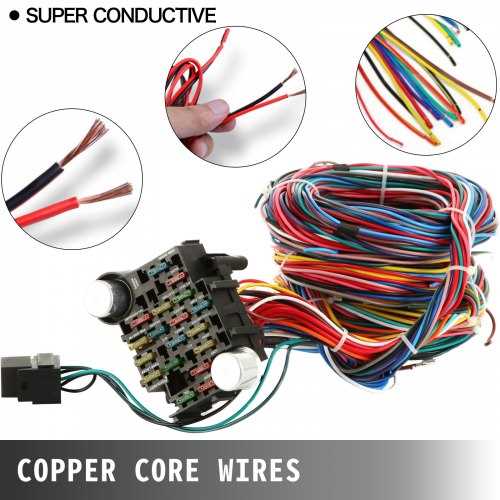
Each conductor supplied in the EZ 21-line kit includes repeating text along the insulation jacket. These markings remove guesswork when colors fade under grease or heat.
- Wipe the insulation with a cloth to reveal printed text.
- Read the repeated label such as “LEFT TURN,” “IGN SW,” or “TAIL LAMP.”
- Cross-reference that label with the function list on the layout sheet.
- Confirm the termination point before crimping a connector.
Group related conductors before installation. Separate lighting, engine control, dashboard, and rear body lines on the workbench. Tape small tags near the ends showing their destination points. This preparation reduces the chance of connecting a lighting feed to an ignition-controlled line or mixing rear lamp leads with front lighting runs.
Measure length and routing path shown on the sheet before cutting insulation or installing terminals. Many lines are intentionally longer to support routing through firewall grommets, frame rails, or interior channels. Align the physical path with the printed route on the sheet; if the path on the vehicle differs greatly, re-verify the color code and label text before final termination.