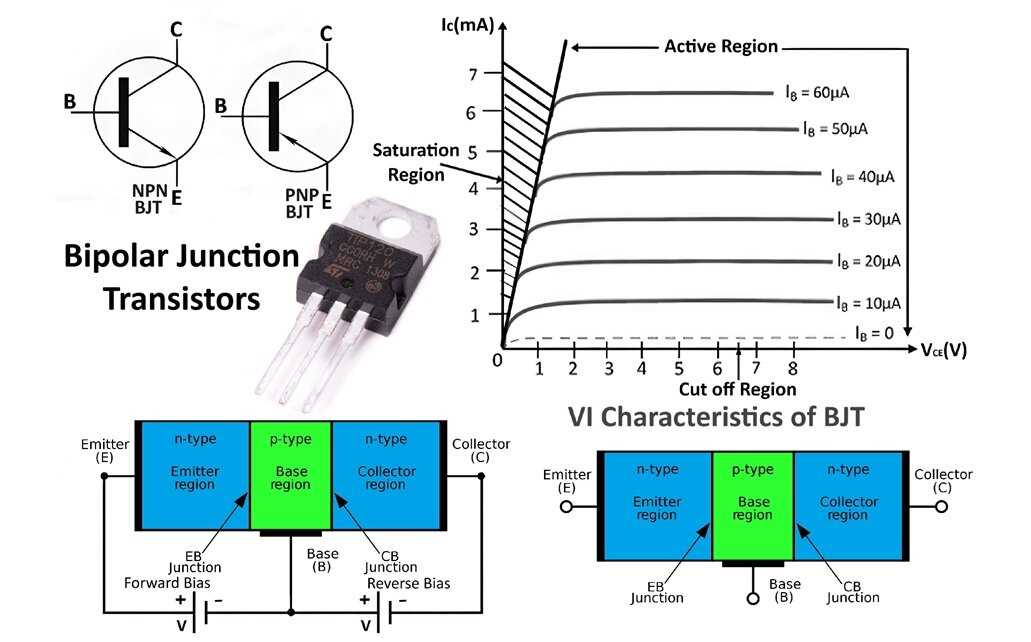
Select a stable biasing network before drawing the electrical layout for a bipolar junction transistor stage. A reliable configuration usually places a voltage divider on the base, a collector load resistor, and an emitter resistor that stabilizes current against temperature drift. With a 12 V supply, a typical small-signal stage often uses a collector resistor between 2.2 kΩ and 4.7 kΩ, while the emitter resistor may range from 470 Ω to 1 kΩ. This arrangement keeps the transistor operating near the midpoint of the supply, allowing symmetrical amplification.
The graphical representation of the transistor stage should clearly indicate current flow and node polarity. Place the collector node toward the positive supply, connect the emitter toward ground through its resistor, and route the input signal to the base through a coupling capacitor such as 10 µF or 1 µF depending on the desired low-frequency cutoff. The capacitor blocks DC from the signal source while allowing AC variations to modulate base current.
Accurate labeling of base, collector, and emitter terminals prevents wiring errors during assembly. Mark the supply rail, ground reference, and signal nodes directly on the schematic drawing. For small-signal amplification, designers often aim for a collector voltage near 40–60 % of the supply level; for example, around 5–7 V when powered from 12 V. This operating point leaves sufficient headroom for positive and negative signal swings.
Include bypass and coupling components in the visual layout whenever gain or frequency response matters. An emitter bypass capacitor such as 47 µF–220 µF increases AC gain by reducing emitter degeneration at signal frequencies, while output coupling capacitors near 4.7 µF–22 µF pass the amplified waveform to the next stage without transferring DC bias. A carefully structured transistor connection sketch with these elements provides a clear blueprint for breadboard testing or PCB design.
BJT Circuit Diagram: Practical Guide to Reading and Building Transistor Circuits
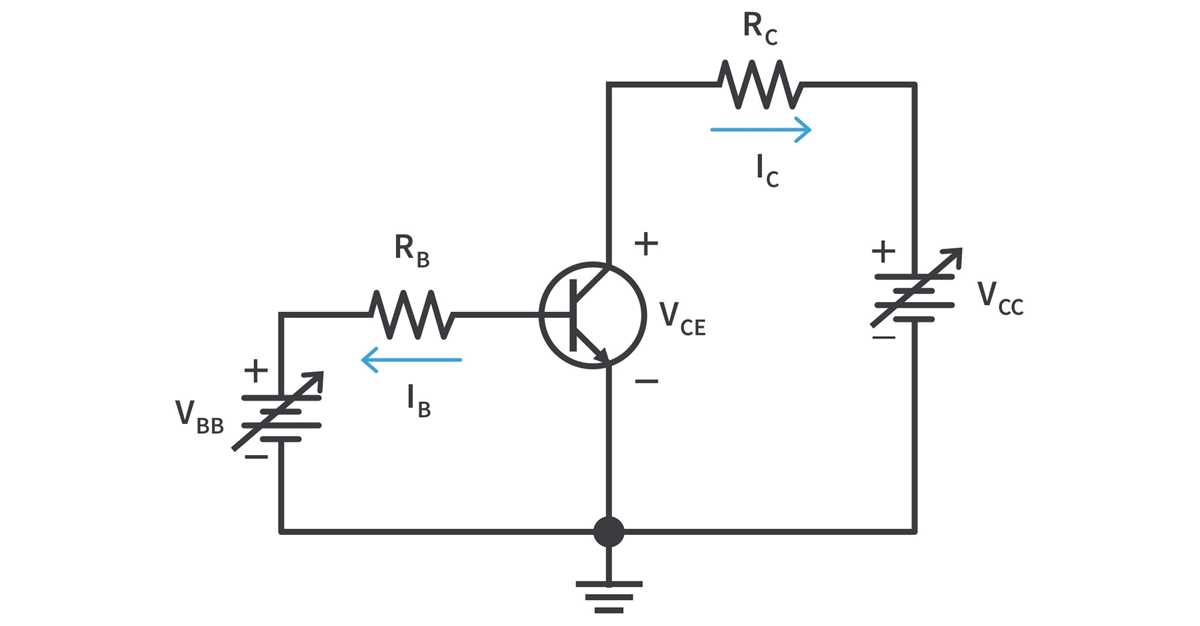
Identify the three transistor terminals first: base, collector, and emitter. On most schematic drawings the emitter includes an arrow; arrow pointing outward marks an NPN device, arrow pointing inward marks a PNP device. Trace the emitter line to ground or supply return, then follow the collector path toward the load component such as a resistor, LED, relay coil, or speaker. This quick orientation step prevents wiring mistakes that destroy small-signal devices rated for only 30–100 mA collector current.
Check the bias network around the base before assembling anything. Many transistor stages rely on a voltage divider composed of two resistors connected between supply and ground. For example, a 12 V supply might use 47 kΩ (upper) and 10 kΩ (lower), producing roughly 2.1 V at the base node. Subtract the typical base-emitter drop (~0.65 V for silicon) to estimate emitter voltage near 1.45 V. With an emitter resistor of 680 Ω, the emitter current becomes about 2.1 mA. Collector current will be similar in a small amplifier stage.
Follow the signal path separately from the DC bias path. Coupling capacitors usually appear between stages; they block steady voltage while passing changing signals. A capacitor of 10 µF feeding a 10 kΩ input resistance creates a cutoff frequency near 1.6 Hz (f ≈ 1/(2πRC)). Smaller values shift this point upward and reduce low-frequency response.
Examine the collector load resistor to estimate voltage swing. With a 12 V supply and a 4.7 kΩ collector resistor carrying about 2 mA, the voltage drop equals roughly 9.4 V. That leaves around 2.6 V at the collector node during idle conditions. Designers often aim for a midpoint between supply and ground so the transistor can amplify positive and negative signal variations without clipping.
While assembling the wiring layout on a breadboard, keep the emitter resistor and base divider physically close to the transistor package. Long leads introduce stray capacitance and noise pickup, which destabilizes high-gain stages. Twisting supply and ground wires also reduces interference in audio preamp builds.
Measure node voltages after powering the setup. A properly biased small-signal NPN amplifier using a 9–12 V supply usually shows: base about 0.6–0.7 V above emitter, collector several volts higher than emitter, and stable current in the milliamp range. If collector voltage collapses near ground, the transistor likely saturates due to too much base current; increasing the base resistor or adjusting the divider corrects the problem.