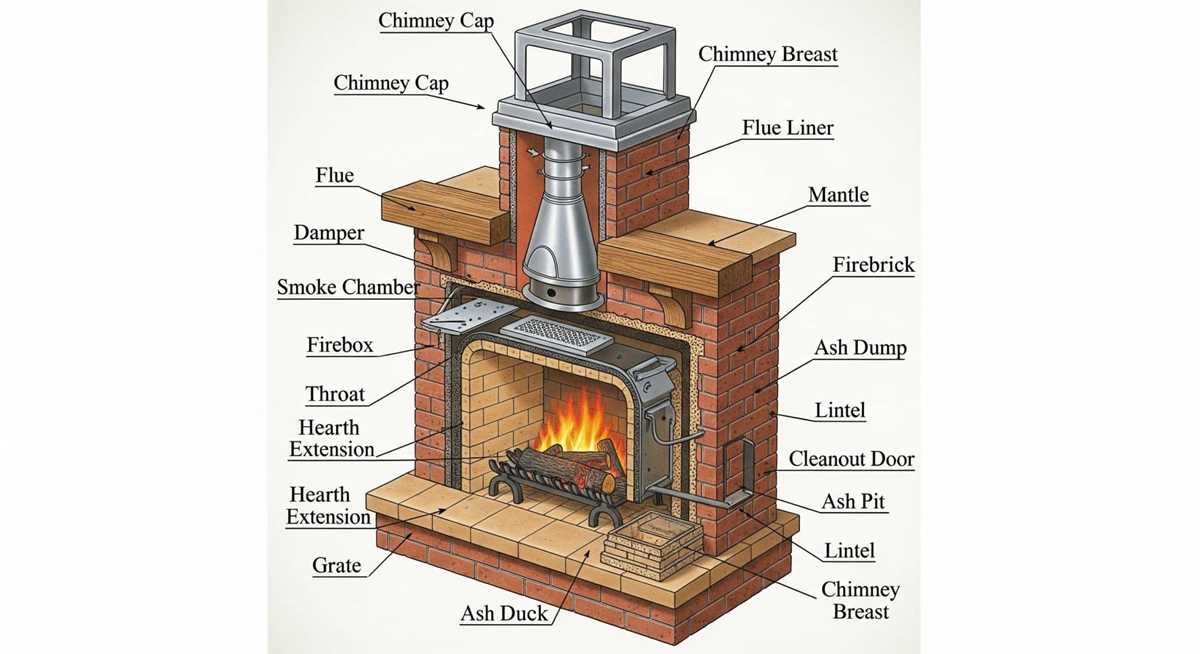
Choose a clear schematic of a hearth heating assembly before any installation or inspection; it allows quick verification of airflow routes, heat containment zones, and safety clearances. A labeled layout highlights how the combustion chamber connects to the vertical exhaust channel, where hot gases rise through the flue liner and exit above the roofline. This visual reference helps prevent draft issues, smoke backflow, and heat loss caused by misaligned elements.
The core structure centers on the firebox, typically built from refractory brick or cast iron, designed to withstand temperatures exceeding 1,000°F. Above it sits the throat and damper assembly, controlling the volume of exhaust gases. A properly sized damper plate–often steel or cast iron–should seal tightly when closed, reducing heat escape by up to 80% compared to an open throat.
Behind the visible opening lies the smoke shelf, a horizontal ledge that disrupts downdrafts and traps debris before it enters the room. Beneath the grate, an ash pit or cleanout channel simplifies residue removal, extending service intervals. Surrounding trim elements such as the lintel and mantel beam distribute structural load while shielding nearby surfaces from radiant heat.
The vertical exhaust path relies on a lined chimney shaft, commonly clay tile or stainless steel, maintaining stable draft and isolating high temperatures from framing. For gas-fed systems, the layout also shows the shutoff valve and supply line routing, positioned outside the combustion zone for access and safety checks. Reading this arrangement as a whole clarifies how each component supports heat output, airflow balance, and long-term reliability.
Fireplace Diagram Parts
Use a sectional schematic to verify clearances, airflow routes, and load-bearing elements before installation or repair.
Hearth base supports the structure and must extend at least 16 inches in front of the opening for solid-fuel units; stone or concrete with a non-combustible rating reduces surface temperatures.
Combustion chamber shapes flame movement and heat reflection; refractory panels rated for 2,000°F limit cracking and reflect radiant output back into the room.
Throat area channels exhaust upward; a smooth transition with a minimum 8-inch height improves draft stability and reduces smoke roll-out.
Smoke shelf sits behind the throat and traps downdrafts; a depth of 6–8 inches captures debris and blocks cold air fall.
Flue liner protects masonry and guides gases; stainless steel resists corrosion, while clay tiles require tight joints and periodic inspection for spalling.
Damper assembly controls airflow; top-sealing models cut heat loss by up to 90% when closed compared to throat-mounted plates.
Lintel spans the opening and bears weight; steel angles sized to opening width prevent sagging of the facing material.
Surround and facing shield adjacent finishes; maintain manufacturer-specified clearances to wood trim, often 6–12 inches depending on output.
Maintenance tip: sweep the exhaust channel annually and check seals at joints to keep draft steady and surfaces safe.
Identify Firebox Components and Their Labels in a Standard Layout
Mark each section directly on the schematic with clear, short tags placed outside the chamber and connected by leader lines; this keeps heat-exposed areas uncluttered and readable.
Firebox shell: Label the left sidewall, right sidewall, rear wall, and floor as a single assembly. Specify material where visible–firebrick, refractory panel, or welded steel–to guide maintenance and replacement.
Lintel bar: Identify the horizontal support above the opening. Note span width and bearing points; this clarifies load transfer to the masonry returns.
Smoke throat: Tag the narrowed passage immediately above the chamber. Add the throat width and height to explain draft behavior and soot collection zones.
Damper plate: Place the label at the pivot axis. Indicate open/closed arc and control linkage location to avoid confusion during inspection.
Smoke shelf: Mark the ledge behind the throat. Include a brief note on its role in catching debris and buffering downdrafts.
Grate: Identify the support frame on the chamber floor. Add bar spacing and elevation to show airflow beneath fuel.
Ash dump door: If present, tag the hinged opening centered in the floor. Include clearance below to the ash pit for service access.
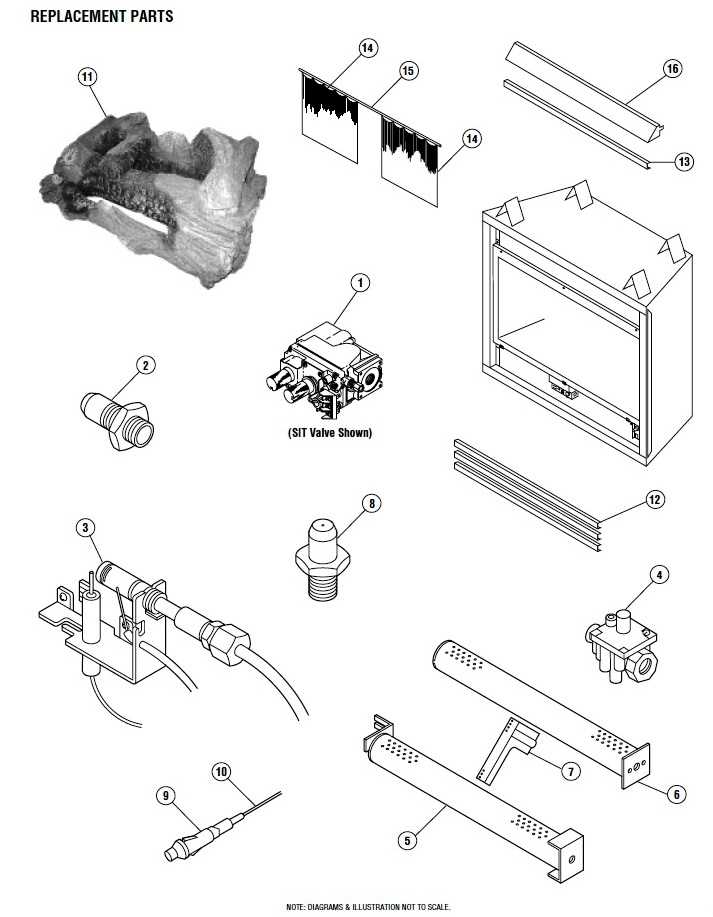
Gas line entry (optional): When a burner is installed, label the penetration point with shutoff proximity and protective sleeve detail.
Measurement callouts: Add depth, width, and rear-wall height near their edges. Keep units consistent and avoid crossing leaders.
Safety notes: Place clearance values from combustibles along the outer perimeter of the chamber, not inside the heat zone.
Trace Airflow Path Shown in Heating Unit Schematics: Intake, Draft, Exhaust
Verify the air route by following the cold-air intake first: it should pull oxygen from an exterior vent or adjacent room grille, never from sealed cavities. A clear intake channel reduces backflow risk and stabilizes ignition during low-pressure conditions.
Next, track the draft corridor rising from the combustion chamber toward the flue. This vertical passage relies on temperature differential; a minimum rise of 12–15 Pa typically sustains steady lift. Any horizontal offset longer than 45 cm weakens pull and should be limited or paired with a smooth-radius elbow.
Inspect the exhaust exit at the terminal cap. Gases must discharge above roofline obstructions by at least 60 cm to avoid downdrafts. A properly sized outlet maintains exit velocity near 4–6 m/s, preventing soot deposition along the flue walls.
Air seals along the casing deserve close attention. Gaskets around access panels must compress evenly; leaks here short-circuit the draft path and dilute lift. Use high-temperature rope seals rated above 500°C for longevity.
Where schematics show dampers, confirm blade orientation aligns with flow arrows. A misaligned damper throttles exhaust and causes smoke spillage at the opening. Fully open position should present no more than 10% cross-section blockage.
For diagnostics, trace the full route with smoke pellets or a digital manometer placed sequentially at intake, mid-flue, and outlet. Consistent negative pressure across these points signals a balanced airflow chain.
Locate Safety and Control Parts in Gas Fireplace Diagrams (Valves, Thermocouple, Ignition)
Identify the shutoff valve first: it sits along the gas supply line near the burner tray and uses a manual knob or lever aligned with the pipe when open.
- Follow the rigid or flex line from the wall inlet to find the control valve body; labels such as OFF/PILOT/ON are stamped on the housing.
- Check clearance around the valve for access; obstructions signal improper placement or later modifications.
Trace the thermocouple by locating the pilot flame tip; the copper tube runs from that tip back to the valve block.
- The sensor end must sit directly in the pilot flame; misalignment causes frequent shutdowns.
- The opposite end threads into the valve body with a small compression nut; hand-tight plus a quarter turn prevents leaks.
Locate the ignition source next, positioned adjacent to the pilot assembly and wired to a push-button or electronic module.
- For piezo systems, find the ceramic-tipped igniter near the pilot hood; a single insulated wire connects it to the striker.
- For electronic systems, identify the spark electrode and the control module mounted behind the lower access panel.
- Verify grounding of the electrode bracket to metal framing; poor ground stops spark generation.
Use the schematic legend to confirm symbols: valves appear as blocks with flow arrows, thermocouples as tapered probes, and ignition as a spark mark near the pilot.
- Compare wire colors and tube routing to the legend to avoid confusing the sensor line with the main gas feed.
- Check spacing between ignition tip and pilot hood; 1/8–3/16 inch produces reliable spark.
Close the manual shutoff before inspection and reopen only after confirming tight fittings and correct sensor placement.