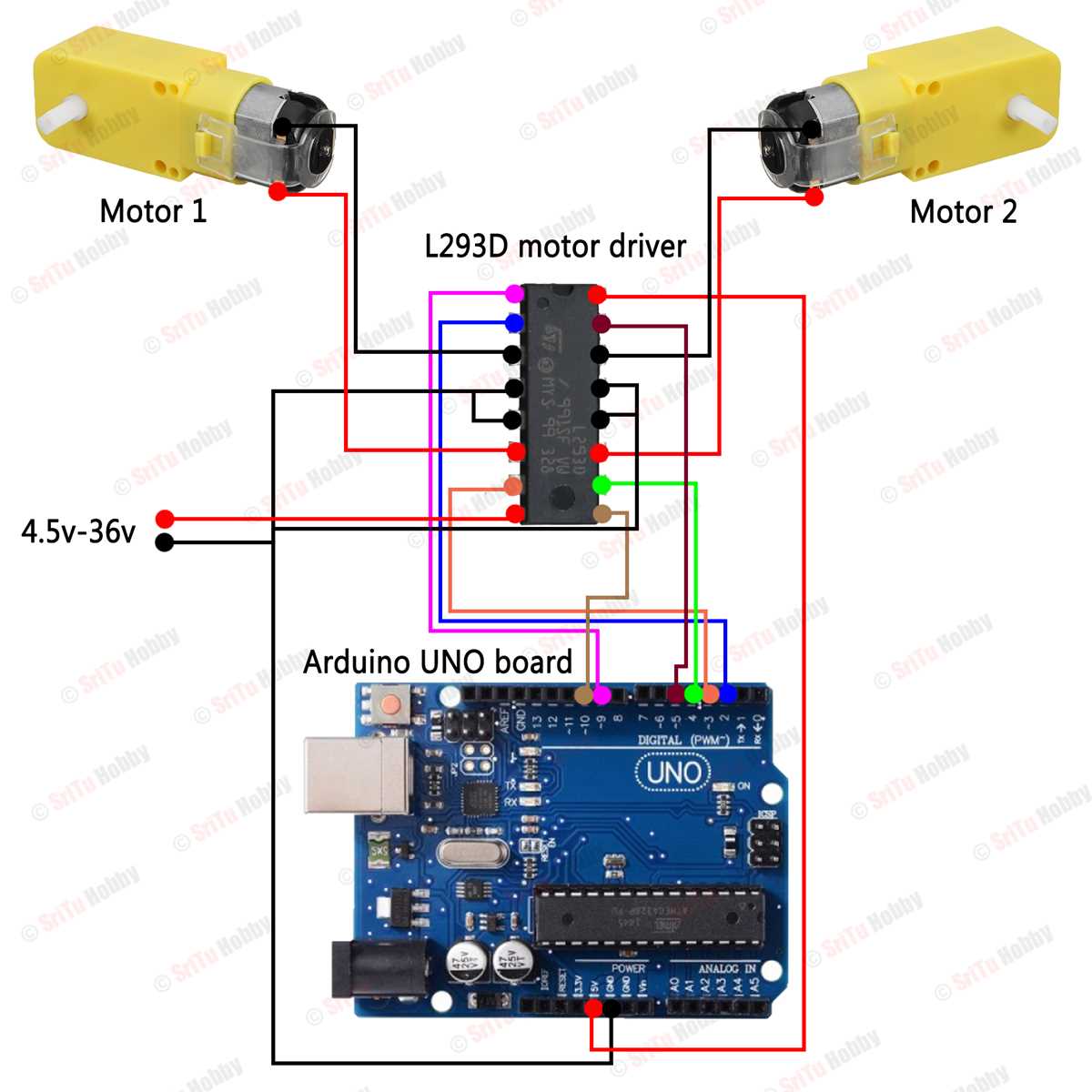
Connect the power supply pins to match the load voltage while keeping the logic section at 5 V to maintain proper input signal levels. Ensure decoupling capacitors of 100 nF to 1 µF are placed close to the power rails to suppress voltage spikes during switching.
Apply input signals directly from a microcontroller or logic source, keeping high and low inputs complementary to control direction. For bidirectional operation, swap input states to reverse current flow across the load coils.
Include flyback diodes if driving inductive loads to prevent voltage spikes from damaging transistors. For small stepper assemblies, sequence inputs with 50–100 ms intervals to avoid missed steps while keeping current within thermal limits.
Check all connections at low voltage before applying full power. Measure input voltages, load current, and temperature rise of the module under test conditions. Adjust wiring or add small series resistors if switching transients create overshoot or oscillations.
Quad H-Bridge Module Wiring and Operation Guide
Connect VCC1 to a stable 5 V logic supply and VCC2 to the load voltage, ensuring it does not exceed 36 V. Place decoupling capacitors of 100 nF close to both power pins to reduce voltage spikes and maintain stable operation during switching events.
Wire input pins directly to a microcontroller or logic source, keeping complementary pairs opposite to each other to control current direction. For bidirectional control, toggle inputs alternately, and use enable pins high to activate each channel, verifying that load current remains below 600 mA per channel.
Include external flyback diodes across inductive loads to absorb back EMF and prevent transistor damage. Test connections at low voltage first, measure input signals, load current, and temperature, and adjust series resistors or heatsinking if any component shows excessive heating or oscillation during operation.
Pin Configuration and Power Supply Connections
Connect the logic supply pin to a stable 5 V source, ensuring ripple does not exceed 50 mV. This stabilizes input signal levels and prevents accidental switching of the H-bridge outputs.
Attach the high-voltage supply pin to the intended load voltage, keeping it below 36 V. Place a 100 nF ceramic capacitor between this pin and ground to filter transient spikes generated during rapid switching.
Ground all GND pins to a common reference point with short, wide traces to minimize voltage drop and maintain consistent switching thresholds across all channels.
Input and Enable Pin Setup
Wire input pins directly to a microcontroller or logic source. Keep complementary input pairs in opposite states to control current flow direction through each load coil. Enable pins must be held high to activate the corresponding channel; low disables output and reduces standby power.
For bidirectional operation, alternate the logic levels of the input pins while maintaining enable pins high. Sequence changes should be slower than 50 ns to prevent cross-conduction and excessive current draw.
Protection and Decoupling
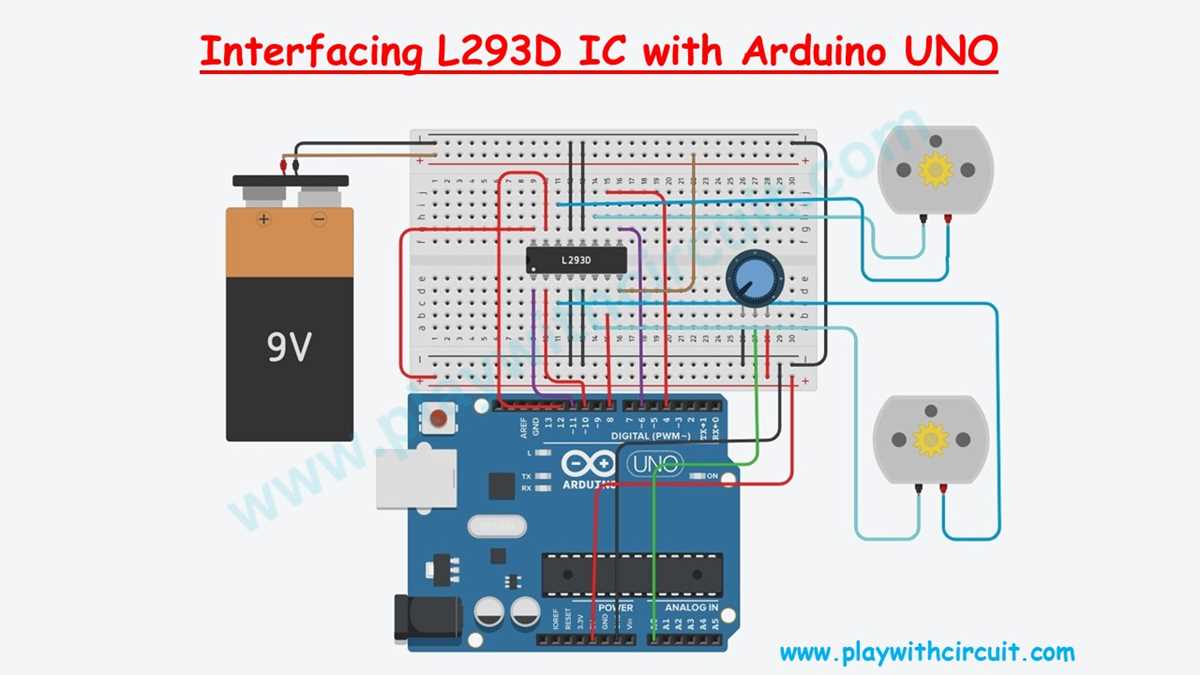
Include flyback diodes across inductive loads to absorb voltage spikes and prevent damage to switching elements. Test all connections at low voltage before applying full supply to confirm proper logic sequencing and thermal stability.
Use additional bulk capacitors of 10 µF near the high-voltage supply for heavy inductive loads to maintain voltage stability under peak current pulses. This prevents voltage sag and ensures reliable operation of each output channel.