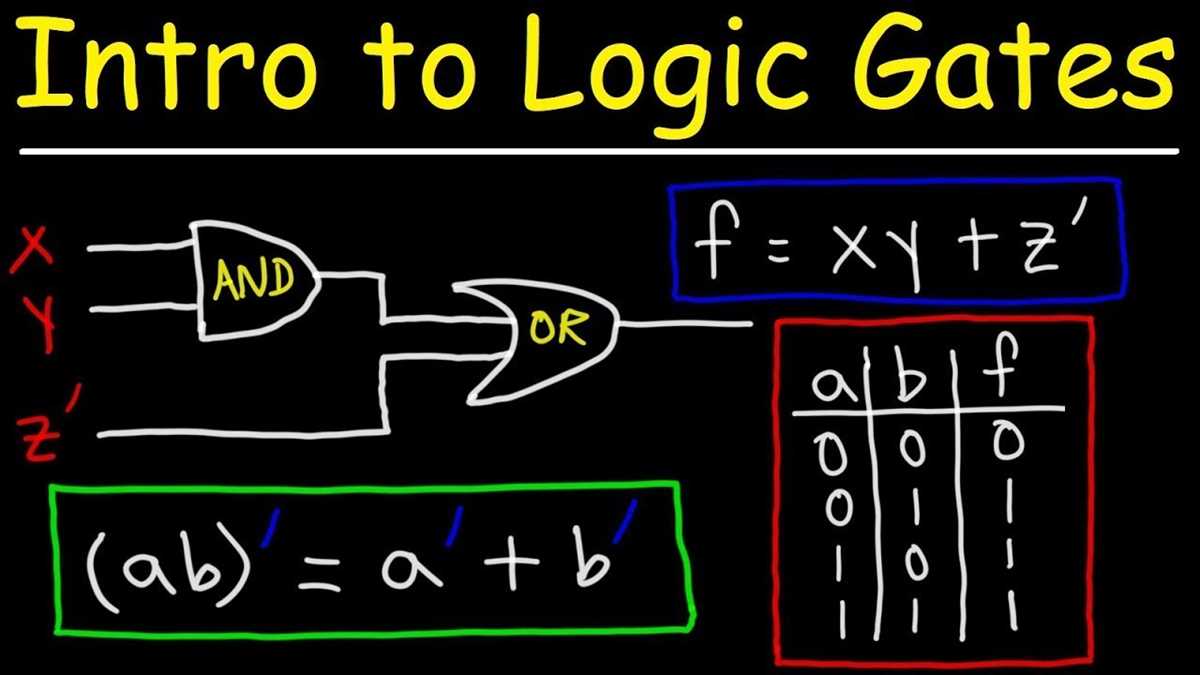
Begin by identifying the components of the formula, such as variables and operators like AND, OR, and NOT. Each component corresponds to a specific gate, so knowing the logical operations will allow you to choose the right gate for each part of the expression. Break down the formula into smaller segments, representing each with a corresponding gate.
After identifying the individual gates, the next step is to connect them. Use lines to show how the output of one gate is fed into another, following the sequence of operations from the original logical formula. Pay attention to the number of inputs each gate requires and ensure they are linked correctly to reflect the original structure.
Once all components are connected, verify the arrangement by simplifying the formula or testing the circuit. Check that the final output matches the expected result from the logical operation. This ensures that the diagram is an accurate representation of the formula you started with.
How to Create a Circuit Representation from a Logical Formula
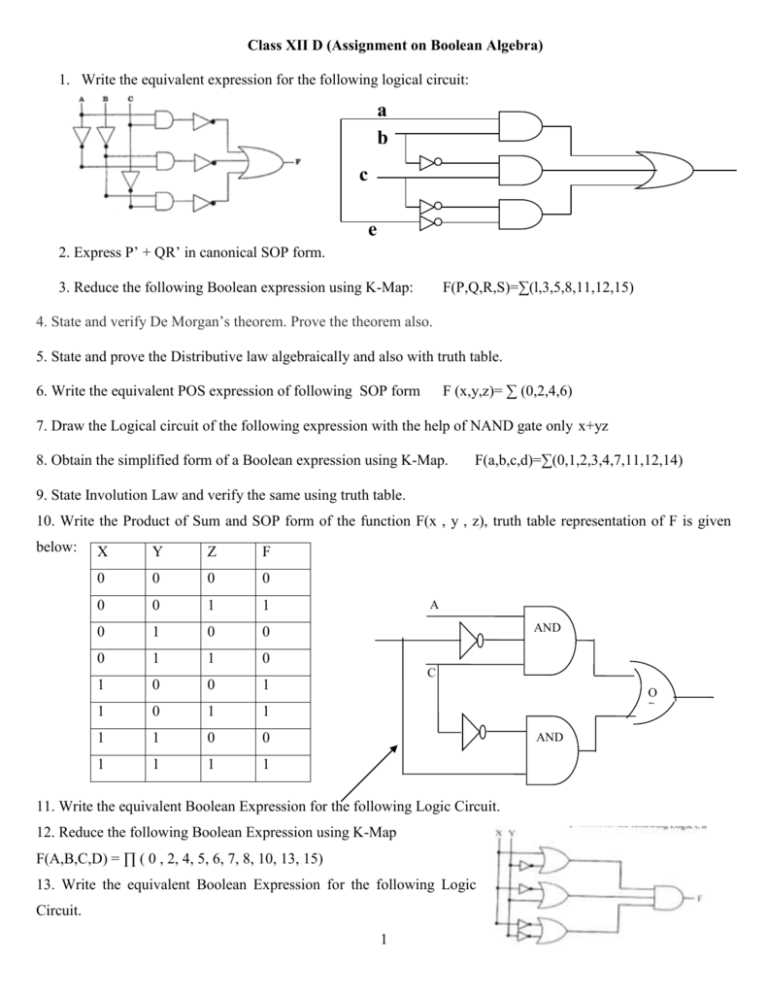
Start by identifying the logical operators in your formula. Each operator corresponds to a specific gate: AND, OR, or NOT. Break down the expression into smaller parts, ensuring each segment corresponds to a distinct gate. For example, an expression like A AND B would be represented by an AND gate, and A OR B by an OR gate.
Mapping Components to Gates
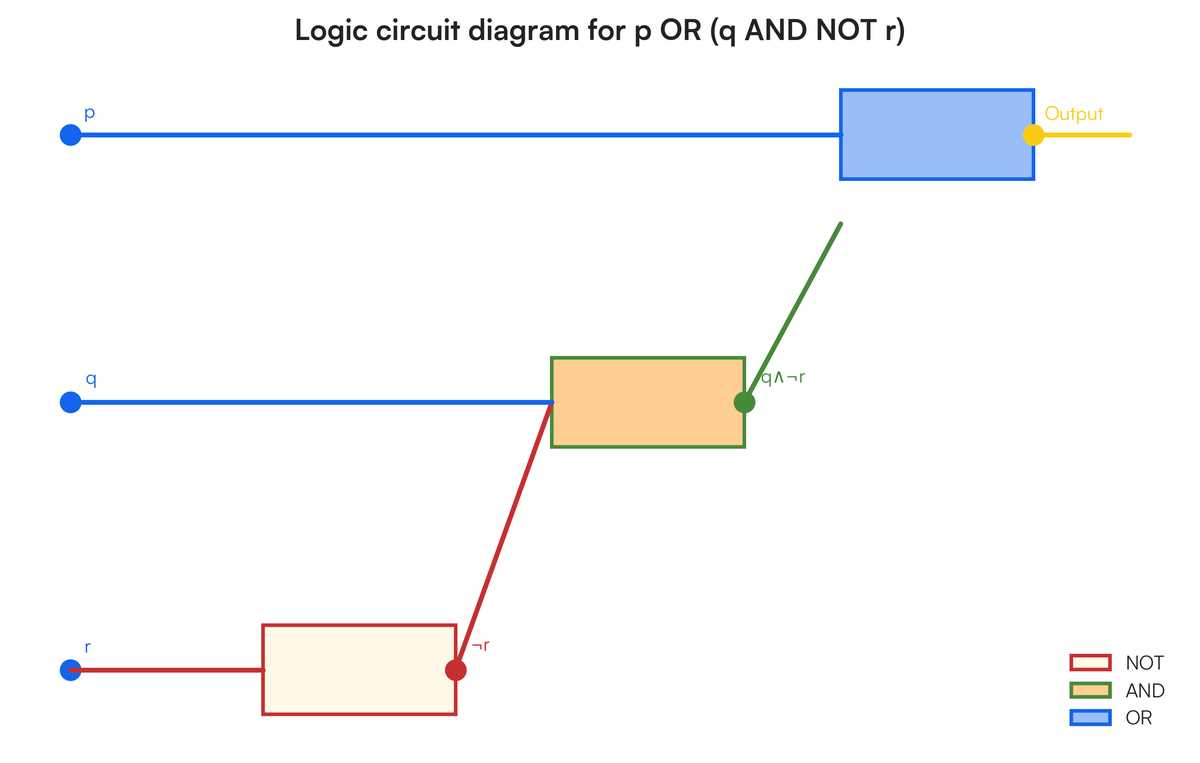
Once you’ve broken down the formula, assign each part to its corresponding gate. For each variable or input, make sure the correct number of inputs are shown at the gate. A NOT gate has a single input, while AND and OR gates require two. The outputs from these gates will form the basis for connecting them in the next steps.
After assigning the gates, you need to connect them properly. Trace the connections between gates, ensuring each output flows into the next gate as dictated by the original formula. Pay attention to the direction of signals, ensuring that each gate’s output feeds correctly into the next stage of the operation.
Testing and Verification
Once the circuit is drawn, test it by comparing the output to the expected result from the original formula. You can do this by substituting values into the formula and checking if the circuit produces the same results. If the output doesn’t match, recheck the connections and the gate placements to identify any mistakes.
Identifying and Converting Boolean Expressions into Logic Gates
Begin by identifying the logical operations in your formula. The most common operations are AND, OR, and NOT. Look for terms like “AND,” “OR,” or symbols like “+” for OR and “•” for AND. These symbols will guide you in determining which gates are required for each part of the formula.
Next, separate the formula into smaller groups or sub-expressions that represent a single operation. For example, if the expression is A AND B OR C, first focus on the AND operation (A AND B) before applying the OR operation to the result and C. This step helps simplify the logical flow and ensures the correct gate is used at each step.
Once you’ve isolated each operation, assign the correct gate to each sub-expression. Use an AND gate for the AND operation, an OR gate for OR operations, and a NOT gate for negation. For example, if the formula includes “A AND B,” this can be represented by an AND gate with inputs A and B.
If your formula has multiple layers of operations, such as nested ANDs or ORs, break the expression down from the innermost operation outward. For example, in (A AND B) OR (C AND D), create two AND gates for the inner operations and an OR gate to combine the outputs. This systematic approach ensures that each part of the formula is correctly translated into the appropriate logic gate.
For formulas with more variables, use a similar method. Ensure that every variable is connected to its appropriate gate and that the connections follow the logic of the expression. It’s important to be mindful of the input and output connections between gates to maintain logical accuracy.
When all gates are in place, and all variables are connected, ensure that the configuration accurately matches the original logical operations. Testing the setup by checking if the circuit behaves as expected when values are substituted into the formula can verify the correctness of your setup.
Finally, once all components are connected and verified, simplify the circuit if necessary. Redundant gates or operations can often be removed to streamline the design without changing the overall functionality. This ensures that the design is as efficient as possible while maintaining logical accuracy.