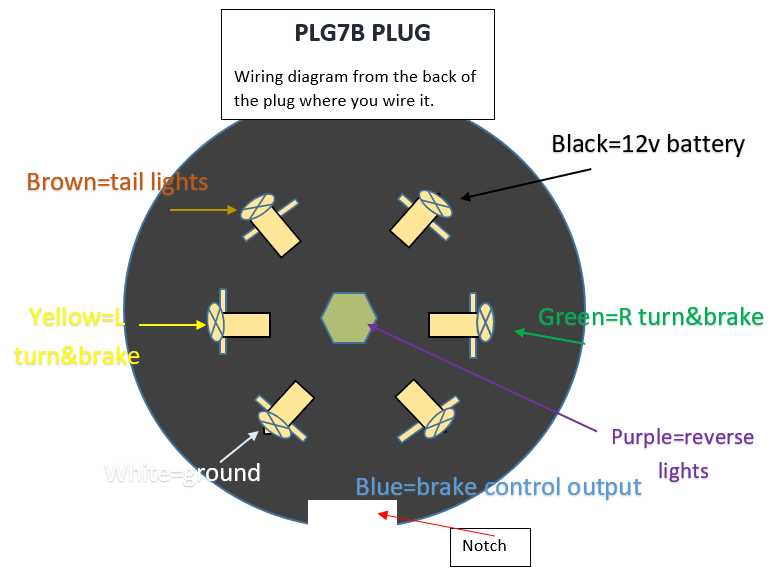
Connect the ground conductor first by attaching the white cable to the metal chassis of the towing vehicle and to the ground terminal of the round towing connector. A solid ground path prevents lighting faults and unstable brake controller signals. Clean the metal surface and tighten the bolt firmly to reduce resistance.
Attach lighting conductors according to the common color standard used on most towing connectors. The brown line supplies tail and marker lights, the yellow lead carries the left turn and brake signal, and the green lead carries the right turn and brake signal. Each conductor should use insulation rated for outdoor automotive use, typically 14–16 AWG.
Route the blue conductor from the brake controller inside the vehicle to the electric brake terminal on the connector. This line delivers variable voltage to the brake magnets on the towed unit. Typical current draw ranges from 3 to 4 amps per brake assembly, so avoid thin cable that could overheat.
The auxiliary power supply usually uses a black or red conductor connected directly to the vehicle battery through a fuse rated around 30–40 amps. This line powers interior lights, charging lines, or other equipment installed on the towed platform. Check voltage with a multimeter; a reading close to 12.6 volts indicates a fully charged vehicle battery.
Seven Way Trailer Plug Wiring Diagram With Pin Layout and Color Code Guide
Mount the round towing connector so the latch faces upward and identify each terminal position before attaching conductors. The center contact typically carries the reverse light signal, while the outer pins distribute ground, lighting, brake control, and auxiliary power. Use 14 AWG copper for lighting circuits and 10–12 AWG for brake control or constant power lines that carry higher current.
Typical Pin Layout and Color Mapping
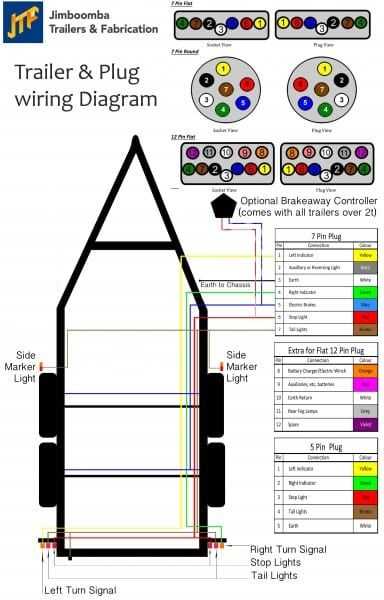
The ground terminal normally uses a white conductor connected directly to the vehicle frame. The tail and marker lights run through the brown lead. Left turn and brake signals pass through the yellow line, while the right turn and brake signal uses the green line. Electric brake control travels through a blue conductor routed from the brake controller mounted inside the cab.
Auxiliary Power and Reverse Light Connections
Attach the auxiliary power feed using a black or red conductor connected to the vehicle battery through a fuse rated around 30–40 amps. This terminal supports interior lighting, breakaway systems, or charging lines on the towed unit. The reverse light terminal often uses a purple conductor connected to the vehicle backup lamp circuit. After completing all connections, check each terminal with a multimeter; lighting lines should show voltage only when their respective switches activate.
Identifying Seven Way Trailer Plug Pins for Brake Lights Turn Signals and Ground
Locate the ground contact first and attach the white conductor to the vehicle frame and to the ground terminal of the round towing connector. This connection provides the return path for every lighting and brake signal. Clean paint or corrosion from the metal surface so resistance remains low.
Identify the lighting signal contacts around the outer ring of the connector. The yellow conductor carries the left turn and brake signal, while the green conductor carries the right turn and brake signal. Each line should use insulated copper rated 14–16 AWG to handle lighting current without overheating.
The running light terminal usually connects to the brown conductor. This line powers marker lamps, tail lights, and license plate illumination on the towed unit. Voltage appears on this contact whenever the vehicle parking lights or headlamps are switched on.
After connecting all lighting conductors, test each terminal using a multimeter or test lamp. Activate the left and right turn signals, press the brake pedal, and verify that the correct contact shows approximately 12 volts during each function. Incorrect placement often causes crossed signals such as both indicators flashing at once.