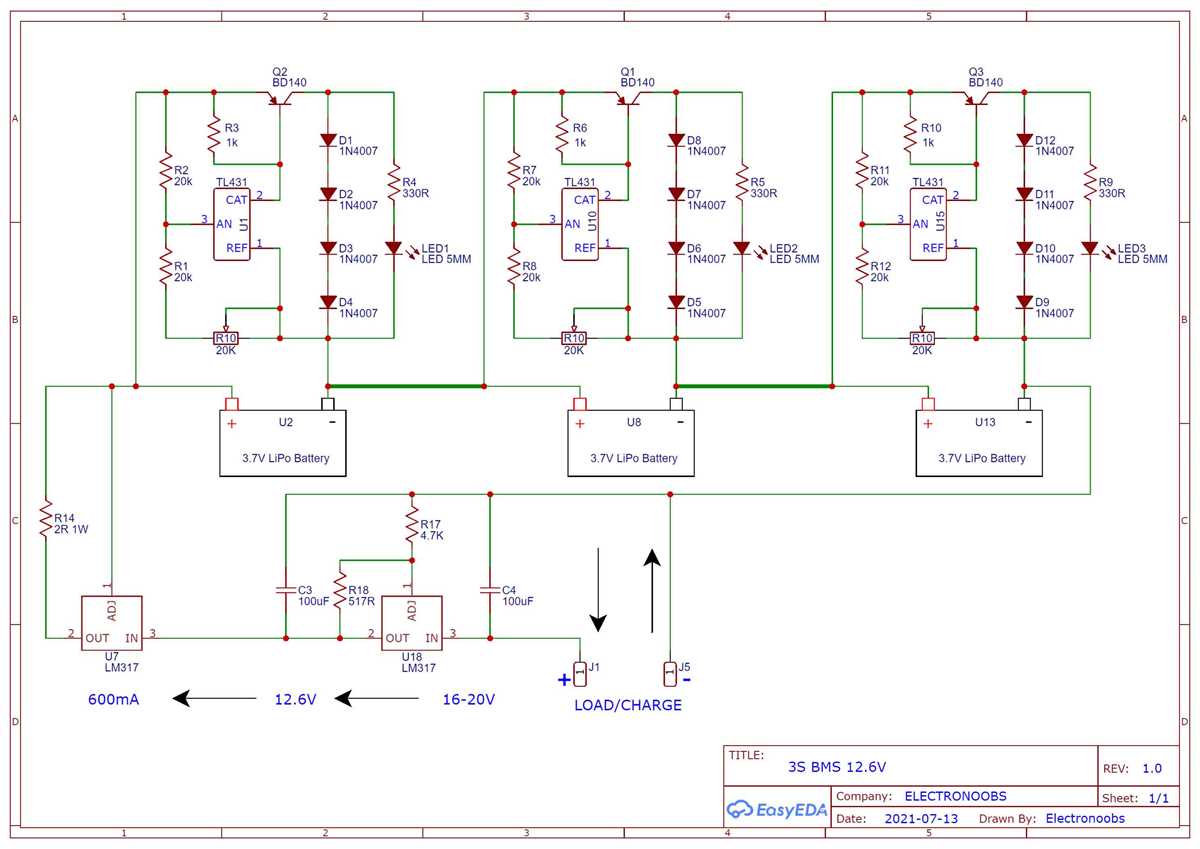
Connect each cell group to the protection control board using the marked terminals B−, B1, B2, B3 and B+ according to the number of series elements in the pack. Each sensing lead measures cell voltage and allows the controller to monitor charge and discharge limits. Typical upper cutoff occurs near 4.20 volts per cell, while discharge protection activates around 2.7–3.0 volts.
Use a module rated slightly above the expected current draw. For example, portable tool packs drawing 20–30 amps require a board with MOSFET switching components rated for 40A or higher. The positive pack output normally connects directly to the load and charging port, while the negative path flows through the MOSFET stage on the control board.
Balancing leads distribute measurement lines across each cell junction. Thin wires carry voltage samples to the monitoring chip, allowing it to equalize cell levels during charging. Passive balancing resistors often bleed small current from higher-voltage cells so that all series elements reach nearly the same level near 4.2 volts.
Mount the protection board close to the pack and keep sensing leads short. Route high-current conductors using thick copper wire such as 12–14 AWG depending on load demand. Verify polarity and voltage with a multimeter before connecting any charger or load to prevent MOSFET damage.
BMS Circuit Diagram for Lithium Ion Battery Pack With Protection MOSFETs and Balance Leads
Connect the negative pack terminal to the protection board pad marked B−. This line feeds the switching stage built with power MOSFETs that interrupt current during overcharge, deep discharge, or short conditions. Use thick copper conductors such as 12–14 AWG if load current may exceed 20–30 amps.
Attach each cell junction to the sensing pads labeled B1, B2, B3 and so on depending on series count. These thin leads report individual cell voltage to the monitoring IC. Correct order matters; reversing these wires can destroy the monitoring chip within seconds.
The positive pack terminal usually connects directly to P+ without passing through the MOSFET stage. Charging and load current return through the controlled negative path marked P−. This layout allows the protection board to disconnect the pack while keeping voltage sensing active.
Typical protection thresholds follow well-known limits. Overcharge cutoff appears near 4.20–4.25 V per cell, while over-discharge shutdown triggers around 2.7–3.0 V. These limits protect electrode chemistry and prevent internal damage.
Balance leads run from each cell connection to the monitoring board through thin wires, usually 22–26 AWG. During charging, the controller checks voltage differences between cells and activates small bleed resistors on cells with higher voltage.
Bleeding current often ranges between 30 mA and 100 mA. This small discharge path gradually equalizes cell levels so that the entire pack approaches a similar voltage near the top of charge.
Mount the protection board on an insulating plate or spacer. MOSFET packages may reach 60–80°C under heavy load, so allow airflow and avoid direct contact with heat-sensitive insulation around the pack.
Verify each connection with a multimeter before attaching a charger or load. Measure voltage between consecutive sense wires; each reading should match the voltage of one cell group. Large differences usually indicate reversed leads or poor connections.
Identifying BMS Board Pins for Cell Inputs Pack Output and Balance Leads
Locate the pad marked B− and connect it to the negative end of the cell stack. This point acts as the reference ground for the monitoring chip and MOSFET switching stage. Use thick copper wire such as 12–14 AWG when the pack delivers more than 20 amps.
Main Power Connections
Most protection boards include clearly labeled output pads that carry load and charging current.
- P+ – positive output terminal connected directly to the pack positive
- P− – controlled negative path routed through MOSFET transistors
- B− – direct connection to the negative end of the cell stack
Attach the pack positive lead to P+. Both the load and the charging port usually share this point. Current returning from the device or charger flows through P−, where the protection board can interrupt the path during fault conditions.
Cell Voltage Sense Connections
Each series junction in the pack must connect to a sensing pad on the board. These thin conductors deliver voltage samples to the monitoring IC.
- B1 connects to the junction between the first and second cell
- B2 connects to the next junction in the series chain
- B3 continues this pattern depending on pack size
Use 22–26 AWG wires for these sensing leads because they carry only measurement current. Keep them short and route them away from high-current conductors to reduce electrical noise.
Balance lines connect to the same sensing points used by the monitoring chip. Small resistors on the board discharge cells that reach higher voltage levels during charging. Typical bleed current ranges between 30 mA and 100 mA, gradually equalizing cell levels near 4.2 volts.
Verify connections with a multimeter before attaching a charger. Measure voltage between consecutive sensing wires; each reading should equal the voltage of a single cell group. Incorrect order or reversed polarity can destroy the monitoring chip immediately.