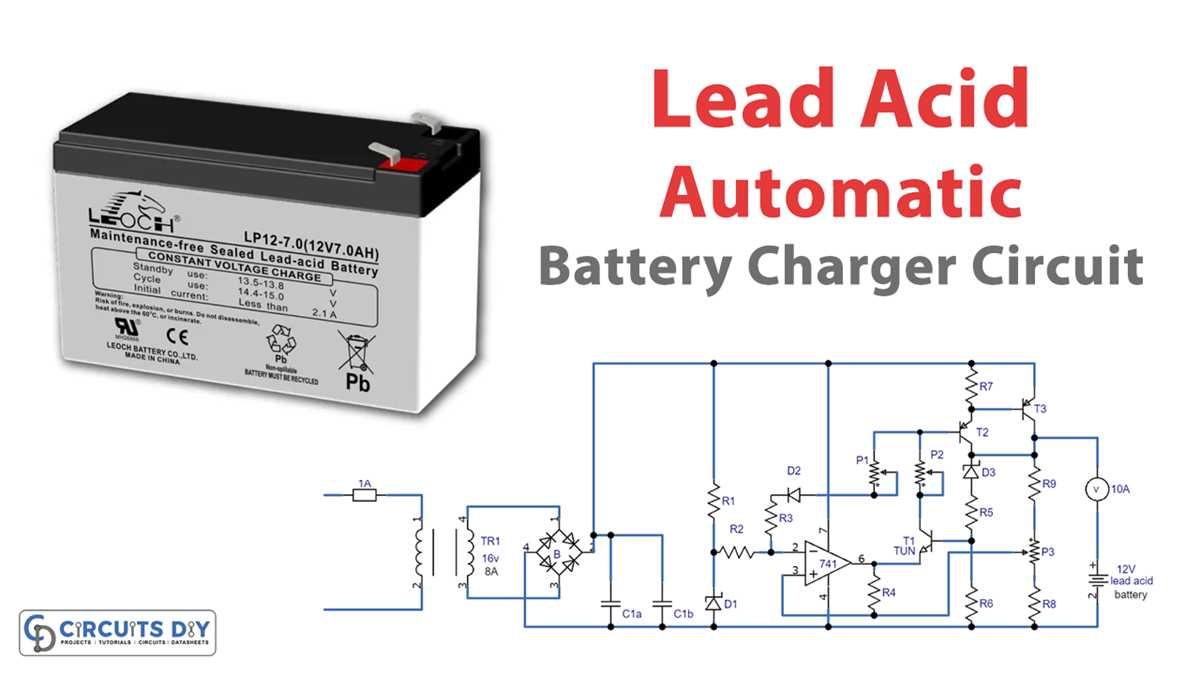
Use a step-down power unit rated around 220V to 15–18V AC with a current capacity of 2–5A as the foundation for a small battery power supply. After the voltage reduction stage, connect a bridge rectifier built from four diodes such as 1N5408. This arrangement converts alternating current into pulsating direct current suitable for storage cells.
Add a smoothing capacitor between 2200µF and 4700µF rated at 25V or higher across the rectifier output. The capacitor reduces ripple and stabilizes the output line before it reaches the regulation stage. Without this filtering component, the battery receives unstable current pulses that may cause heating and shorten service life.
Voltage control can be handled through a linear regulator like LM317 paired with a resistor network that sets the output near 13.8–14.4 volts, a typical charging range for sealed lead-acid batteries. Place a heat sink on the regulator if current exceeds about 1A, and include a series fuse on the input side to protect the assembly from short circuits or wiring mistakes.
During assembly, keep the high-current paths short and use wire rated for at least 5A load. Mount the rectifier and regulator on a small aluminum plate or heat sink plate to dissipate heat. After wiring, verify the output with a multimeter before connecting any battery pack.
12V Charger Circuit Diagram With Component List Wiring Layout and Assembly Guide
Select a step-down transformer rated 220–240V AC input and 15–18V AC output with at least 3A capacity for small lead-acid battery packs. After the transformer secondary, connect a four-diode bridge rectifier built from 1N5408 or a ready-made 6A rectifier block. Attach a smoothing capacitor rated 3300–4700µF at 25V across the rectifier output to reduce ripple before voltage regulation.
Use the following component set for a stable battery power supply assembly:
- Step-down transformer 15–18V AC, 3–5A
- Bridge rectifier 6A or four 1N5408 diodes
- Electrolytic capacitor 3300–4700µF 25V
- LM317 adjustable regulator
- Resistor 240Ω for regulator reference
- Variable resistor 2kΩ for voltage adjustment
- Output capacitor 100µF 25V
- Input fuse rated 3–5A
- Aluminum heat sink for regulator
Follow a simple wiring layout that keeps high-current paths short. Connect the transformer secondary leads to the rectifier AC terminals. The rectifier positive output goes to the large filter capacitor and then to the LM317 input pin. The adjustable pin connects through a 240Ω resistor to the output node and through a 2kΩ potentiometer to ground. This resistor network sets the output near 13.8–14.4 volts, suitable for many sealed lead-acid batteries. Mount the regulator on a heat sink and route the negative line directly from the rectifier to the output terminal to reduce voltage drop.
How to Read a 12V Charger Circuit Diagram With Transformer Bridge Rectifier and Filter Capacitor
Trace the power path from the AC input symbol to the battery output node. The first block usually shows a step-down transformer that converts mains voltage (220–240V AC or 110–120V AC) to a lower secondary level such as 15–18V AC. On the drawing, the primary coil connects to the mains supply, while the secondary coil feeds two lines that enter a four-diode bridge. Each diode symbol forms a diamond pattern with clearly marked polarity outputs. The positive node typically connects to a large electrolytic capacitor, while the negative node becomes the ground reference for the entire layout.
Understanding Rectification and Filtering Symbols
The bridge assembly converts alternating input into pulsating DC through four directional diodes arranged so current flows toward the positive output during both halves of the AC cycle. After this stage, locate the large electrolytic capacitor symbol marked with values like 2200µF, 3300µF, or 4700µF at 25V. This component stores charge during waveform peaks and releases it between peaks, reducing ripple voltage. On most electrical drawings, the capacitor sits directly across the positive and negative rails. Follow the lines leaving this point to identify regulators, resistors, and the final battery connection terminals.