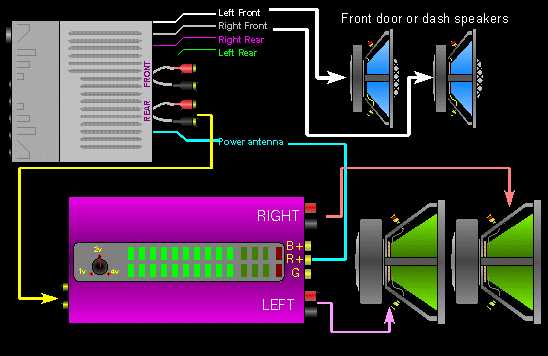
To ensure optimal performance and avoid damage, use quality cables for connecting the head unit to the amplifier. The most important aspect of this setup is to match the wiring with the proper voltage and current ratings for each component. Always check the specifications for both the receiver and power unit before proceeding with the installation.
Start by identifying the main power and ground connections. The power cable, usually marked as red or labeled “positive,” should be connected to the battery or power source. For the ground, typically marked as black, it’s vital to ensure a solid, direct connection to the vehicle chassis. A poor ground connection can lead to distortion and signal loss in the system.
For signal transfer, use shielded cables to reduce the risk of interference. Ensure the RCA cables are securely attached, and the connectors are free from dirt or corrosion. This step plays a major role in achieving clear and noise-free audio output from your setup.
Car Stereo to Amp Wiring Guide
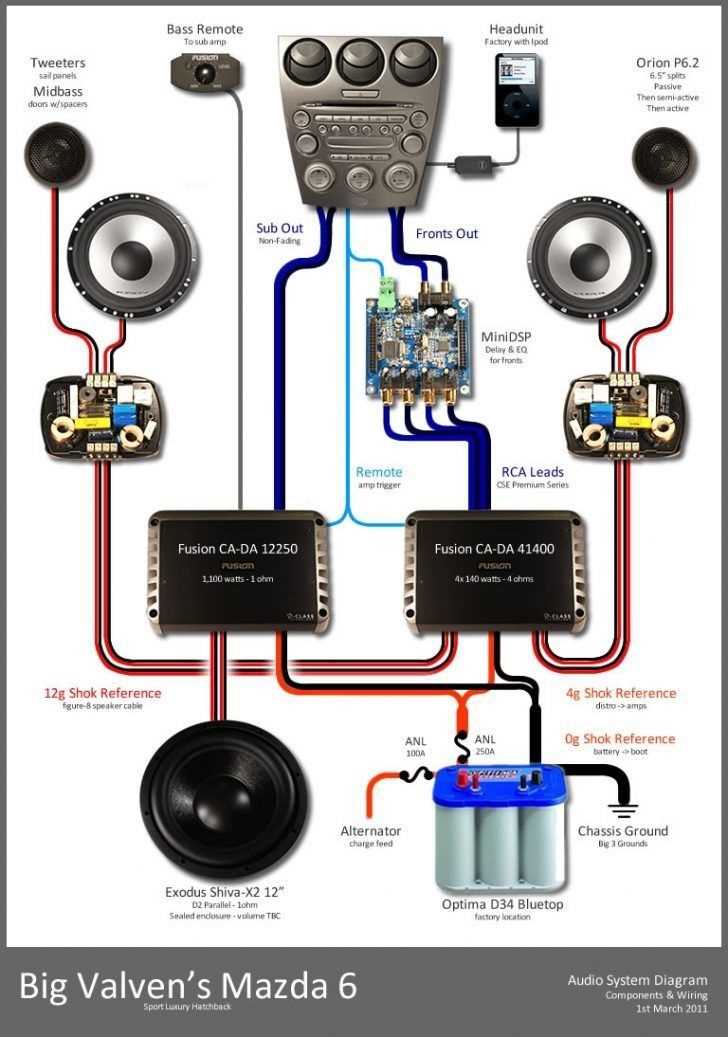
Ensure the correct power source for your amplifier by connecting the positive lead from the head unit to the amplifier’s power terminal. The power wire typically uses a red color and should be rated for the proper current to prevent overheating and ensure stability during operation.
For grounding, use a black wire that connects to the chassis of the vehicle. A strong ground connection is necessary for signal clarity and to avoid distortion. Double-check the ground point, making sure it is free from rust or paint, as these can cause unreliable performance.
Next, the RCA cable provides the signal from the head unit to the amplifier. This connection should be kept away from power cables to avoid interference. Secure both ends of the RCA cable, ensuring that they are plugged into the correct input/output on each component.
Powering the amplifier requires a fuse for safety. This fuse should be installed near the battery on the positive lead and rated appropriately for the amplifier’s power consumption. This protects your components from power surges or short circuits.
If your system includes additional accessories, like a subwoofer, ensure the corresponding outputs from the amplifier are properly connected to the speaker terminals. Use speaker wires of sufficient thickness to handle the load of your speakers and maintain signal quality.
For remote turn-on control, wire the remote lead from the head unit to the amplifier. This small blue wire will activate the amp when the stereo is powered on. Make sure this connection is clean to avoid any issues with activation.
Keep all connections tight and use high-quality connectors to avoid any loss of signal or power. Regularly inspect the wires for signs of wear, as frayed or loose wires can affect performance and even cause electrical shorts.
Finally, once all connections are made, test the system before finalizing the installation. Check that all components are receiving power and the audio output is clear and undistorted. If everything is working properly, you can secure the wires and finalize the setup, ensuring a tidy and safe installation.
Choosing the Right Cables for Connecting Car Stereo and Amp
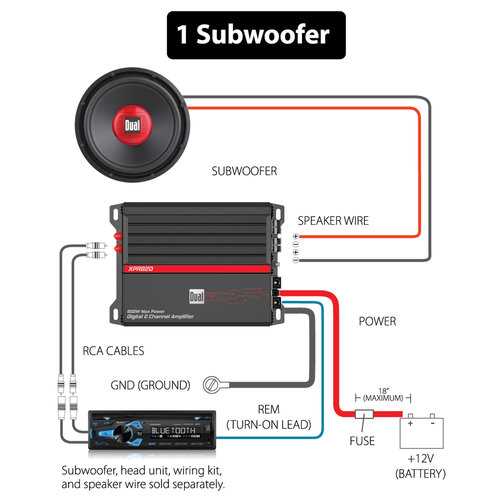
To ensure clear sound and reliable performance, always select cables with sufficient gauge for power and signal transfer. For most setups, 12-gauge power cables are recommended for their ability to handle high currents. For signal cables, 16- or 18-gauge wires are typically sufficient, but the quality of the insulation should also be considered for optimal performance.
Use twisted pair RCA cables for the signal connection between the head unit and amplifier. These cables are designed to minimize noise interference and maintain a clear audio signal. Make sure the RCA connectors are high-quality and have a firm grip on the respective inputs and outputs.
For grounding, a thick, well-insulated wire is required. A common choice is an 8-gauge or 10-gauge cable, depending on the power demands of the system. Proper grounding is crucial for avoiding electrical hums or interference in the audio output.
Power cables should be equipped with durable connectors, and it is advisable to use fuse holders close to the power source for safety. Always match the fuse rating to the specifications of your amplifier to prevent damage from power surges.
Finally, speaker cables should be robust enough to handle the power output from the amplifier to the speakers. Depending on the distance, 14- or 16-gauge cables work best for most systems. Ensure that the connections are secure to avoid any loss in signal strength or sound quality.