
Begin by identifying all input and output terminals on the unit. Label each conductor and confirm proper polarity before making connections. Use insulated tools to prevent accidental contact with live parts.
Inspect internal contacts and mechanical levers for wear or corrosion. Ensure that spring-loaded mechanisms move freely and that trip arms are correctly aligned. Replace any damaged components before powering the system.
Verify the position of the thermal and magnetic trip elements. These elements respond to overloads and short circuits, disconnecting power to protect wiring and devices. Check for tight mounting and proper calibration to ensure reliable operation.
Document the configuration and connection points for future reference. A labeled schematic helps during maintenance or troubleshooting and reduces the risk of miswiring when performing inspections or replacements.
Understanding Internal Components and Operation of an Electrical Protection Device
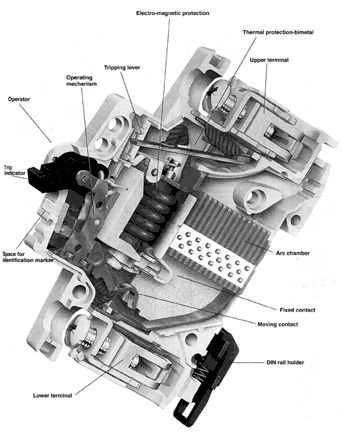
Start by inspecting the main terminals for secure connections. Loose connections can cause arcing or intermittent power loss. Tighten all screws and verify that conductors are fully inserted into the terminal slots.
Examine the movable contact assembly for smooth operation. The contact arms should move freely without sticking. Any debris or corrosion should be removed with a non-conductive brush to maintain reliable current flow.
Check the thermal element for proper placement and calibration. This bimetal strip responds to prolonged overloads by bending and activating the trip mechanism. Ensure it is firmly mounted and unobstructed to respond accurately.
Inspect the magnetic coil and plunger assembly. This component reacts to sudden short circuits. The plunger should move without resistance and reset correctly after testing. Confirm coil connections are tight and free from damage.
Verify the trip lever and latch mechanism alignment. Each lever must engage precisely with the latch to disconnect the load when needed. Misalignment can prevent proper operation or cause nuisance trips.
Observe the insulation and spacing between live parts. Maintain adequate clearance to prevent accidental contact or arcing. Replace any worn insulation or damaged barriers before restoring power.
Test the device under controlled conditions. Apply a low-current test to simulate overload and ensure the trip mechanism functions as designed. Confirm that reset operations restore normal connections without sticking or unusual noise.
Document all component positions and connections. A detailed record simplifies future maintenance, troubleshooting, or replacements. Label each terminal and component clearly for reference during inspections or upgrades.
Identifying Key Terminals and Contact Points
Begin by locating the main input and output terminals on the unit. These points carry the primary current and must be clearly labeled. Verify that line and load conductors are correctly assigned to prevent reversed connections.
Inspect the movable contact assemblies for proper engagement. Each contact should align precisely with its mating surface to ensure consistent conduction. Look for signs of pitting or corrosion that could reduce performance.
Identify auxiliary terminals for control and signaling circuits. These points often operate indicator lights or alarms and require secure connections. Use labeled wires to prevent misrouting and maintain operational accuracy.
Check the spacing between live contacts and adjacent metal parts. Maintain adequate clearance to prevent arcing or accidental shorting. Replace any damaged insulating barriers or supports before energizing the unit.
Document the position and function of all terminals. Create a reference sheet or photo record to simplify future maintenance, troubleshooting, or upgrades. Clearly label each point to ensure quick identification during inspections.