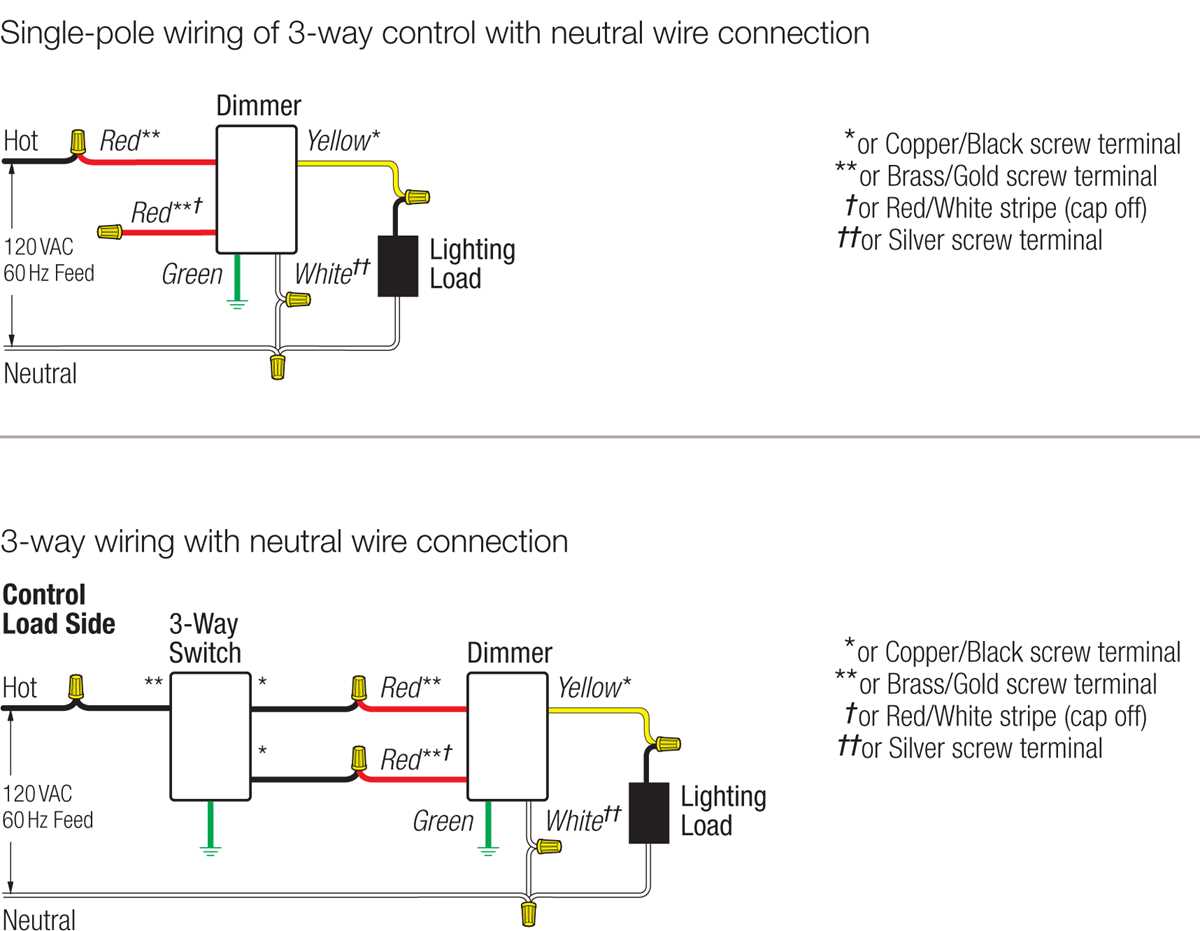
Ensure proper identification of line, load, and traveler terminals before attempting any installation. Label each conductor and verify voltage levels with a tester to prevent short circuits or fixture damage.
Connect companion wall controls following the manufacturer’s sequence to maintain smooth operation across all switch points. Use the specified gauge wire to handle maximum load without overheating.
Integrate LED and incandescent lamps by matching the load type on the control unit. Some models require separate neutral connections for LED fixtures to prevent flickering under partial load conditions.
Check circuit continuity after each step. Loose terminals or reversed travelers can cause unexpected behavior, including lights that fail to turn off or dim inconsistently across locations.
Secure all connectors with wire nuts or terminal screws rated for the specified amperage. Avoid over-tightening, which can strip terminals or damage the conductors, leading to potential fire hazards.
Three Location Control Connections with Terminal and Load Identification
Verify the main control terminals before attaching any conductors. Label the line, load, and traveler connections, and confirm voltage using a multimeter to prevent misplacement during assembly.
Attach companion wall units according to the terminal markings. Ensure traveler conductors run unbroken between switches, avoiding splices that can cause erratic operation or flickering lights.
Match load type to terminal specifications. Incandescent, CFL, and LED bulbs often require separate terminals. Confirm the neutral is connected when handling low-voltage or LED fixtures to maintain consistent performance.
- Secure each conductor with the proper terminal screw or connector rated for the circuit amperage.
- Check continuity on all wires after attachment to prevent shorts or unintended connections.
- Test operation from every location individually before final assembly to confirm smooth control and dimming response.
Mark each terminal and connected load clearly on the control housing. Accurate identification reduces the risk of miswiring during future maintenance, bulb replacement, or fixture upgrades.
Identifying Line Load and Traveler Terminals on the Control Module
Confirm the incoming power connection by locating the line terminal marked on the device housing. Use a voltage tester to verify live conductors before attaching any load to prevent damage or shock.
Identify the outgoing load connection by tracing the conductor leading directly to the lighting fixture. Terminal markings usually indicate load placement; connecting here ensures proper current flow and dimming response.
Recognizing Traveler Connections
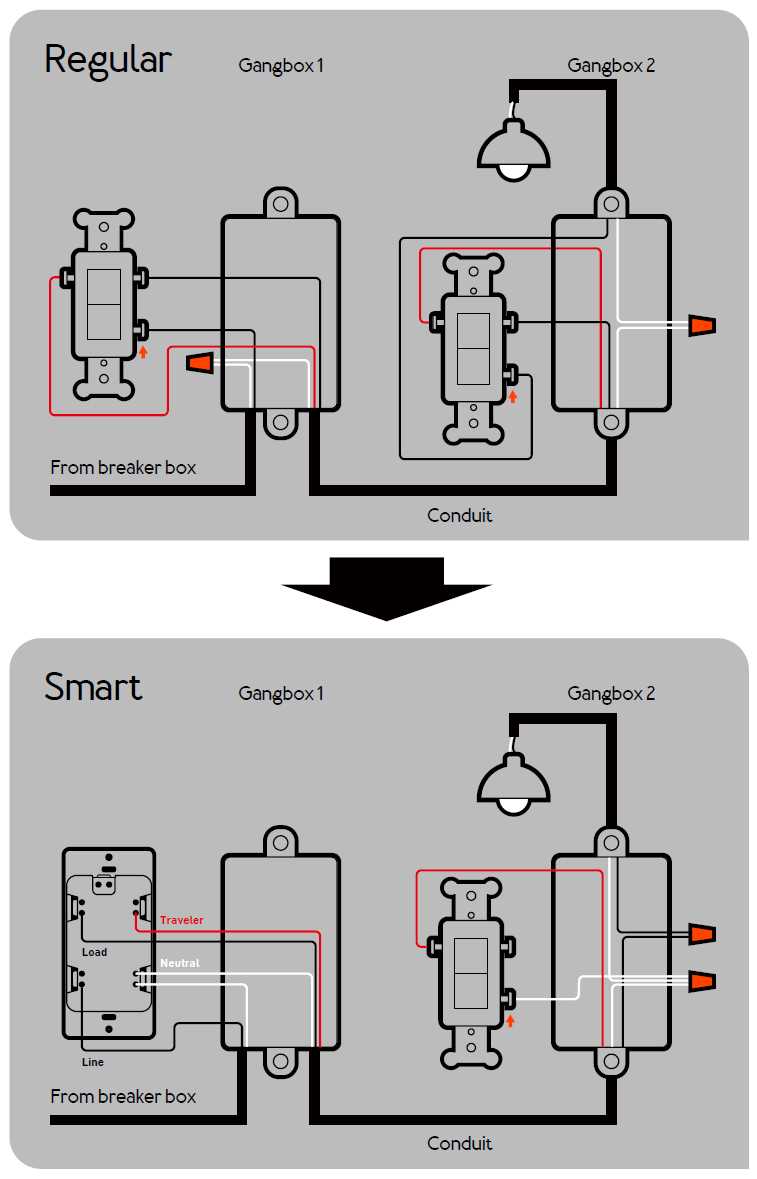
Traveler terminals link multiple control locations. These are often color-coded or labeled as traveler on the module. Ensure continuous conductors run between locations without splicing to maintain consistent operation.
Verify each connection by testing continuity across the traveler paths. Label each conductor after confirmation to simplify maintenance and avoid misplacement during future updates or fixture changes.