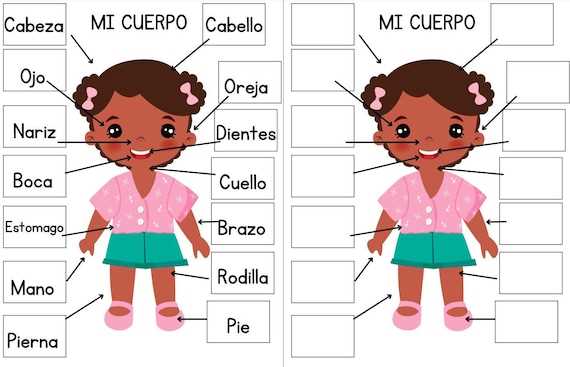
Start by memorizing the names for major limbs and organs in the human structure. Recognizing these terms will help you effectively communicate health-related issues or perform anatomical studies in a Spanish-speaking context.
Focus first on the hands, feet, head, and torso. These regions contain some of the most commonly used words in both medical and casual conversations. For example, the word for “arm” is “brazo” and for “foot” it’s “pie”. Knowing these will make identifying these regions much easier in both written and verbal exchanges.
Once you have mastered the main components, move on to the internal organs. “Corazón” means heart, while “estómago” refers to the stomach. These terms are often used in medical discussions and help with a deeper understanding of the body’s functions.
Spanish Human Anatomy Guide
Start by learning the names of the most prominent external features like the head (“cabeza”), eyes (“ojos”), ears (“orejas”), and mouth (“boca”). These terms are foundational for any anatomical discussions or learning.
Once you’re familiar with the outer structures, move on to the upper limbs such as the arms (“brazos”), hands (“manos”), and fingers (“dedos”). Understanding these basic terms will significantly improve your ability to identify and describe movements or injuries.
Next, focus on the trunk, with the chest (“pecho”), stomach (“estómago”), and back (“espalda”) being the primary areas to memorize. These are crucial in health-related conversations and medical situations.
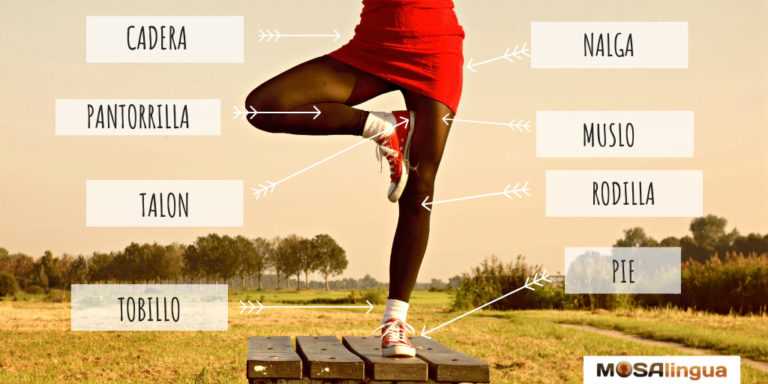
Lastly, don’t forget the lower body, including the legs (“piernas”), knees (“rodillas”), and feet (“pies”). These parts are just as important when discussing health and performing physical assessments.
How to Identify and Pronounce Common Anatomy Terms in Spanish
Begin by mastering the pronunciation of key external features. For the head, say “cabeza,” with the stress on the second syllable: ca-BE-za. The eyes are “ojos,” pronounced as “O-hos.” The mouth is “boca,” and the ears are “orejas.” Each word focuses on clear vowel sounds, so practice those first to sound more natural.
Next, move to the arms and hands. “Brazos” is used for arms, pronounced as “BRA-thos,” with a soft “th” in the middle. “Manos” for hands is easier, as it’s pronounced “MA-nos.” Don’t forget the fingers: “dedos” is said as “DE-dos,” emphasizing the first syllable.
For the torso, focus on the chest (“pecho”) and back (“espalda”). “Pecho” is pronounced as “PE-cho,” with a softer “ch” sound. “Espalda” is stressed on the second syllable: es-PAL-da.
For the legs and lower limbs, “piernas” refers to legs, with the pronunciation “PYEHR-nas.” “Rodillas” is knees, said as “ro-DEE-yas,” stressing the middle syllable. Finally, practice saying “pies” for feet, pronounced “PEE-es,” with a soft “s” at the end.
Understanding the Connection Between Terms and Human Anatomy
In many languages, terms referring to the human form share a strong connection to the function or location of those features. For example, the term for “hands” in many languages is linked to the idea of action or interaction. In this case, “manos” directly ties the notion of the hands to their role in performing tasks or manipulating objects.
The connection is even clearer in anatomical terminology. The term for the heart, “corazón,” is derived from a Latin root meaning “center,” which reflects the heart’s role as the central organ in the body’s circulation system. Similarly, “cabeza,” the word for “head,” also refers to the uppermost part of the body, reflecting its position as the leading section in physical and cognitive functions.
Another interesting relationship exists with terms for senses. The word for “eyes,” “ojos,” is deeply tied to the function of vision, while the term “oído” for “ear” directly relates to hearing. This clear link between terminology and anatomy is evident in many common terms.
By understanding these associations, learning the names of different features becomes easier as they are often rooted in logic that relates directly to human experience and interaction with the world around them.