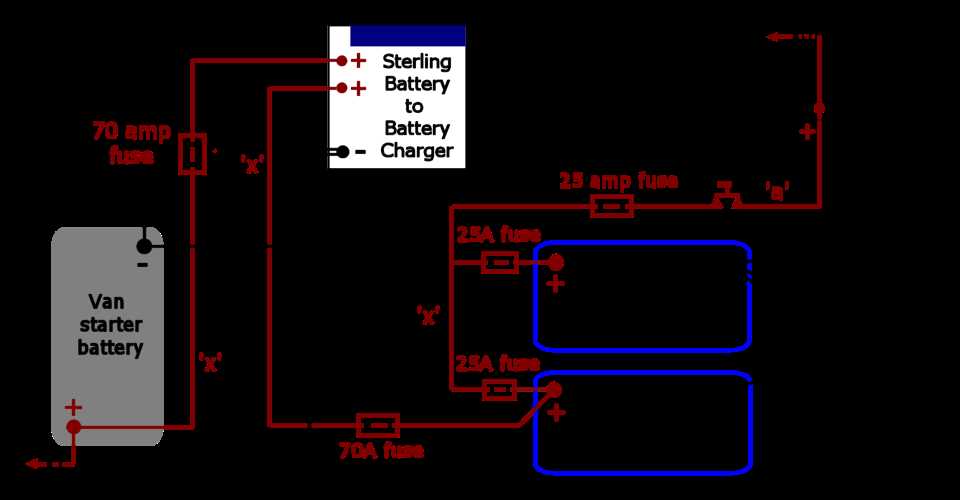
Start by identifying the positive and negative terminals on the power source. The positive connection will typically be marked with a red wire, while the negative connection is usually black. Secure the positive cable to the corresponding terminal using a heavy-duty connector to ensure a solid connection that can handle the required current.
Next, connect the negative cable to a clean, rust-free metal surface on the RV chassis. This will create a reliable ground connection and prevent any issues with power loss. Ensure the connection is tightly fastened and free from corrosion to maintain consistent performance.
Once the power connections are in place, you’ll need to connect the remaining wires for the auxiliary systems. These connections should be made according to the device specifications, with the correct gauge wire and fuse ratings for each. After completing the setup, verify each connection and test the system to ensure everything is functioning as expected.
RV Power System Connection Guide
Begin by ensuring you have the proper cables for your system. The main positive lead should be thick enough to handle the required current, typically 8 AWG or larger. The negative cable should be equally robust and securely connected to a clean metal surface on the vehicle’s frame. This ensures a reliable ground connection.
Attach the positive terminal to the power source first, ensuring a tight connection. Always use a ring terminal connector that fits snugly over the terminal to avoid any loose connections, which can cause power loss. After securing the positive connection, move on to the ground, making sure the metal surface is clean and free from paint or rust.
- Ensure the connection is tight to avoid voltage drop.
- Use a corrosion-resistant connector for long-term durability.
- Always check that both terminals are free from any debris.
Once the primary connections are secure, connect any auxiliary components, such as a power inverter or solar panel system, according to the manufacturer’s guidelines. For each of these devices, make sure you use the correct size fuse to prevent overcurrent conditions that can damage your system.
Test the system by switching it on and checking for any issues with the electrical flow. Use a voltmeter to confirm that the voltage across the power terminals is within the expected range. If any voltage drops are detected, check for loose connections or undersized cables that might be causing resistance.
Finally, regularly inspect the connections for corrosion or wear. Over time, even well-secured connections can deteriorate, especially in harsh environments. Cleaning and tightening the connections every few months will ensure your power system runs smoothly and safely.
Identifying the Correct Battery Terminals and Connections
First, locate the main power terminal, typically marked with a “+” symbol, which connects to the positive terminal of the power source. This wire must be thick enough to handle the current demands, and it’s crucial that it is tightly connected to prevent power loss or potential hazards. Double-check that the terminal is free from corrosion, which can weaken the connection.
Next, identify the ground terminal, marked with a “-” symbol. This is equally important, as it provides the return path for the electrical flow. Connect this wire to a clean, rust-free metal part of the chassis to ensure a solid and safe connection. If the metal surface is covered with paint or rust, use a wire brush or sandpaper to clean it off before securing the connection.
Choosing the Right Cable and Connectors
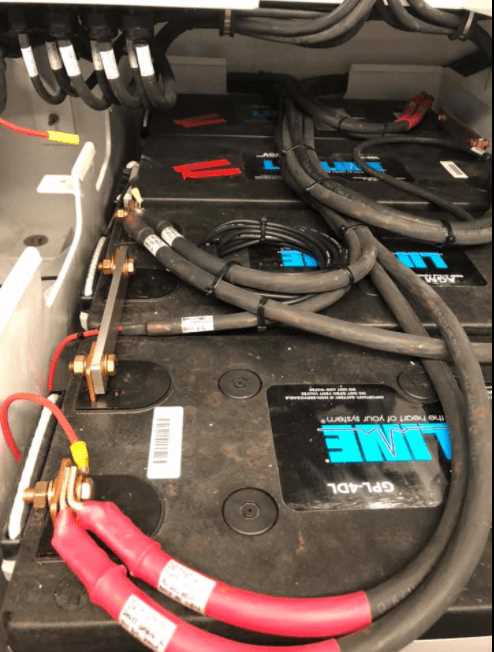
The cable connecting the power and ground terminals should be rated for the appropriate amperage. A wire gauge that is too thin can result in overheating, while one that is too thick can be harder to manage. Typically, use 4 AWG or 6 AWG cables for most RV systems, but always verify the amperage requirements of your specific setup.
Connecting the Auxiliary Devices
When connecting additional devices, such as solar panels or power inverters, ensure each connection is properly matched to its corresponding terminal. Use fuses with the correct ratings for each device to prevent overcurrent. Avoid attaching too many devices to a single terminal, as this can lead to overloaded circuits and potential failures.
It’s also important to verify the polarity when connecting auxiliary systems. Reversed polarity can lead to malfunction or even damage to sensitive components. Make sure each connection aligns with the correct positive and negative terminals, following the wiring color codes where applicable.
Once all connections are made, test the system using a multimeter to check for voltage stability. If the readings are consistent and within the expected range, you have successfully set up your system. If any discrepancies are found, recheck each connection for looseness, corrosion, or incorrect wiring.
Lastly, keep track of all connections and periodically inspect them for wear or corrosion. Regular maintenance will help maintain the efficiency and safety of your power system, avoiding unexpected power failures or hazards.