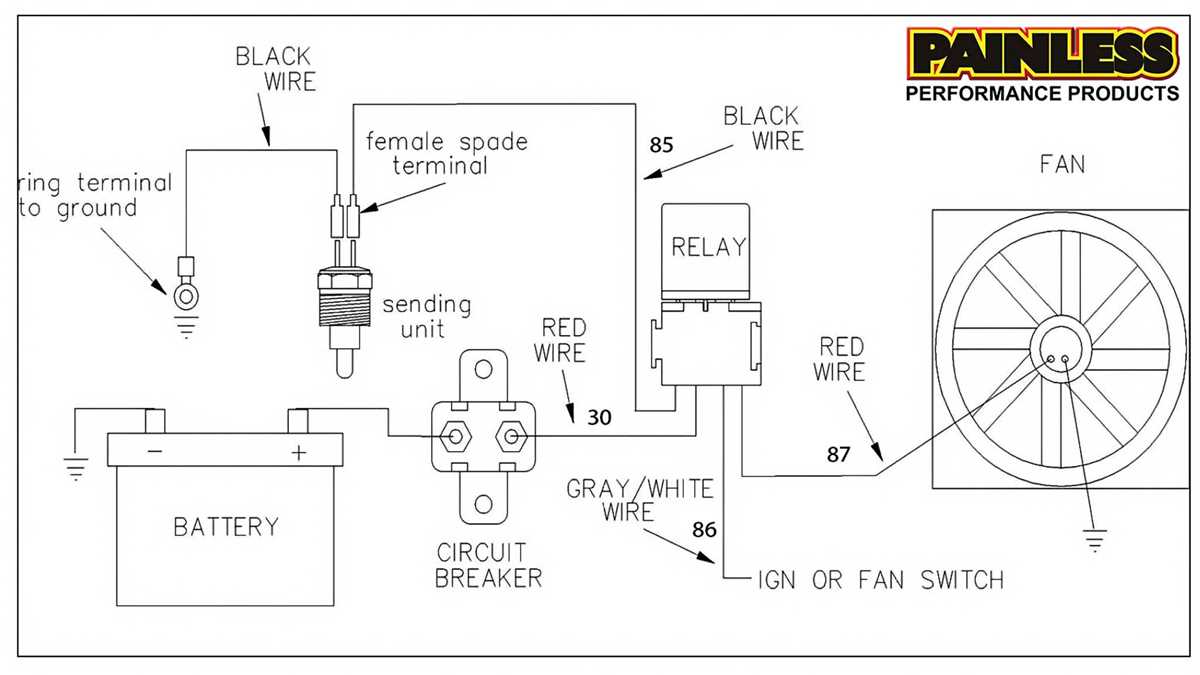
Connect the four-pin assembly with correct orientation to match power, ground, speed control, and tachometer signals. The primary power line supplies full voltage to the motor, while the ground ensures stable current flow. Verify the positive and negative terminals with a multimeter before applying power.
PWM control and tachometer lines must align with the ECU or temperature controller outputs. PWM regulates the motor speed by varying duty cycle, while the tach line provides RPM feedback for engine management and cooling logic. Crossed signals can result in erratic speed or incorrect temperature readings.
Use heat-resistant sleeves on all leads that pass near the exhaust manifold or headers. Ensure the harness reaches the controller without stretching or interference from moving components. Proper routing prevents insulation damage and maintains consistent operation under load and vibration.
Secure connectors with locking tabs and zip ties to minimize vibration-induced disconnections. Inspect pins for corrosion and apply dielectric grease to improve contact reliability. These steps reduce the likelihood of intermittent faults and extend component lifespan.
Verify the control module settings for low and high-speed thresholds. Adjust the duty cycle or relay triggers as required for specific vehicle cooling requirements. Correct setup ensures the motor operates efficiently during idle, cruising, and high-load conditions.
4 Wire Radiator Fan Connector Layout and Control Signal Guide for Vehicles
Connect each terminal according to function with one line supplying full voltage, one line as ground, one for PWM speed control, and one for RPM feedback. The full voltage line powers the motor directly, while the ground stabilizes current flow. Confirm continuity with a multimeter before energizing to prevent short circuits or reversed connections.
PWM and tachometer connections must match the controller outputs to regulate speed accurately and provide correct RPM data. Route leads away from hot engine parts and moving components, and secure connectors with locking tabs and clips. Proper layout ensures consistent operation, protects insulation from heat, and maintains stable feedback for engine management systems under varying load conditions.
Identifying Pin Functions and Power Connections for Four-Wire Fans
Identify each terminal by function before connecting to the vehicle’s control system. One terminal carries full voltage to power the motor, one serves as the ground path, one receives PWM signals to adjust speed, and the last provides RPM feedback to the ECU or temperature controller. Misidentifying pins can cause erratic operation or component damage.
Test each connection with a multimeter to confirm continuity and polarity. Apply a small voltage to verify the correct pin responds before making permanent connections. This step prevents accidental shorts and ensures the control module receives accurate signals.
Power and ground lines should be routed directly from the battery or fused junction block. Use appropriate gauge conductors: 10–12 AWG for main supply and ground, 14–16 AWG for PWM and tach feedback. Proper sizing maintains voltage stability and prevents overheating during extended operation.
Protect signal lines from heat and vibration. Route them along the engine bay frame and secure with clips or zip ties, avoiding exhaust components and moving parts. This layout minimizes insulation damage, maintains accurate feedback, and reduces the risk of intermittent motor failure.
Finally, inspect each connector for corrosion or bent pins before assembly. Apply dielectric grease to maintain low-resistance contact and prevent moisture intrusion. Correct pin identification and secure connections ensure reliable speed control, accurate RPM reporting, and consistent cooling system performance under all operating conditions.