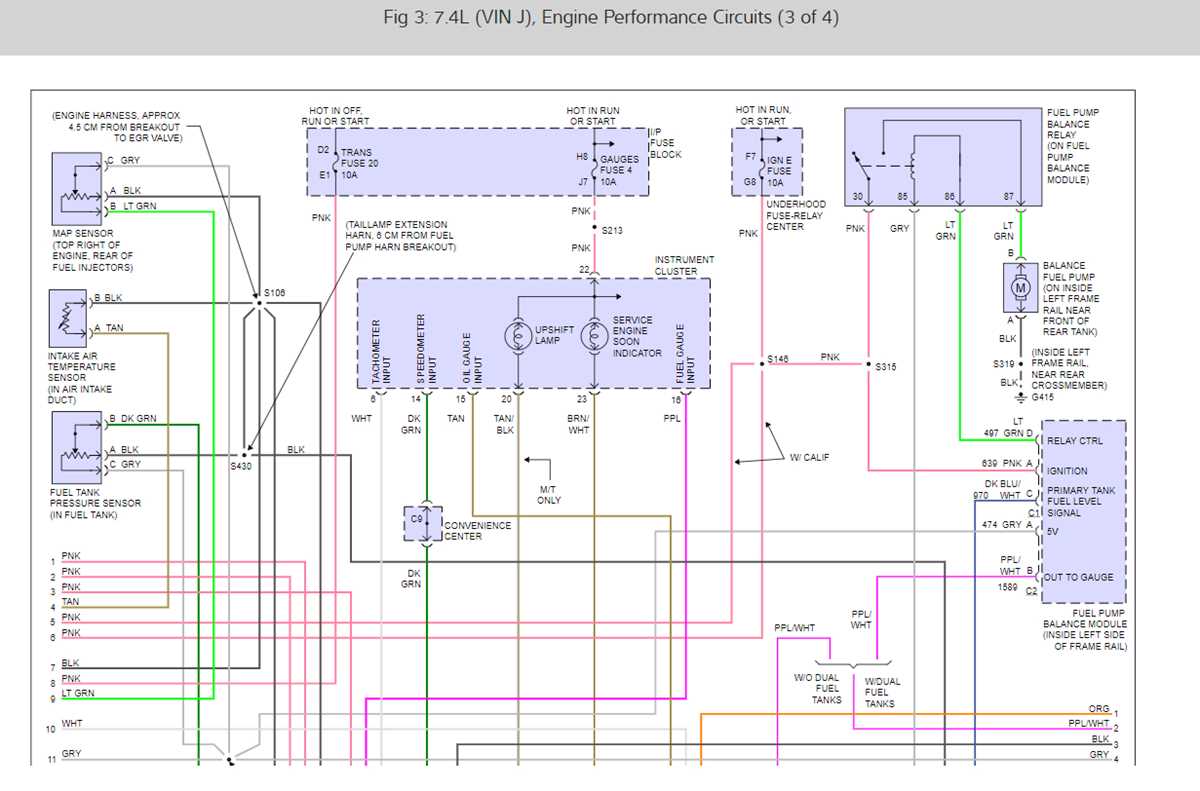
Check the battery feed and ground points before diagnosing electrical faults in a 1998 GM full size pickup. The electrical layout routes constant battery voltage from the under-hood fuse block to multiple systems including ignition, lighting, engine management, and dashboard instruments. A weak ground at the frame or engine block often causes unstable sensor signals and intermittent starting problems.
Locate the fuse and relay center on the driver side of the engine compartment. This panel distributes power through labeled fuses and relays for the fuel pump, headlamps, starter control, and engine control module. Each conductor in the harness uses a distinct insulation shade and stripe marking that allows quick identification when tracing circuits inside the truck.
The ignition switch assembly behind the steering column sends voltage to several systems once the key moves to the RUN or START position. For example, the starter relay receives a trigger signal through a purple lead, while the engine control module and dashboard cluster receive switched voltage through pink or pink-black conductors.
Lighting circuits follow a separate path through the headlamp switch and multifunction lever. Power flows from the fuse panel to the headlamp control, then through the dimmer section that selects low or high beams. Rear lamps, brake lights, and turn signals route through the body harness that runs along the frame rail toward the tail section.
Use a factory electrical layout chart when tracing any conductor. Matching connector pin numbers, insulation shades, and component locations allows accurate identification of circuits connected to the engine control module, sensors, lighting assemblies, and interior instruments.
98 Chevy Silverado wiring diagram with engine lights ignition and dash circuits
Trace the ignition power feed from the under-hood fuse block before testing any engine or instrument faults. In the 1998 GM full-size pickup electrical layout, battery voltage travels through a large red lead to the ignition switch mounted on the steering column. When the key moves to RUN or START, the switch distributes current through pink or pink-black conductors that power the engine control module, fuel injectors, and dashboard gauges.
Check the instrument cluster and warning lamp circuits through the interior fuse panel. The engine control module sends status signals to indicators such as check engine, oil pressure, and charging system lights. These signals travel through dedicated harness connectors behind the dash panel. A poor ground connection at the dashboard support bracket or loose connector pins often causes dim gauges, inactive warning lamps, or unstable readings on the tachometer and coolant temperature display.
98 Chevy Silverado wiring diagram for ignition switch starter relay and battery connections
Inspect the battery terminals and main power cable before testing the starting circuit. The 12-volt source feeds a thick red lead running directly to the under-hood fuse and relay center. From there, current travels through a protected fusible link that supplies the ignition switch located on the steering column assembly.
Measure voltage at the ignition switch connector while turning the key to the START position. The switch should deliver power through a yellow conductor that routes the start signal toward the starter relay mounted in the engine compartment. A reading close to battery voltage confirms that the switch contacts and column linkage are operating correctly.
The relay acts as an electrical gate that allows a small control signal to activate the high-current path feeding the starter solenoid. When the yellow control lead becomes energized, the relay coil closes the internal contacts. This sends battery power through a heavier purple cable directed toward the starter motor assembly mounted near the transmission bellhousing.
Ignition switch circuit routing and connector layout
The steering column harness carries multiple circuits grouped in a rectangular plug beneath the dash. Inside this connector, red wires deliver constant battery power while pink lines feed ignition-powered components once the key reaches the RUN position. The start signal exits the same connector on a yellow line that continues through the firewall bulkhead connector toward the relay block.
Inspect the bulkhead connector pins for corrosion or looseness. Moisture intrusion around the firewall gasket sometimes leads to high resistance, which causes intermittent cranking failure. Cleaning the terminals and applying dielectric grease restores a stable electrical path between the cabin harness and the engine compartment loom.
Starter relay and battery cable routing
The relay usually sits inside the power distribution center near the battery. Identify the two heavy terminals: one connected directly to the battery positive cable and the second routed to the starter solenoid. A multimeter should show constant voltage at the supply terminal regardless of key position.
Check the purple lead running from the relay output to the starter solenoid. This conductor carries the full engagement signal. Damage to insulation or loose eyelet connections at the starter can prevent the solenoid plunger from activating, leaving the engine unable to crank.
Confirm the ground return path as well. The starter housing grounds through the engine block, which connects to the battery negative terminal via a thick black cable attached near the alternator bracket. A corroded ground strap increases resistance and reduces current flow, producing slow or silent cranking despite a fully charged battery.