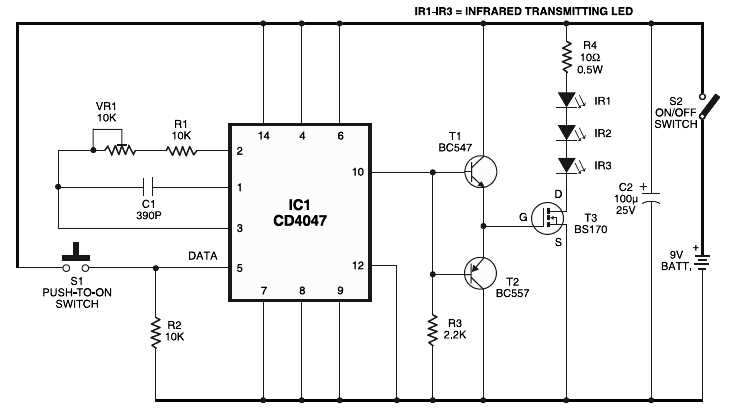
Use high-sensitivity photodiodes paired with 940nm infrared LEDs to achieve stable signal transmission over distances exceeding 30 meters indoors. Ensure the emitter is powered with a regulated 5V supply to maintain consistent brightness and avoid signal degradation.
Align the optical components precisely along the same axis, as even minor angular deviations can reduce reception accuracy. Incorporate collimating lenses on the emitter to focus the beam and narrow the spread, minimizing interference from ambient light sources.
Implement series resistors and decoupling capacitors on the power lines to prevent voltage spikes that may damage the LEDs or the photodiode amplifier. Selecting resistor values between 100Ω and 330Ω typically balances current draw with light intensity.
Shield the photodiode with a small tube or enclosure to block stray infrared from sunlight or nearby electronics. This improves signal-to-noise ratio and ensures more reliable detection across the intended distance.
Long range infrared transmitter and receiver setup guide
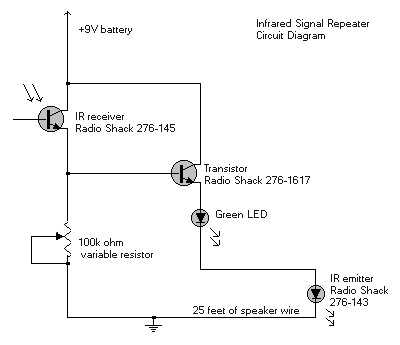
Use 940nm IR LEDs with narrow beam lenses to maintain a focused signal over extended distances. Connect each emitter to a regulated 5V supply with a 150Ω series resistor to stabilize output intensity and prevent thermal overload.
Position the photodiode sensor directly opposite the emitter and align them on the same horizontal axis. Small angular offsets greater than 5 degrees can significantly reduce detection reliability, especially in environments with ambient sunlight or fluorescent lighting.
Integrate a decoupling capacitor between power and ground near each sensor to filter voltage fluctuations. This minimizes false triggers caused by sudden current spikes or nearby electronic noise.
Shield the sensor with a narrow tube or opaque enclosure to block stray infrared interference. This simple addition improves the signal-to-noise ratio, allowing reliable operation over distances exceeding 30 meters indoors and up to 15 meters in bright outdoor conditions.
Selecting components for extended infrared signal transmission
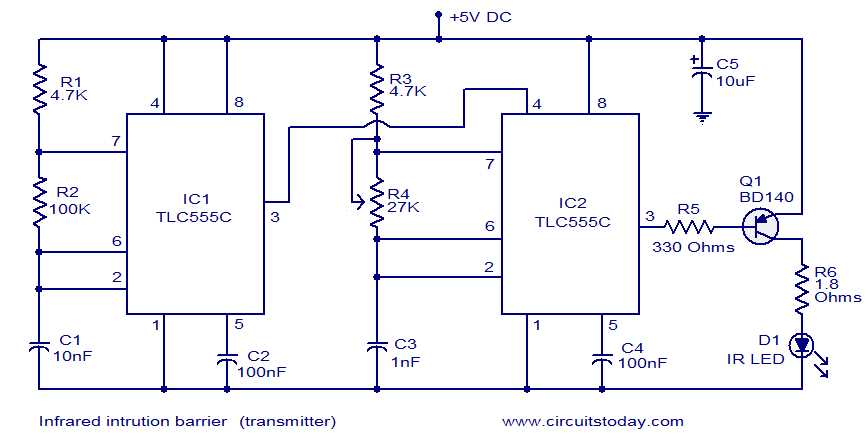
Choose LEDs with peak emission around 940nm to maximize sensor sensitivity. Opt for high-intensity packages rated at 100mW or above, paired with collimating lenses to focus the beam over long distances.
For detectors, prefer photodiodes with fast response times under 1µs and low dark current. Integrating an IR filter over the sensor improves detection in environments with strong ambient light.
Power regulation is critical for stable output. Use the following components for optimal performance:
- Low-dropout 5V regulator for each LED array
- 150–220Ω series resistors to limit current
- 100nF decoupling capacitor near each sensor
This ensures uniform intensity and reduces fluctuations caused by supply noise.
PCB layout should minimize interference. Keep emitter and detector traces separate, route sensor ground close to the power return, and avoid running high-current lines parallel to sensitive detection lines.
Additional improvements include using heat sinks for high-power LEDs, optional pulse modulation at 38kHz for noise immunity, and mounting enclosures with narrow apertures to reduce stray IR signals affecting the sensor.