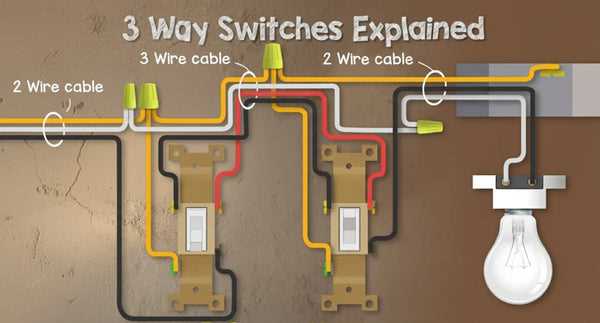
Turn off the breaker at the distribution panel before connecting any conductors in a residential light power path. Most dwellings use 120 V at 60 Hz or 220–240 V at 50 Hz, and safe installation requires correct placement of live and neutral conductors.
A typical room illumination setup contains three primary elements: a power source from the distribution board, a wall switch, and a lamp holder. The live conductor runs from the breaker to the switch first, then continues from the switch to the lamp holder. The neutral conductor travels directly from the distribution panel to the lamp holder.
This arrangement ensures that the switch interrupts the live conductor rather than the neutral return path. When the switch is open, voltage cannot reach the lamp holder contacts. When the switch closes, current flows through the bulb filament or electronic driver and produces light.
Residential installations commonly use 1.0–1.5 mm² copper conductors for illumination lines. Color identification helps prevent mistakes: brown or black for live, blue or white for neutral, and green yellow for protective earth. Correct conductor routing keeps the system stable and reduces risk of overheating or accidental contact with energized parts.
House Lighting Circuit Diagram With Switch Bulb and Live Neutral Wiring Layout
Connect the live conductor from the distribution board to the wall switch first, then route it from the switch output to the lamp holder. This arrangement ensures that the control device interrupts the energized line rather than the neutral return path.
In most residential electrical systems the supply delivers 120 V or 220–240 V alternating current. The energized conductor carries voltage from the breaker panel, while the neutral conductor returns current back to the panel after it passes through the lamp.
The neutral conductor normally runs directly from the distribution board to the lamp holder. It does not pass through the wall switch. This direct connection keeps the control device responsible only for interrupting the energized path.
When the switch remains open, the energized conductor stops at the switch terminal and the lamp receives no voltage. Once the switch closes, the path becomes complete and current flows through the bulb filament or electronic driver inside modern lamps.
Residential installations often use 1.0 mm² or 1.5 mm² copper conductors for room illumination lines. These conductor sizes safely handle typical loads such as ceiling fixtures, wall sconces, and LED lamps.
Color identification reduces installation errors. Many regions use brown or black for the energized conductor, blue or white for neutral, and green yellow for protective earth. The grounding conductor connects to metal lamp housings and electrical boxes.
The protective earth conductor provides a low resistance path if a fault causes the energized conductor to contact a metal fixture body. Fault current travels through this path and trips the breaker or fuse, disconnecting power.
Secure each conductor under terminal screws with about 8–10 mm of stripped insulation. Copper strands should be twisted tightly and fully clamped inside the terminal to prevent loose contact and heat buildup.
Single Switch House Lighting Circuit Wiring With Live and Neutral Connections
Route the live conductor from the distribution board to the wall switch before connecting it to the lamp holder. This placement ensures that the control device interrupts the energized line and removes voltage from the lamp when switched off.
Main Conductors in a Single Switch Layout
A basic room illumination installation uses three conductors connected between the breaker panel, switch, and lamp holder.
- Live conductor carries voltage from the breaker panel
- Neutral conductor returns current back to the panel
- Protective earth connects metal fixtures to ground
The neutral conductor runs directly from the distribution board to the lamp holder terminal. It does not pass through the wall switch, which prevents unnecessary connections and keeps the switching point focused on the energized conductor.
Connection Sequence
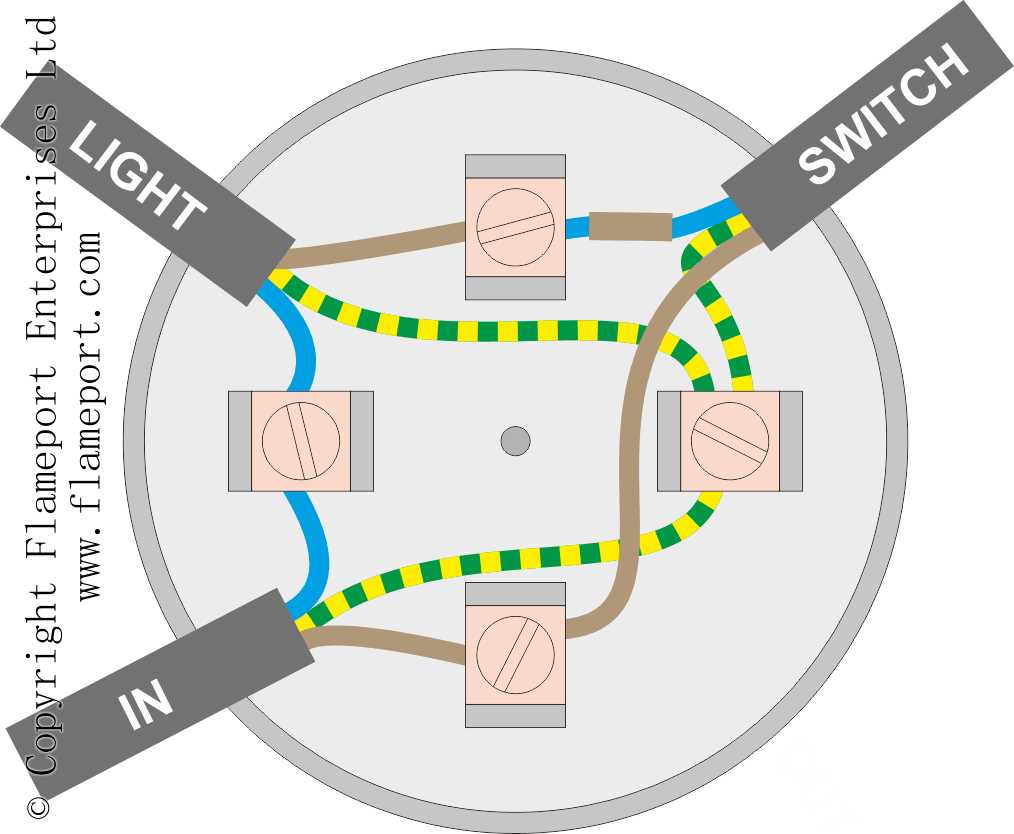
- Connect the live conductor from the breaker panel to the switch input terminal
- Run another conductor from the switch output terminal to the lamp holder live contact
- Connect the neutral conductor from the panel directly to the lamp holder neutral contact
- Attach the protective earth conductor to the metal fixture body if present
Residential installations commonly use 1.0 mm² or 1.5 mm² copper cable for illumination lines. Correct tightening of terminal screws and proper insulation stripping prevent overheating and intermittent electrical contact.