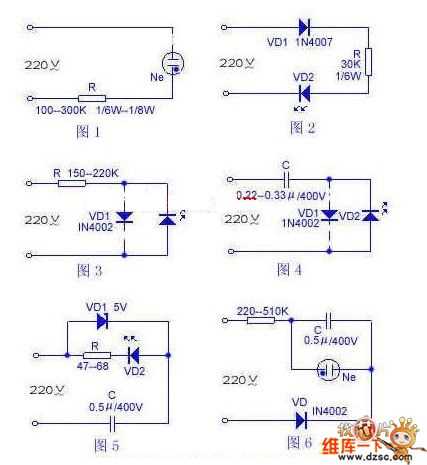
Use a bridge rectifier rated for at least 600–1000 V and a filter capacitor between 4.7 µF and 22 µF at 400 V when building or analyzing a mains-powered driver for diode-based lighting modules. This configuration converts household alternating current into pulsating direct current that can power a chain of light-emitting diodes safely.
Household supply in many regions delivers 220–240 volt AC at 50 Hz. Inside the driver layout, four rectifier diodes form a full bridge that converts the alternating waveform into DC pulses. A high-voltage capacitor smooths the ripple, while a current-limiting resistor or capacitive dropper controls the current passing through the diode array. Typical operating current ranges from 20 mA to 120 mA depending on the number of emitters and total forward voltage.
A common configuration connects 30–80 light-emitting diodes in series, producing a combined forward voltage between 90 V and 250 V. Additional components often include a fusible resistor for surge protection, a small discharge resistor across the smoothing capacitor, and sometimes a MOV surge suppressor placed across the AC input lines.
Understanding the layout used in mains-driven diode lighting helps during troubleshooting. Burned resistors, swollen capacitors rated below 400 V, or failed bridge rectifiers frequently cause flicker, intermittent glow, or complete shutdown. Careful inspection of component ratings and current path makes repair and modification much easier.
230V LED Lamp Circuit Diagram With Driver Components and Working Principle Explained
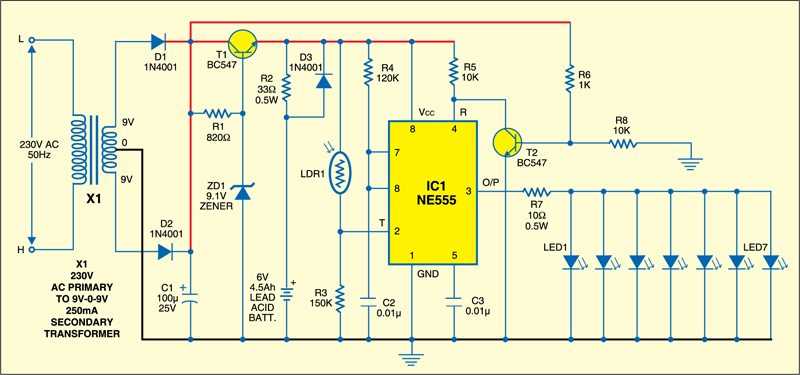
Use a full bridge rectifier rated 600–1000 V and a 400 V electrolytic capacitor as the first stage in a mains-powered diode lighting driver. This stage converts household alternating supply around 220–240 volts into pulsating direct current that feeds the semiconductor emitter chain.
The driver layout normally contains several key elements connected in sequence. Each part controls voltage, current, and surge behavior inside the power path.
- AC input terminals connected to the household supply
- Four-diode bridge rectifier module
- High-voltage smoothing capacitor (4.7–22 µF, 400 V)
- Capacitive dropper or resistor that limits current
- Series string of light-emitting semiconductor devices
- Protection parts such as MOV suppressor or fusible resistor
During operation, alternating current enters the rectifier bridge. The four diodes convert the sinusoidal waveform into pulsating DC. A filter capacitor reduces ripple amplitude. After smoothing, current flows through a limiting element that stabilizes the flow through the semiconductor chain. Typical forward voltage per emitter ranges from 2.8 V to 3.4 V depending on chip type.
Emitter arrays inside household bulbs often contain 30–80 diodes connected in series. With an average forward drop near 3 V, the full string voltage may reach 90–240 V DC. Current levels usually remain between 20 mA and 100 mA. Higher values produce overheating and early failure.
Protection parts improve durability. Typical additions include:
- Fusible resistor placed at the AC input to limit surge current
- Metal oxide varistor across the mains line for transient suppression
- Bleeder resistor across the filter capacitor (470 kΩ – 1 MΩ)
Fault diagnosis follows the power path from input to emitter chain. Check for open rectifier diodes, dried electrolytic capacitors rated below 400 V, or burned current-limiting elements. These faults commonly cause flicker, dim output, or total shutdown in mains-powered diode lighting devices.
How 230V AC Is Converted to DC in a Simple LED Lamp Driver Circuit
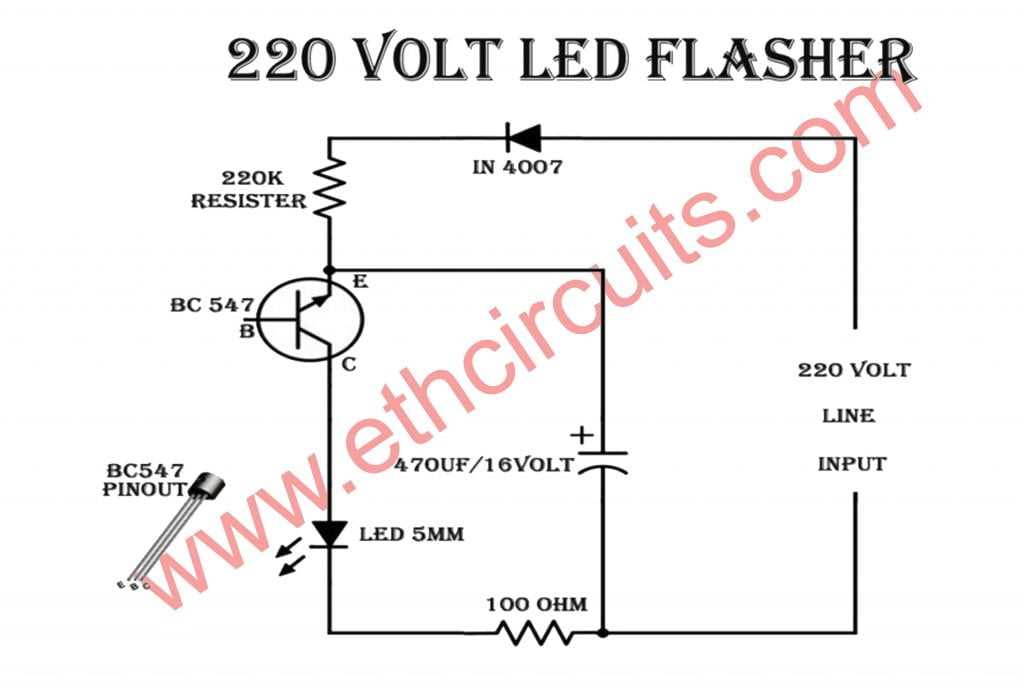
Install a bridge rectifier rated at least 600–1000 V directly after the mains input to convert household alternating supply around 220–240 volts into pulsating direct current. The rectifier contains four diodes arranged so that both halves of the AC waveform pass through the load with the same polarity. This configuration produces a full-wave rectified output where the frequency doubles from 50 Hz to 100 Hz.
Place a high-voltage electrolytic capacitor between 4.7 µF and 22 µF rated at 400 V after the rectifier stage. The capacitor stores charge during voltage peaks and releases it between peaks, reducing ripple in the rectified waveform. Without this smoothing stage, the semiconductor light emitters would flicker at mains frequency. After filtering, the DC level typically reaches 300–325 volts derived from the peak of the AC sine wave.
Control current using either a capacitive dropper (commonly 330 nF–1 µF rated for AC line use) or a series resistor rated for several watts. The limiter restricts current flowing into the emitter chain whose combined forward drop may range from 90 V to 250 V. With correct component values, operating current usually remains within 20–80 mA, preventing overheating while maintaining stable illumination.