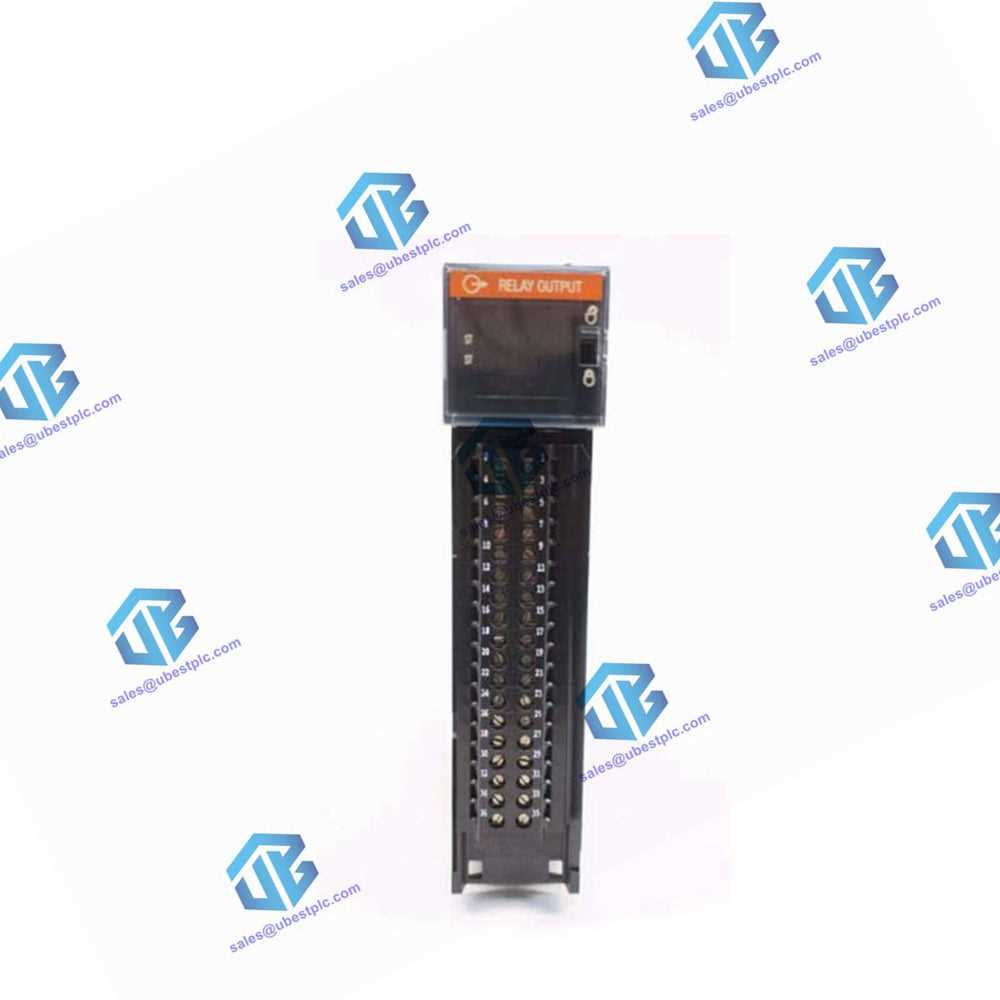
Connect each field load to the relay contact terminals on the ControlLogix output card while routing the supply line through the common terminals of the module. Each channel acts as an isolated relay contact rated for switching loads up to 5 A per point, allowing control of lamps, contactors, and small motors from a PLC rack.
Terminal blocks on this sixteen-channel output card follow a numbered layout that groups outputs into pairs sharing common return points. The contact type is normally open relay switching, which means the load receives power only after the PLC energizes the corresponding channel. External supply voltage may range from 5 V to 125 V DC or 10 V to 240 V AC depending on the connected device.
Route the incoming power line to the module common terminal first, then run a conductor from each output contact to the controlled device. The return path of the load connects directly back to the external power source. This configuration prevents current from flowing through the PLC backplane and keeps switching activity limited to the relay contacts.
Install protective components near inductive loads such as solenoid valves or relay coils. A flyback diode across DC coils or an RC snubber network across AC loads reduces voltage spikes generated when contacts open. These spikes may exceed several hundred volts and can shorten relay life if no suppression device is installed.
1756 OW16I Wiring Diagram with Terminal Layout and Relay Output Connections
Connect the external power line to the common terminal of the ControlLogix relay output card, then route each switched line from the output contacts to the field device. Each channel contains a mechanical relay that isolates the PLC electronics from the load supply. Typical loads include contactor coils, signal lamps, alarms, and small solenoid valves.
The terminal block uses numbered connection points arranged in channel pairs. Each relay contact switches an external voltage while the PLC backplane only controls the coil inside the module. Electrical ratings normally allow switching up to 5 A per output with voltage ranges up to 240 V AC or 125 V DC.
Typical connection path for a single load:
- Bring the supply line to the common terminal group on the module
- Run a conductor from the selected relay contact to the device
- Connect the device return line back to the power supply
- Activate the channel through the PLC program
Terminal numbering usually follows this structure:
- Channel 0–3 first terminal group
- Channel 4–7 second group
- Channel 8–11 third group
- Channel 12–15 fourth group
Install suppression components across inductive loads connected to relay contacts. Recommended protection devices include:
- Flyback diode across DC relay or solenoid coils
- RC snubber across AC contactor coils
- Transient voltage suppressor for higher-energy loads
Mount field conductors neatly inside the control cabinet and keep power lines separate from low-level signal cables. Proper routing reduces electrical noise and prevents accidental contact between high-voltage lines and PLC communication wiring.
Terminal Numbering and Channel Group Layout on the 1756 OW16I Output Module
Use the terminal block numbering printed on the removable connector to identify each relay output channel. The sixteen outputs are arranged in groups that share common contact points. This layout simplifies connection of multiple loads powered by the same supply line.
Channel Group Structure
The output card divides the sixteen relay channels into four groups. Each group contains four switching contacts tied to a shared common terminal. This grouping allows one supply line to feed several loads without installing external jumpers.
Typical grouping appears as follows: channels 0–3 first block, channels 4–7 second block, channels 8–11 third block, and channels 12–15 fourth block. Each block includes numbered terminals for individual relay contacts plus a common connection point. Field conductors from loads attach directly to these contact terminals.
Terminal Identification on the Connector
Numbers printed on the terminal strip correspond to output channels recognized by the PLC program. When the controller activates a channel, the associated relay closes and connects the common line to the load terminal. Accurate conductor placement on the numbered connector prevents unintended switching of the wrong device and simplifies troubleshooting during maintenance.