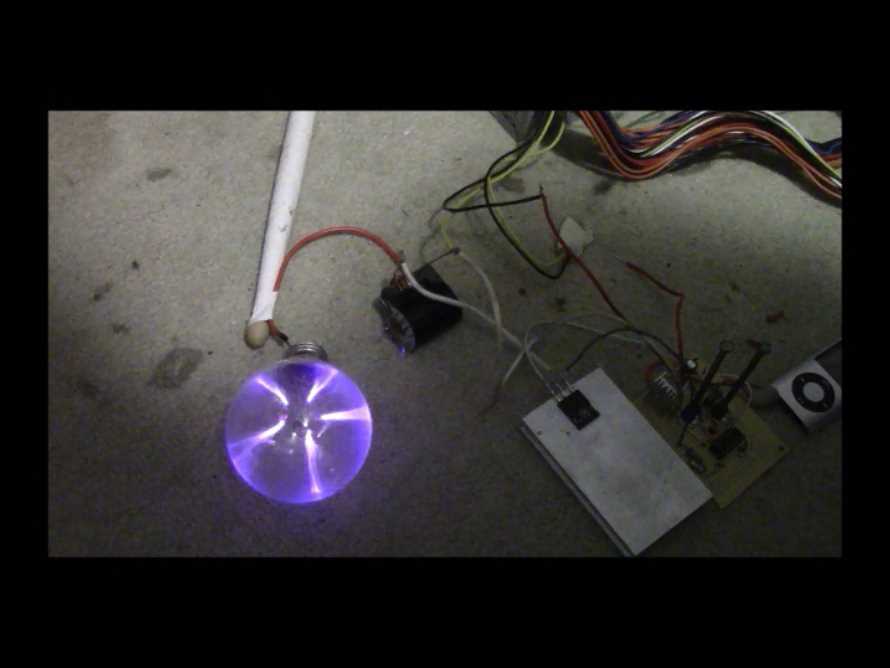
Use a high-frequency oscillator paired with a step-up transformer that raises supply voltage from 9–12 V to several kilovolts. A simple driver built around a bipolar transistor such as 2N3055 or TIP31C can generate rapid switching pulses that feed the transformer primary coil. The secondary winding then produces strong electric fields inside the glass sphere, creating visible discharge filaments.
Keep the driver stage compact and route high-voltage leads through thick insulation. The oscillator usually runs between 20 kHz and 40 kHz, where the transformer core performs well without overheating. Typical builds use a ferrite flyback unit taken from an old CRT display or a custom-wound coil with a primary winding of 5–10 turns and a secondary winding containing several hundred turns of thin copper wire.
Position the central electrode inside the glass sphere so the discharge originates from a single point. The high-voltage output connects directly to this electrode, while the outer surface remains isolated. Current in these visual discharge devices stays very low, usually under a few milliamps, yet voltage levels may exceed 3 kV–8 kV, which requires careful insulation and spacing.
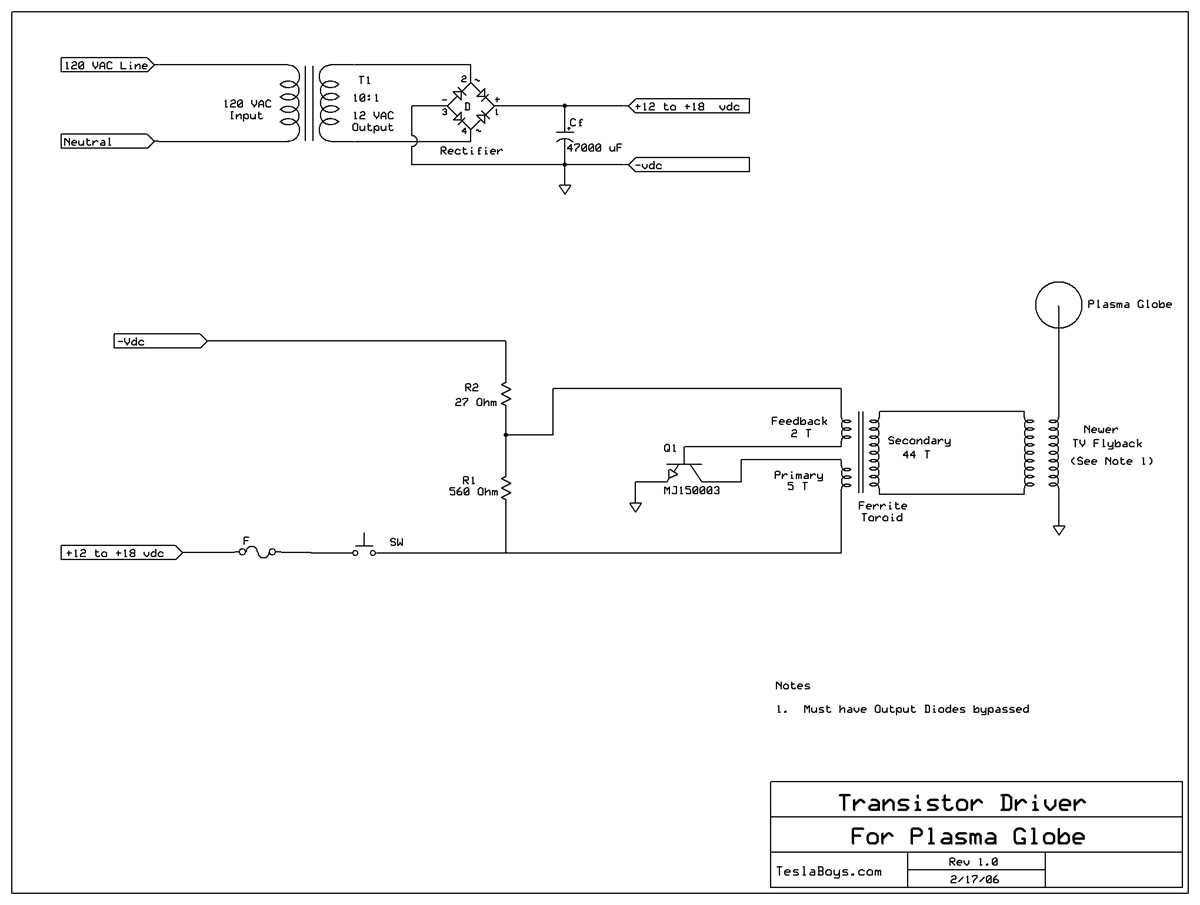
Place a resistor between the transistor base and the oscillator feedback winding to stabilize switching behavior. Many hobby builds use values around 220 Ω to 1 kΩ. A small heat sink on the transistor prevents thermal buildup during long operation, while a fuse or current-limited power adapter protects the driver stage from overload.
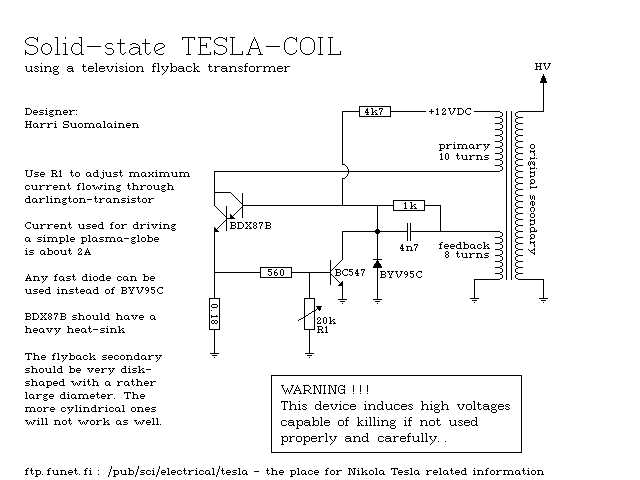
Plasma Globe Circuit Diagram with Transformer Driver and High Voltage Oscillator Layout
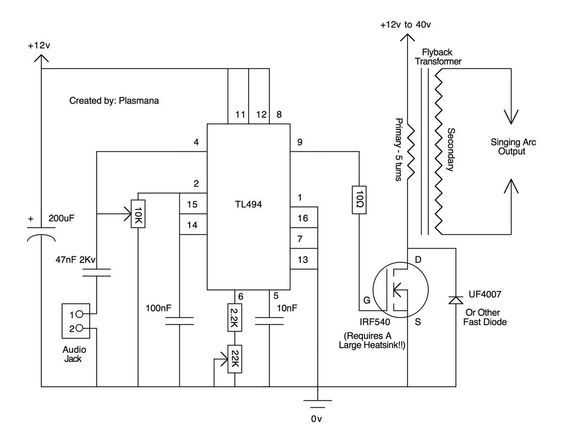
Use a flyback transformer driven by a transistor oscillator operating around 20–40 kHz. A low-voltage supply between 9 V and 15 V feeds the switching stage, which rapidly energizes the primary coil. Each switching cycle induces several kilovolts on the secondary winding, creating electrical discharges inside the glass sphere.
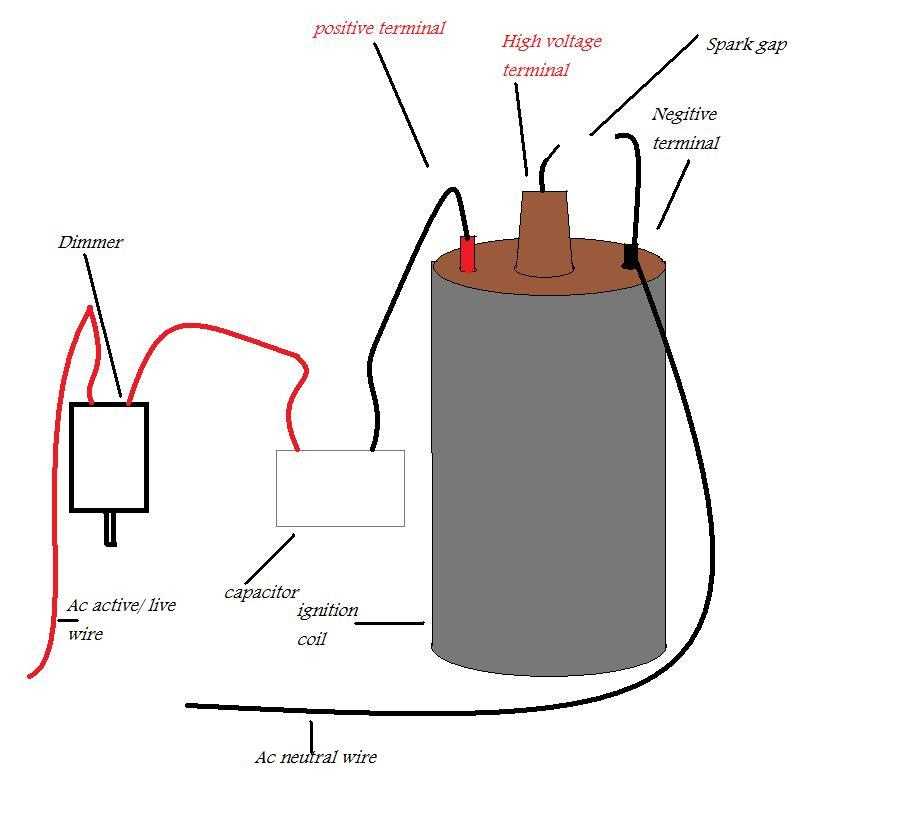
The driver stage normally includes a power transistor, a feedback coil, and a base resistor. A common configuration uses a self-oscillating topology where the feedback winding controls transistor switching automatically. Typical component arrangement:
- Power transistor such as 2N3055, TIP31C, or MJE13007
- Primary coil with 5–10 turns of insulated copper wire
- Feedback coil with 2–4 turns
- Base resistor between 220 Ω and 1 kΩ
- DC supply adapter rated 2–5 A
The high-voltage output connects to a metal electrode placed in the center of the glass sphere. Electrical discharge lines form between this electrode and the inner surface of the glass filled with low-pressure noble gas. Voltage levels from the transformer secondary often reach 3 kV to 10 kV, while current remains extremely small.
Assembly sequence normally follows this order:
- Connect the primary coil to the collector of the transistor
- Attach the feedback winding to the transistor base through a resistor
- Link the emitter directly to ground
- Connect the power supply positive line to the transformer primary
- Route the secondary high-voltage lead to the central electrode
Install insulation tubing on the secondary lead and maintain several centimeters of spacing from other conductors. Mount the transistor on a heat sink because switching losses can raise device temperature above 70 °C during continuous operation. A fuse rated around 2–3 A protects the driver stage from accidental short circuits.
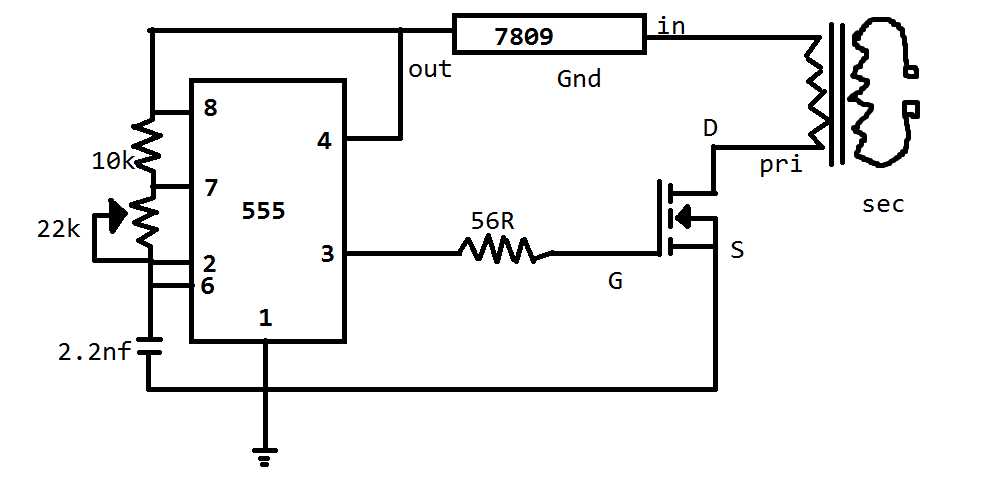
High Voltage Oscillator Layout Used in Plasma Globe Driver Circuits
Place the oscillator stage as close as possible to the step-up transformer primary winding. Short conductor paths reduce energy loss and stabilize switching behavior. A single-transistor self-oscillating driver built with devices such as 2N3055, MJE13007, or TIP31C works well with supply levels between 9 V and 15 V. The switching device repeatedly energizes the transformer coil, producing high-voltage pulses at the secondary side.
The oscillator frequency usually falls within 18 kHz to 45 kHz. This range allows ferrite cores from flyback transformers to operate without excessive heat. The base of the switching transistor receives feedback from a small auxiliary winding. When current rises in the primary coil, the feedback signal drives the base and forces the transistor to switch off, creating the oscillation cycle.
Typical component arrangement includes a base resistor between 220 Ω and 1 kΩ, which controls current entering the transistor base. A diode may be installed across the feedback winding to limit reverse voltage spikes. Builders often place a 0.1 µF to 0.47 µF capacitor near the supply input to smooth short voltage fluctuations during switching.
Mount the transistor on a heat sink rated for at least 20–30 W of thermal dissipation. Switching losses grow quickly once the oscillator runs continuously for several minutes. Heat buildup beyond 80 °C may damage the semiconductor junction and reduce device lifetime.
Keep the high-voltage secondary lead separated from the oscillator board by several centimeters. Electrical discharge inside the glass sphere operates at several kilovolts, and stray arcs may occur if insulation spacing is too small. Silicone tubing or thick PVC insulation around the output conductor helps prevent unwanted breakdown between components.