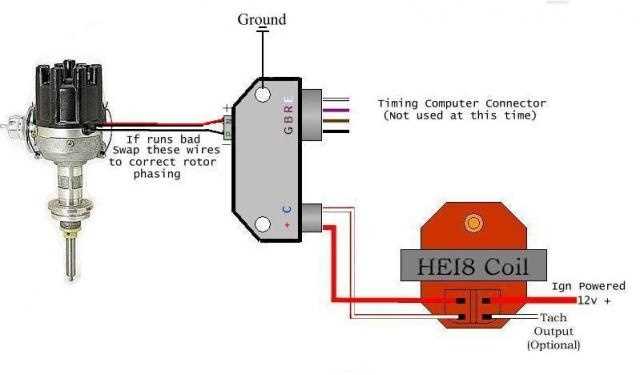
Connect the main coil lead directly to the positive terminal of the control module to prevent voltage drops and misfires. Verify that the green trigger wire aligns with the pickup coil for proper spark timing. Incorrect alignment can cause backfiring or starting failure.
Use color-coded terminals to distinguish between primary and secondary circuits. Red wires typically carry battery voltage, while black or brown wires serve as ground paths. Mixing these connections may damage the module or coil.
When replacing components, check the continuity of each conductor with a multimeter. Resistance above 1 ohm in primary leads indicates a weak connection, and any breaks in secondary cables can lead to weak or inconsistent sparks. Proper testing avoids repeated troubleshooting after installation.
Secure all connectors with insulated clamps and avoid routing near high-heat areas. Heat can degrade insulation and cause short circuits. Keeping leads separated from exhaust manifolds and headers extends the lifespan of the electrical assembly.
HEI Ignition Connections for Accurate Vehicle Installation
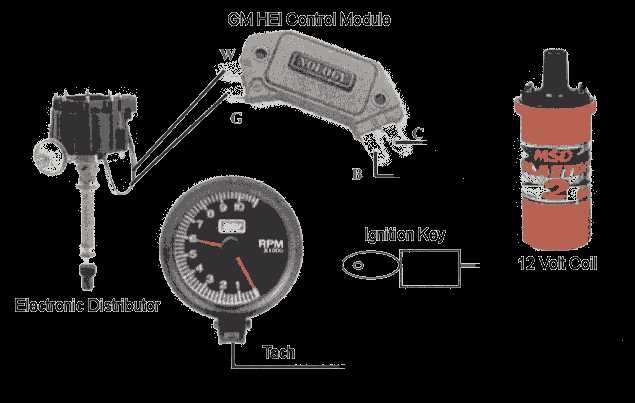
Attach the main coil lead directly to the module’s positive terminal to maintain consistent voltage delivery. Verify that the green trigger wire connects to the pickup coil correctly to ensure precise spark timing. Misalignment can cause stalling or misfires during startup.
Check each conductor for continuity before final installation. Primary circuits should show less than 1 ohm resistance, and secondary leads must be free of breaks to guarantee reliable spark strength. Securing connectors with insulated clamps and routing away from high-heat components prevents shorts and premature wear.
Identifying Connector Pins and Wire Colors
Start by labeling each terminal on the control module before making any connections. Use a permanent marker or color-coded tags to distinguish primary, trigger, and ground circuits. This prevents accidental cross-connections that can damage the system.
Match wire colors to their designated functions:
- Red: Constant battery voltage
- Black or brown: Ground path
- Green: Trigger signal from the pickup coil
- White or yellow: Secondary output to the coil
Check each pin for corrosion or bent contacts. Clean terminals with electrical contact cleaner and gently straighten any misaligned pins. Proper contact ensures consistent voltage flow and avoids intermittent misfires.
When installing the module in the vehicle, ensure connectors seat fully into their sockets. Listen for a click or feel for resistance to confirm engagement. Loose connections can produce weak sparks or prevent startup entirely.
Document the configuration with a quick sketch or photo. This visual reference helps during maintenance or replacement and minimizes errors when reconnecting multiple leads. Maintaining consistent labeling across all terminals streamlines troubleshooting.