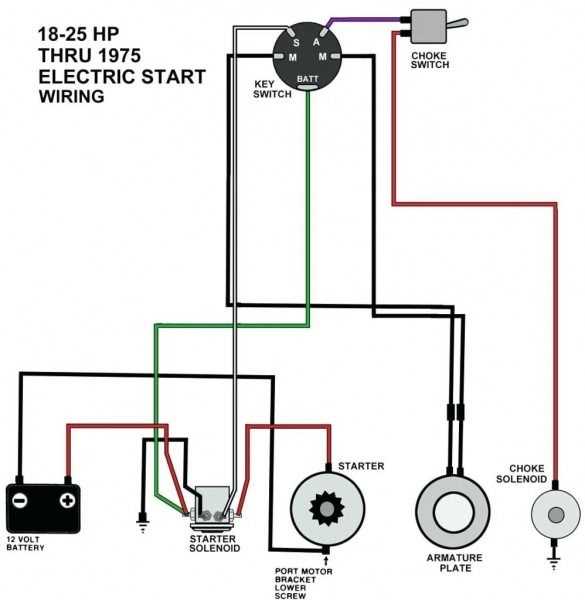
Match each terminal on the starter key control to the correct circuit before connecting any cable. Use a clear contact layout chart and confirm battery, starter solenoid, magneto ground, and accessory leads with a multimeter set to continuity mode. A quick check prevents crossed connections that can stop the engine from cranking or leave the magneto permanently grounded.
This type of key-operated control unit usually contains seven contact terminals arranged on the rear housing. Each terminal links to a specific circuit: battery feed, starter relay signal, charging line from the stator, lighting supply, safety interlock path, magneto kill line, and ground return. Terminal labels such as B, S, M, L, G, and A appear on many units, though placement may vary by manufacturer.
Before attaching conductors, inspect the harness colors used by the tractor manufacturer. A common layout includes red for battery power, black for ground, white for magneto shutdown, yellow for lighting, and blue or green for accessory circuits. Confirm every lead with a meter rather than relying only on color, since replacement harnesses often differ from factory schemes.
Correct terminal mapping also protects electrical components. Connecting the battery feed to the magneto shutdown circuit can block spark completely, while sending charging output to the starter relay line may damage the solenoid coil. Careful identification of each contact, along with labeled connectors and continuity testing, ensures the starting system, lighting circuit, and safety switches operate as intended.
7 Pin Lawn Mower Ignition Switch Wiring Diagram With Pin Layout and Connection Guide
Connect the battery feed terminal first and confirm voltage with a multimeter set to 20V DC. The power lead from the battery should deliver about 12.4–12.8 volts on a fully charged system. This contact normally sits at the center or slightly offset on the rear of the key control assembly. Mark this conductor before attaching other leads to avoid sending battery power into the magneto shutdown circuit.
The rear contact layout usually includes seven terminals that route current to separate circuits across the tractor electrical harness. Each contact changes state as the key rotates through OFF, RUN, and START positions. The following arrangement appears on many tractor starter key units.
- B – battery power input from the main fuse
- S – starter solenoid trigger lead
- M – magneto shutdown circuit
- L – lighting circuit output
- G – ground return
- A – accessory power line
- I – charging or auxiliary feed from stator
Route each conductor according to its function. The solenoid trigger line must reach the starter relay mounted near the engine block. The magneto shutdown lead connects to the coil grounding circuit. Lighting output often travels through the headlight harness at the front of the tractor hood. Ground usually ties directly to the chassis frame using a ring terminal.
Connection Order for the Rear Terminals
- Attach the battery power lead to terminal B.
- Connect the starter relay trigger wire to S.
- Link the magneto shutdown lead to M.
- Attach the lighting circuit wire to L.
- Secure the chassis ground wire to G.
- Connect accessory feed to A.
- Attach stator or charging circuit lead to I if used.
Verify contact behavior with a continuity test before reinstalling the dashboard panel. In the OFF position the magneto circuit should connect to ground, stopping spark generation. In RUN the shutdown line must open while accessory and lighting contacts receive battery voltage. During START the relay trigger terminal sends 12 volts to the starter solenoid for engine cranking.
Quick Verification With a Multimeter
- Battery contact to ground should show constant voltage.
- Starter relay terminal should show voltage only during key rotation to START.
- Magneto shutdown line should connect to ground only in OFF.
- Lighting output should carry voltage in RUN position.
Incorrect terminal placement often leads to no-start conditions, continuous starter operation, or lack of spark. Label each conductor with tape before removal and compare terminal markings stamped into the rear housing of the key assembly.
Pin Functions on a 7 Pin Lawn Mower Ignition Switch and What Each Terminal Connects To
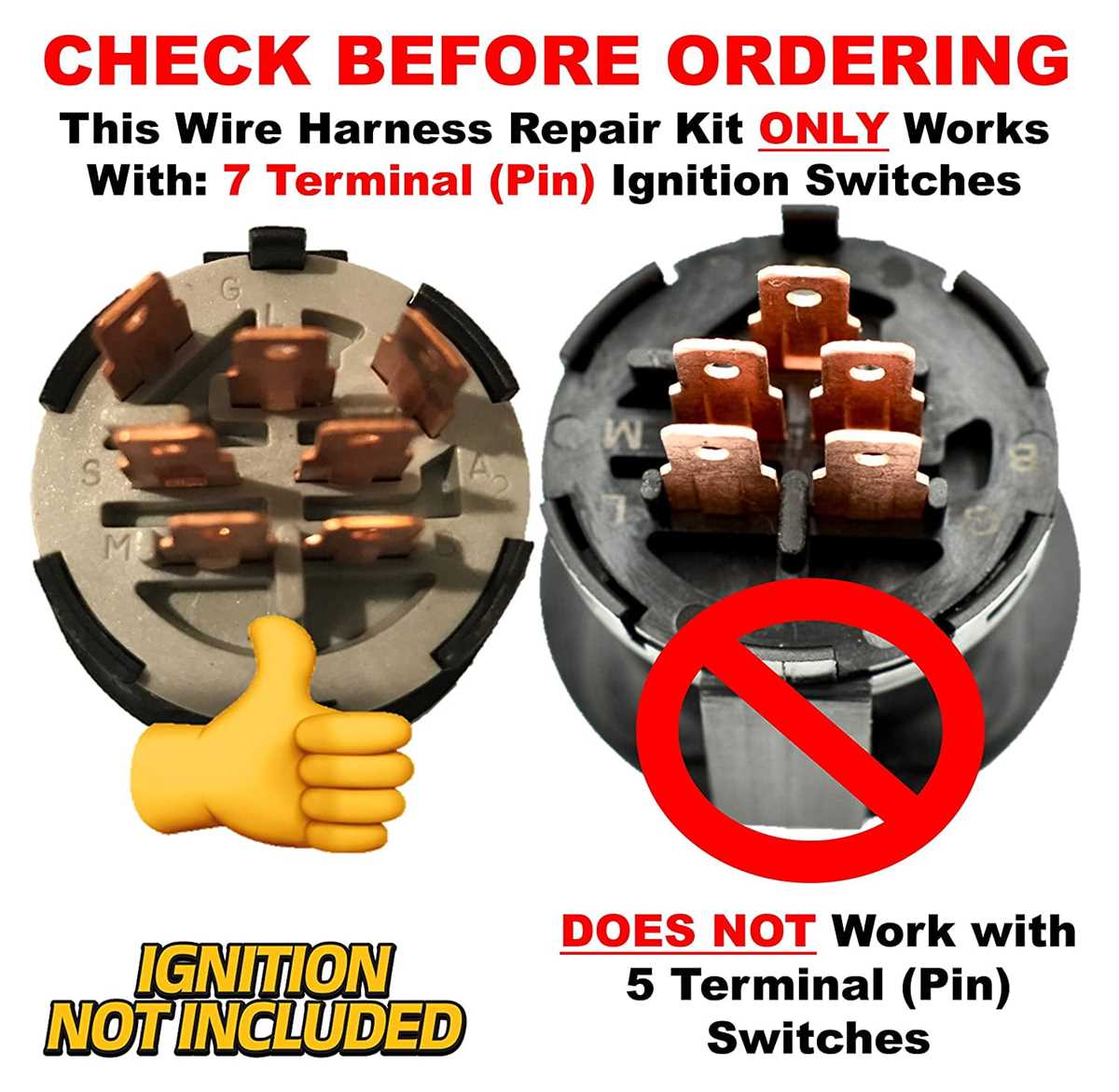
Identify each rear terminal before attaching any conductor and confirm labels stamped on the metal housing. Most key-operated starter controls include contacts marked B, S, M, L, G, A, and I. Each one routes electrical flow to a different circuit in the tractor harness.
The B contact carries constant battery power. A red conductor normally runs from the main fuse or battery positive lead to this point. Voltage should remain near 12 volts regardless of key position. Without this supply, none of the other circuits will receive power.
The S terminal sends a short electrical signal to the starter solenoid during engine cranking. When the key turns to the START position, this terminal supplies roughly the same battery voltage to the relay coil mounted near the starter motor. If this connection fails, the engine will not turn over.
The M terminal controls the magneto shutdown line. When the key is rotated to OFF, this contact connects the magneto lead directly to chassis ground, stopping spark generation. In the RUN position the contact opens, allowing the magneto to produce spark for engine operation.
Lighting and Accessory Circuits
The L terminal provides current to the headlight circuit. Power flows to this contact during the RUN position and travels through the front harness to the lighting assembly mounted on the hood or grille panel.
The A terminal distributes power to accessory components such as hour meters, electric PTO clutches, or dashboard indicators. Voltage appears only while the key remains in the RUN position. This prevents battery drain when the machine is parked.
The I terminal often links to the charging circuit or stator output on certain tractor models. This connection helps feed electrical power back into the system while the engine runs, supporting lights and accessories.
Ground Connection
The G terminal connects directly to the chassis frame and serves as the common ground point for several circuits. A black conductor with a ring connector usually attaches here. A loose or corroded ground connection may cause weak starter engagement, intermittent lights, or unstable accessory operation.