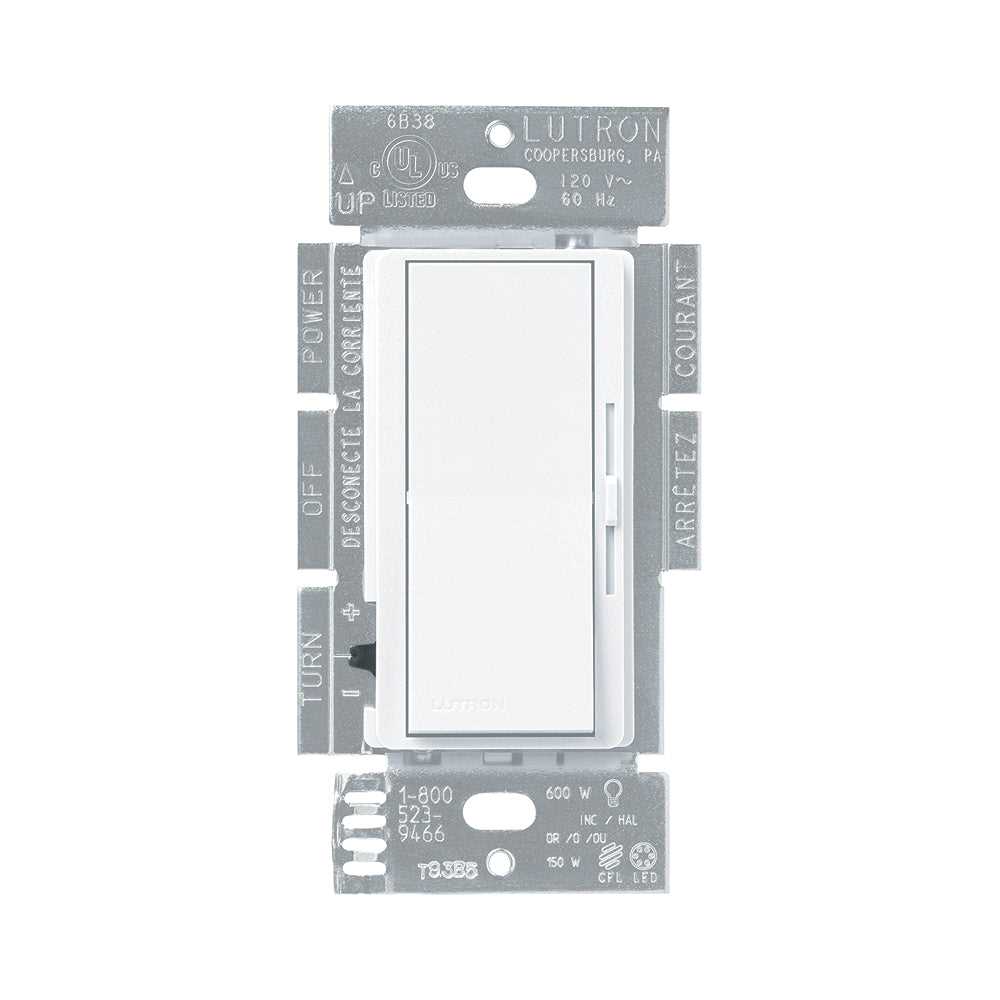
Ensure the power is fully disconnected before attaching any leads to the control unit. Identify the incoming voltage source and confirm its compatibility with the device rating, typically 120V AC in residential setups.
Use a voltage tester to verify that no live current is present at the terminals. Secure grounding conductors to the designated screw or bus bar to prevent electrical faults and maintain device stability under load.
Strip conductors carefully to expose 10–12 mm of copper without nicking the wire. Attach line and load wires firmly under terminal screws or push-in connectors, maintaining correct polarity to avoid flickering or uneven brightness.
Check for tight connections and ensure insulation barriers are intact. After installation, restore power gradually and operate the control knob to confirm smooth adjustment and verify that the fixture responds without noise or overheating.
Lutron Single Pole Dimmer Switch Installation Guide
Turn off the circuit breaker before handling any live conductors. Identify the incoming hot line and the load lead that goes to the fixture. Connect the neutral wire to the designated terminal if required, and attach the grounding conductor securely to the green screw or ground bus. Ensure that all connections are tight and that no exposed copper remains outside the terminals to prevent short circuits or arcing.
Mount the control device firmly into the electrical box using the provided screws. Adjust the faceplate to sit flush against the wall, avoiding gaps that could expose internal components. Restore power gradually and rotate the adjustment knob to verify smooth operation, checking that the light responds consistently without flicker or buzzing.
Identifying Line Load and Ground Connections
Use a voltage tester to confirm which conductor carries the live current before making any attachments. The line lead typically connects to the incoming power source, while the load wire directs electricity toward the fixture or appliance. Mark each conductor clearly to avoid accidental cross-connections that could trigger short circuits.
Inspect terminal markings on the device carefully. Most connectors are labeled for hot, load, and ground points. Attach the grounding conductor to the green screw or dedicated ground slot to maintain a safe path for stray current, reducing risk of shock or damage.
Ensure proper polarity by verifying that the hot and load connections match the intended flow of current. Incorrect attachment can cause flickering, overheating, or malfunction of the lighting component. Tighten all screws securely and use wire nuts where required to maintain mechanical and electrical stability.
Double-check continuity with a multimeter before closing the enclosure. Confirm that the ground connection completes a continuous path back to the panel and that the line and load terminals remain isolated until power is restored. This step prevents inadvertent shorts and ensures safe operation under load conditions.