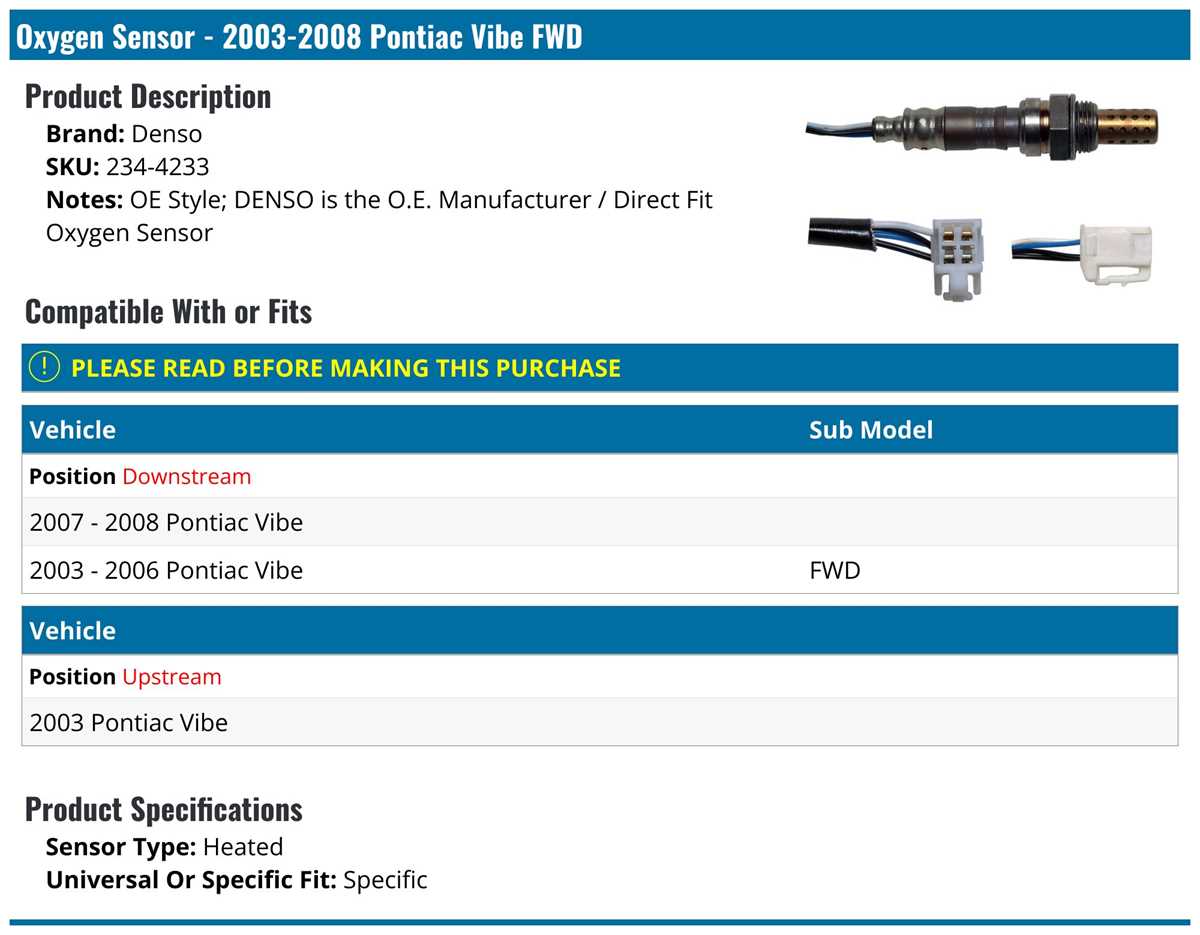
Connect the heater supply and ground first to ensure the component reaches operational temperature quickly and produces accurate readings. Verify polarity using a multimeter before final attachment.
Signal lines should be routed separately from high-current leads to reduce interference and prevent voltage spikes. Keep a minimum distance of 50 mm from alternator or ignition cables.
Inspect connectors for corrosion or loose terminals before installation. Even minor oxidation can create fluctuating readings that trigger false feedback in the engine control unit.
Secure the assembly with proper clamps and routing channels to avoid vibration-induced wire fatigue. Avoid tight bends near the base, as this can break the internal leads over time.
Check the reference voltage using a digital meter before completing the full connection. A steady 0.45 V baseline at room temperature indicates correct pre-installation conditions.
Use dielectric grease on terminals to prevent moisture ingress and maintain long-term signal stability, especially in regions with high humidity or frequent temperature changes.
After full installation, perform a live signal test to confirm the component responds to air-fuel ratio variations. Rapid fluctuations between 0.1 V and 0.9 V under throttle changes confirm proper function.
4 Lead O2 Assembly Connection and Pin Layout Guide
Identify the heater supply and ground terminals first to ensure rapid warm-up and stable output. Connect the positive lead to the designated power source and verify continuity with a multimeter before final insertion.
Signal leads must be kept separate from high-current paths to prevent interference. Maintain at least 50 mm separation from alternator cables or ignition lines for accurate readings.
Check connector integrity for corrosion, bent pins, or loose contacts. Even minor oxidation can create voltage fluctuations that trigger false feedback to the engine control module.
Follow the pin layout precisely when attaching to the harness: Pin 1 should carry heater positive, Pin 2 heater ground, Pin 3 sensor signal, and Pin 4 reference voltage. Crossed connections can cause inaccurate air-fuel monitoring.
Secure the assembly with clamps and proper routing channels to reduce vibration stress. Avoid sharp bends near the base to prevent internal lead breakage over time.
Use dielectric grease on all terminals to protect against moisture and oxidation, particularly in humid environments or areas exposed to temperature fluctuations.
After installation, perform a live output test under varying engine load. The sensor should fluctuate between low and high voltage as fuel mixture changes, confirming proper connection and functional pin alignment.
Identifying Each Lead and Its Role in the Sensor
Begin by labeling each terminal according to function: the first lead carries heater current, the second provides a ground return for the heating element, the third transmits the measurement signal to the control unit, and the fourth delivers a stable reference voltage. Accurate identification prevents cross-connections that can cause erroneous fuel mixture readings.
Use a multimeter to verify each lead’s role before installation. Heater paths should show low resistance, signal leads should display fluctuating voltage under exhaust variation, and the reference wire must maintain a steady potential. Correct mapping ensures reliable operation and long-term stability of the emission feedback system.