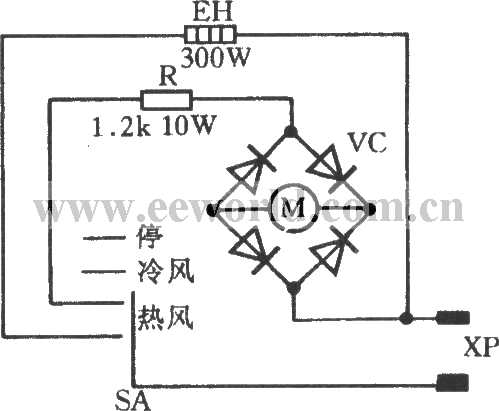
Connect a 220V AC supply to the main switch and ensure the fuse is rated at 5A to protect against overloads. Use heat-resistant wires for the heating element to prevent insulation damage.
Install the motor with proper polarity to achieve consistent airflow. Adding a capacitor of 0.47µF across the motor terminals reduces noise and smooths operation under varying loads.
Include thermal cut-off components near the heating coil to prevent overheating. Test LEDs and small indicators with a 3–5V supply before full assembly to verify correct polarity and operation.
Secure all components in a plastic or heatproof casing and maintain a minimum distance of 5mm between high-voltage wires and metal parts. This ensures safety and prevents accidental shorts during use.
Assembly and Testing of a Personal Styling Appliance
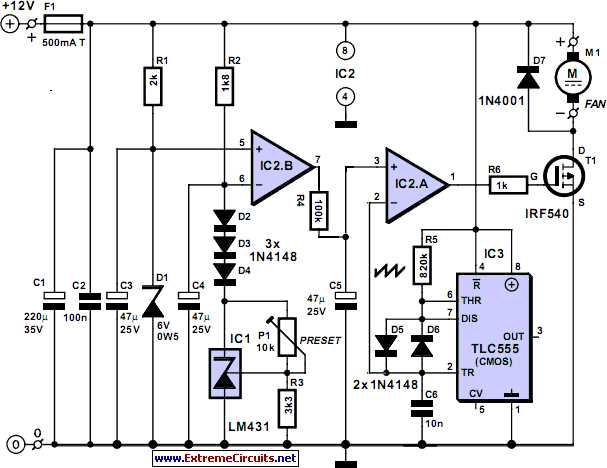
Connect the AC input to a single-pole switch and include a 5A fuse for overload protection. Use silicone-insulated wires for the heating coil and ensure the motor terminals are clearly marked for correct rotation. Install a 0.47µF capacitor across the motor to reduce hum and maintain smooth airflow.
Test components individually before final assembly:
- Check the heating element resistance with a multimeter to confirm 20–25Ω for a 220V supply.
- Verify LED indicators with a 3–5V source to confirm polarity and brightness.
- Ensure thermal cut-off switches operate around 120°C to prevent overheating.
- Mount all parts in a heat-resistant enclosure maintaining at least 5mm clearance between live wires and metal surfaces.
Choosing Components for Heating and Motor Sections
Select a nichrome wire heating element with resistance between 20–25Ω for 220V operation. Ensure the wire diameter supports continuous current up to 5A without excessive temperature rise. Mount the coil on ceramic insulators to prevent shorting and heat damage.
Use a universal motor rated at 120W to 150W for consistent airflow. Pair the motor with a small capacitor of 0.47µF to reduce electrical noise and improve rotational stability under load variations.
Choose thermal cut-off switches rated for 120–130°C near the heating coil. This prevents overheating during prolonged operation and provides an automatic safety shutdown if the main switch fails.
- LED indicators: 3–5V, 20mA for visual feedback.
- Fuses: 5A slow-blow for AC input protection.
- Switches: SPST push button or toggle rated for 220V, 5A.
- Wiring: Silicone-insulated 1mm² to 1.5mm² for high-temperature zones.
Test each component individually before assembly. Measure the heating element resistance, verify motor rotation direction, and ensure thermal switches trigger correctly under controlled heat.
Secure all parts in a heat-resistant casing and maintain at least 5mm clearance between live wires and metallic surfaces. Position the motor to maximize airflow over the heating coil and avoid hotspots that could trigger false shutdowns.