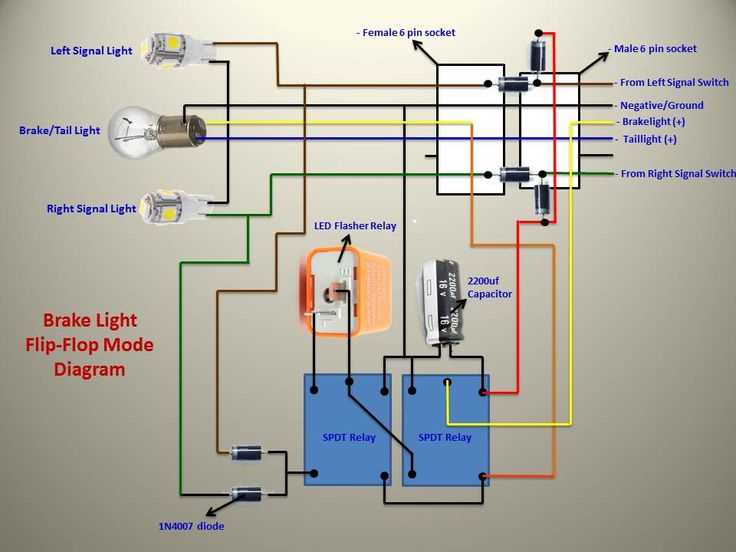
Ensure that the power feed is correctly traced to the rear assembly before attempting any connections. Verify voltage at each terminal using a multimeter to avoid short circuits or blown fuses.
Identify the ground points on the vehicle chassis. Secure each connector tightly to metal surfaces free of paint or corrosion to maintain stable conductivity for brake and indicator functions.
Follow the color-coded leads on the harness to match corresponding sockets. Cross-check the turn and brake signals individually by activating controls and observing the reaction at the rear assembly before finalizing mounting.
Use proper insulation and heat shrink tubing on all exposed splices. This prevents accidental shorts and reduces the risk of corrosion over time, ensuring consistent illumination for nighttime and signaling operations.
Tail Light Circuit Connection and Troubleshooting
Check the main power supply to the rear signal cluster first. Verify continuity along each conductor and inspect connectors for corrosion or loose fittings that could cause intermittent illumination or complete failure.
If indicators or brake lamps fail to respond, test each bulb individually and examine the control switch and fuse integrity. Tracing voltage drops with a multimeter helps identify breaks or resistance points within the harness that require repair or replacement.
Identifying Power and Ground Lines for Rear Lights
Locate the main feed supplying current to the rear signal assemblies. Use a multimeter to confirm a stable voltage between the positive conductor and the chassis ground. Pay attention to insulation color codes to avoid confusion with adjacent circuits.
Trace each ground path from the rear fixtures to the vehicle body. Secure connections to clean, unpainted metal surfaces to prevent voltage drops. Tighten mounting points and check for rust or debris that could impede proper contact.
Map the distribution of auxiliary feeds such as brake and turn indicators.
- Label each line based on function
- Verify continuity to the control switches
- Inspect connectors for bent or corroded pins
Test each circuit individually by activating the respective switch and measuring voltage at the socket. Record any fluctuation in readings that might suggest resistance in the path or partial disconnection.
Use a fused test light to pinpoint intermittent current losses. Move the harness along its length to identify any damaged sections hidden behind panels or trim, which may require splicing or replacement.
Once all power and ground paths are verified, reassemble fixtures securely and confirm simultaneous operation of brake, running, and signal functions without flickering or delay.