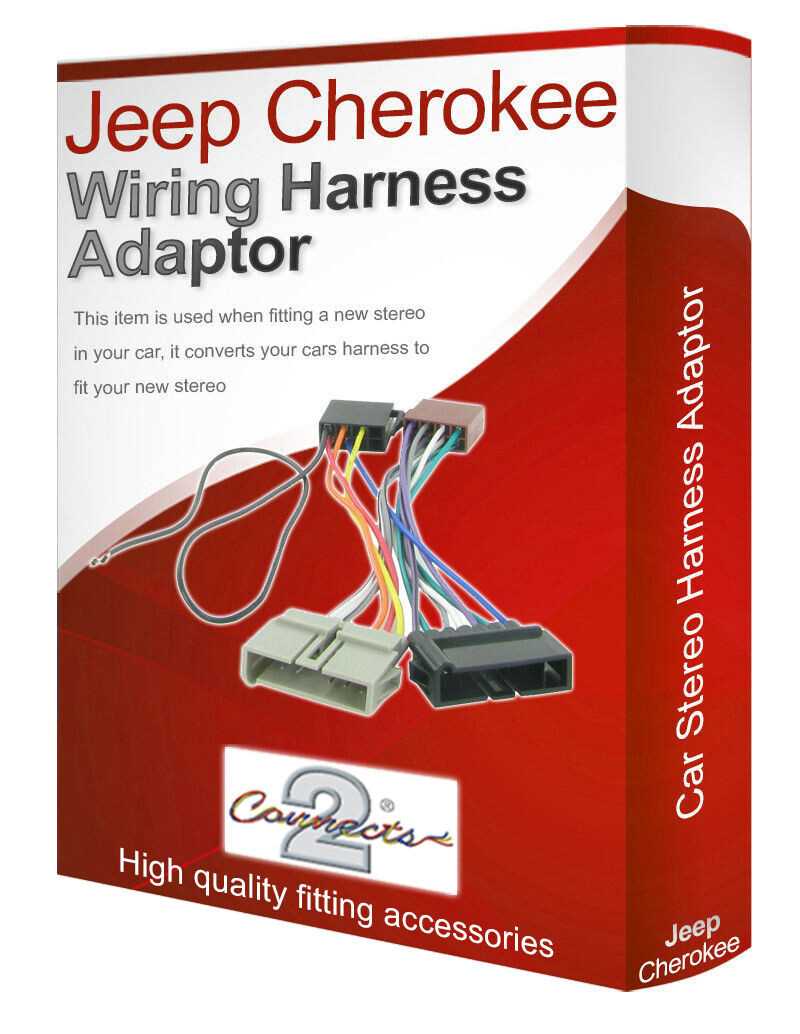
Disconnect the negative battery terminal and identify each conductor in the dashboard audio connector before installing a replacement head unit. The compact SUV from the early 2000s uses a factory harness with dedicated leads for constant power, ignition-controlled supply, speaker outputs, and illumination. Matching each wire by color avoids reversed polarity and protects the new receiver from electrical damage.
The permanent 12-volt feed usually appears as a yellow lead connected to the vehicle battery line through an interior fuse. An accessory lead, commonly red, becomes active when the ignition key moves to ACC or RUN. A black conductor serves as chassis ground and attaches to the metal dashboard frame. This connection reduces electrical noise produced by the alternator and ignition system.
Speaker outputs are arranged as color-striped pairs. The front left channel often uses dark green with red stripe for positive and brown with yellow stripe for negative. The front right channel commonly uses gray with red stripe for positive and gray with black stripe for negative. Correct polarity keeps speaker cones moving in the same direction and preserves balanced bass response.
Rear cabin speakers connect through another pair of leads routed along the interior harness. One channel typically uses brown with red stripe and brown with yellow stripe, while the opposite channel uses dark blue with red stripe and dark blue with yellow stripe. Using a plug-in adapter designed for this vehicle generation allows connection of an aftermarket receiver without cutting the factory harness.
2001 Jeep Cherokee radio wiring diagram with factory harness and speaker colors
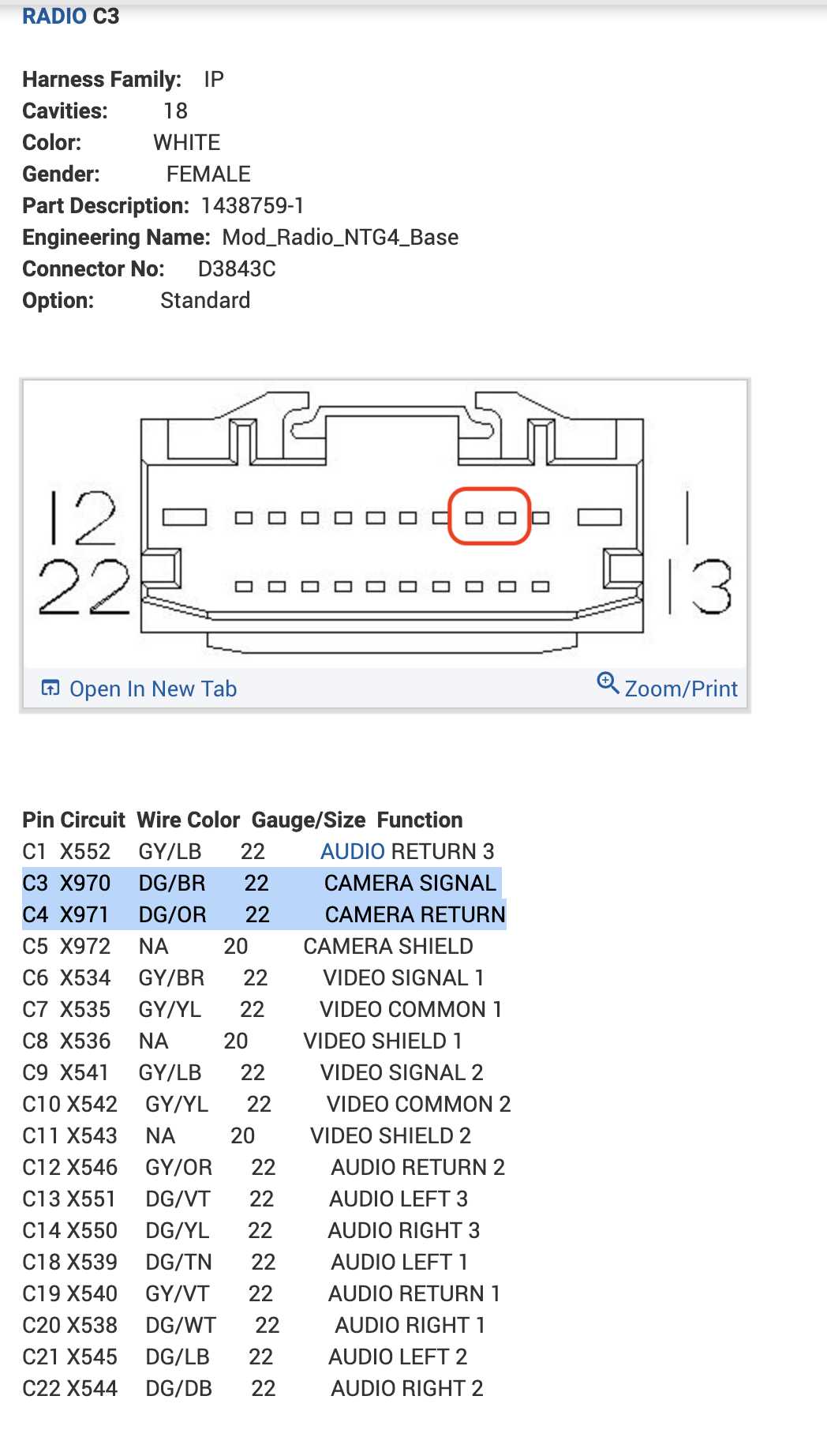
Match each conductor in the dashboard audio connector with the factory color code before attaching a new head unit. The original harness in this compact SUV contains separate leads for battery power, ignition feed, ground, illumination, and four speaker channels. A plug-in adapter designed for this vehicle platform allows installation of an aftermarket receiver without cutting the original loom.
Typical power and control leads include:
- Yellow – constant 12-volt battery supply for memory
- Red – ignition controlled accessory feed
- Black – chassis ground connected to the dashboard frame
- Orange or orange with stripe – instrument illumination input
- Blue – power antenna or amplifier trigger line
Speaker outputs appear as paired conductors that maintain polarity for each channel:
- Front left pair often uses dark green with red stripe and brown with yellow stripe
- Front right pair typically uses gray with red stripe and gray with black stripe
- Rear left pair often uses brown with red stripe and brown with yellow stripe
- Rear right pair commonly uses dark blue with red stripe and dark blue with yellow stripe
Check each pair with a multimeter set to resistance before connecting speakers. A reading near 4 ohms confirms the correct channel path through the door speaker.
Factory radio harness pinout and wire color identification in 2001 Jeep Cherokee
Check the dashboard connector pin positions with a multimeter before attaching a replacement head unit. The factory audio harness behind the center panel contains multiple terminals carrying battery supply, ignition feed, ground, illumination, and speaker outputs. Identifying each contact by color and function prevents reversed polarity and protects the new receiver electronics.
The constant battery line normally uses a yellow conductor. This lead supplies approximately 12 volts at all times and maintains clock and station memory. The ignition controlled feed usually appears as a red conductor that becomes active only when the key is in ACC or RUN. Ground is provided through a black wire attached to the metal dashboard support structure.
Pin layout and control leads
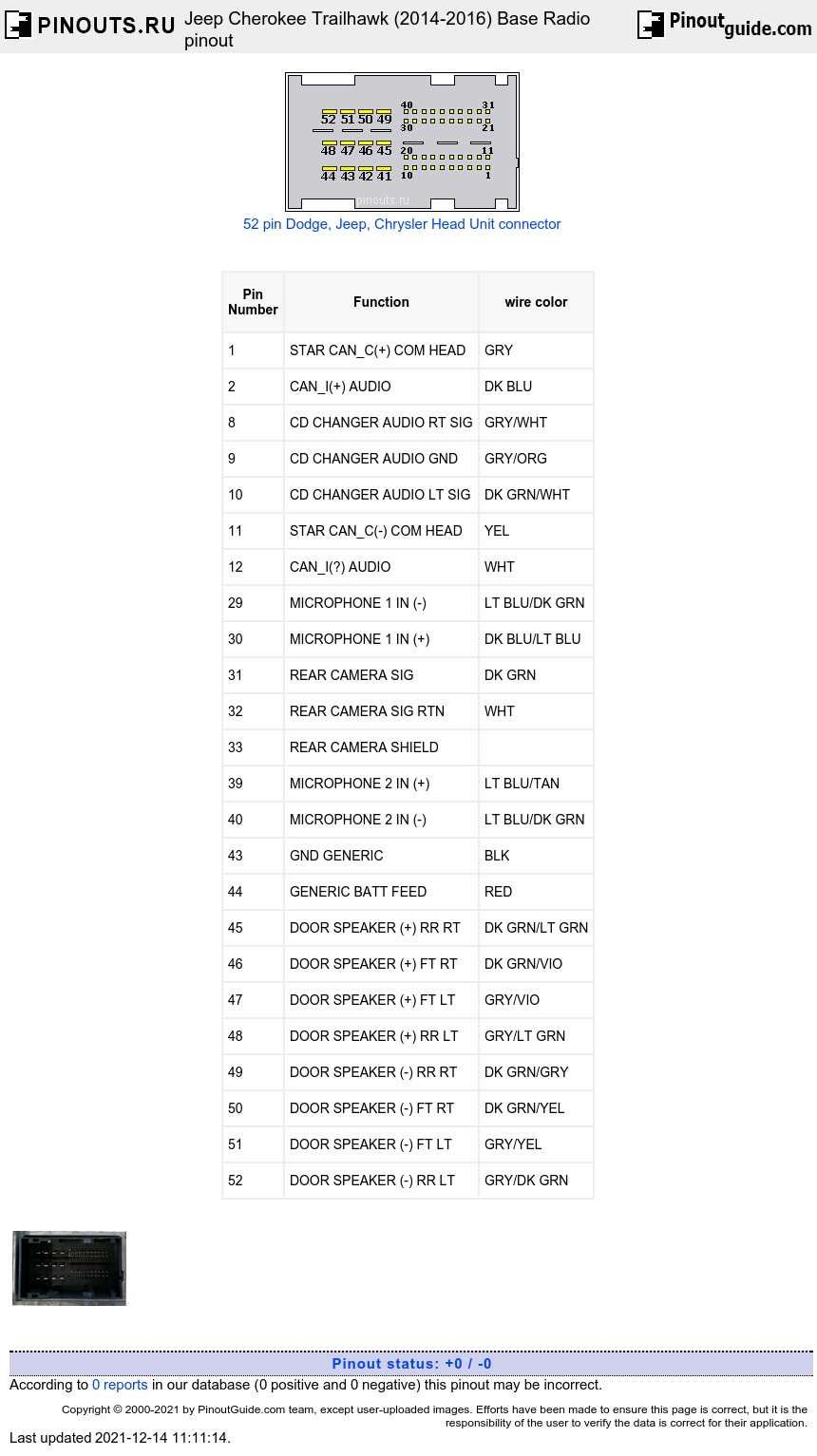
The connector block typically contains separate positions for power, lighting, and antenna control. An orange or orange with stripe lead carries the instrument panel illumination signal, allowing the head unit display brightness to change when exterior lights are activated. A blue conductor often provides a trigger output used for a powered antenna or external amplifier.
Speaker outputs appear as color-striped pairs located in adjacent connector slots. One pair routes to the left front door speaker, another to the right front channel, and two additional pairs connect to rear cabin speakers. Each pair contains a positive lead marked with a stripe and a matching negative lead with a darker color variant.
Verifying conductor identification
Use a digital multimeter set to DC voltage and resistance to confirm each connection. The battery feed should measure near 12 volts with the ignition off, while the accessory line should show voltage only after the key is turned. Checking resistance across a speaker pair normally produces a reading close to 4 ohms, confirming the correct channel path through the vehicle audio harness.