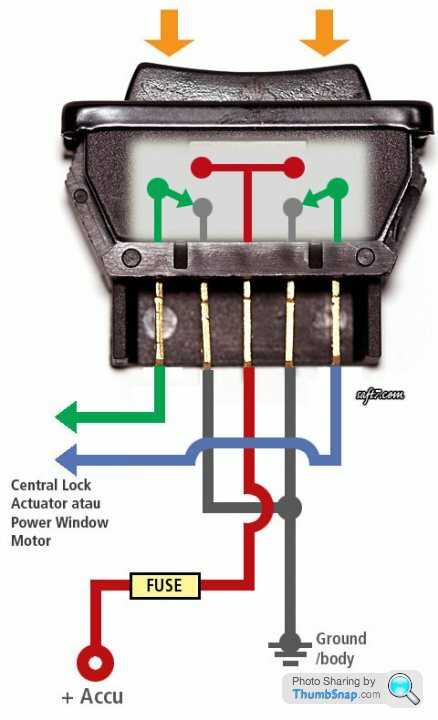
Identify the six terminals on the control button before connecting any wires. This type of automotive control unit manages a small DC motor that raises or lowers the glass panel in a vehicle door. Two terminals usually connect to the motor leads, two supply the electrical source and ground, and the remaining contacts route polarity changes during operation.
The internal mechanism works by reversing the direction of current through the motor. When the rocker is pressed in one direction, the contact set sends voltage through one motor lead and returns through the other. Pressing the rocker the opposite way swaps the polarity, forcing the motor to rotate in reverse and move the glass panel down.
Most vehicle door systems operate from a twelve-volt electrical supply provided by the main fuse box. The incoming line normally passes through a fuse rated between 20 and 30 amps before reaching the door control unit. Ground returns through the vehicle chassis, which completes the electrical path for the motor.
Correct terminal identification prevents motor damage and blown fuses. Automotive connectors often mark terminal numbers on the plastic housing. A multimeter set to continuity or resistance mode helps confirm which contacts link together when the rocker moves between up, down, and neutral positions.
Door harnesses frequently include thicker conductors for the motor and thinner wires for illumination or shared control signals. Inspect the connector block and insulation condition before attaching leads. Broken strands near the door hinge area often interrupt the motor supply path.
6 Pin Power Window Switch Wiring Diagram with Motor Direction Control
Connect the motor leads to the two center terminals of the control unit. These contacts deliver current in alternating polarity depending on the rocker position. When the control rests in the neutral position, both motor leads remain disconnected or tied to ground, which stops the motor instantly.
Motor direction control principle
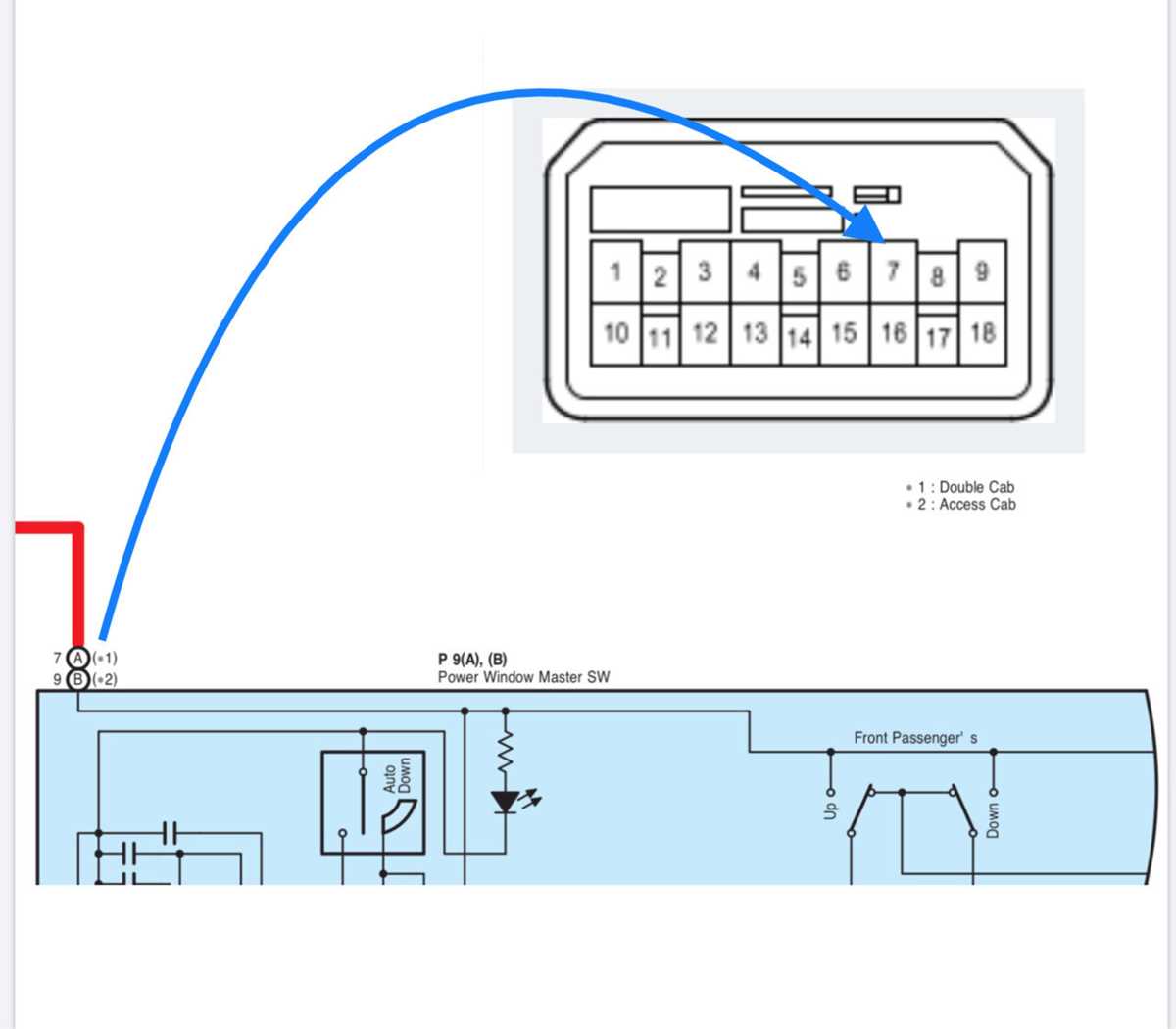
The glass lifting motor operates as a reversible DC unit. Rotation direction depends on which motor lead receives the supply line and which returns to ground. Pressing the rocker upward sends current through one lead while the second lead becomes the return path. Pressing the rocker downward reverses these paths, causing the motor shaft to rotate in the opposite direction.
Inside the control assembly, the contacts route the supply line through different internal paths. One side of the rocker connects the motor to the twelve-volt source on one lead and ground on the other. The opposite rocker position swaps those connections.
Terminal roles in the six terminal layout
Typical assignments follow this structure:
Two terminals → motor leads
One terminal → supply line from fuse box
One terminal → chassis ground
Two terminals → cross connection used to reverse polarity
When the rocker moves, internal metal contacts bridge these terminals in different combinations. The result changes the direction of current through the motor without altering the external supply line.
Inspect the connector block for heat damage or loose terminals. Door harness movement near the hinge often breaks copper strands, which interrupts the motor supply path. Testing continuity between the motor leads and the control unit helps locate faults before replacing components.
6 pin power window switch pinout and function of each terminal
Identify each terminal on the connector block before attaching wires. The six-contact layout normally includes two terminals connected to the motor, one receiving the twelve-volt supply from the fuse box, one connected to chassis ground, and two used as cross contacts that reverse current flow through the motor.
Typical terminal roles:
- Terminal 1 → supply line from vehicle fuse panel
- Terminal 2 → chassis ground return
- Terminal 3 → first motor lead
- Terminal 4 → second motor lead
- Terminal 5 → internal crossover contact for polarity reversal
- Terminal 6 → second crossover contact linking the rocker mechanism
This layout allows the rocker mechanism to route current through different internal contact paths. In one position, the motor receives supply on the first lead and ground on the second. In the opposite position, the crossover contacts swap those paths, reversing motor rotation and moving the glass in the opposite direction.