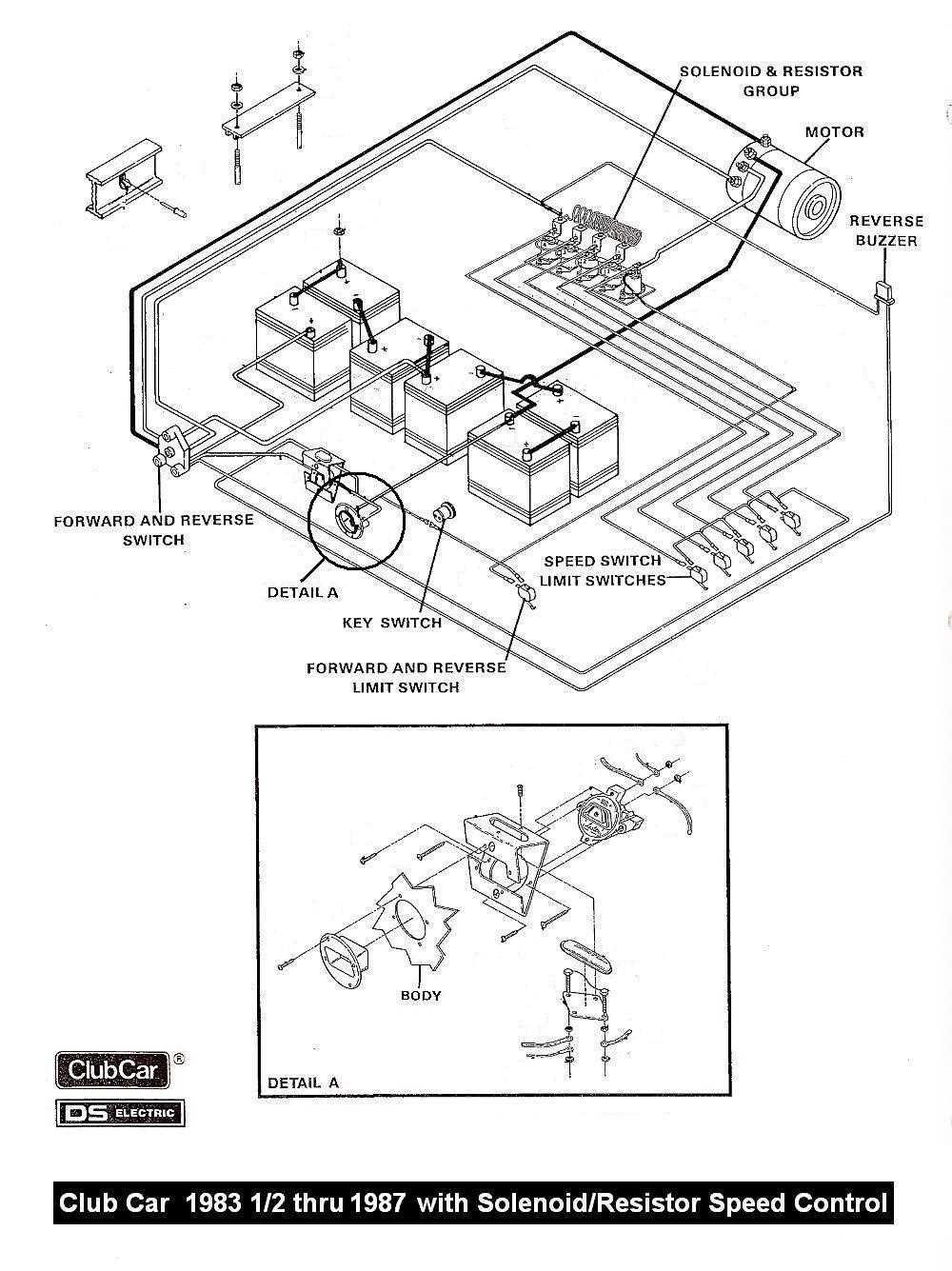
Verify the battery pack series order before connecting any power cables. A typical electric golf vehicle in this category uses six lead acid cells rated at six volts each. These units connect in series so their voltages add together, producing roughly thirty six volts across the main terminals that feed the motor controller.
The traction system relies on several major components linked through heavy gauge cables. The pack output travels through a main solenoid contactor, then into the electronic speed controller, and finally to the traction motor. When the ignition key closes the control path, the solenoid coil activates and connects the high current path from the battery pack to the controller.
Each six volt unit connects to the next through short jumper cables. The first unit’s negative post acts as the main ground reference for the vehicle electrical system. The opposite end of the series chain forms the pack output that feeds the solenoid and power electronics. Incorrect jumper placement reduces total pack voltage and prevents the motor from operating.
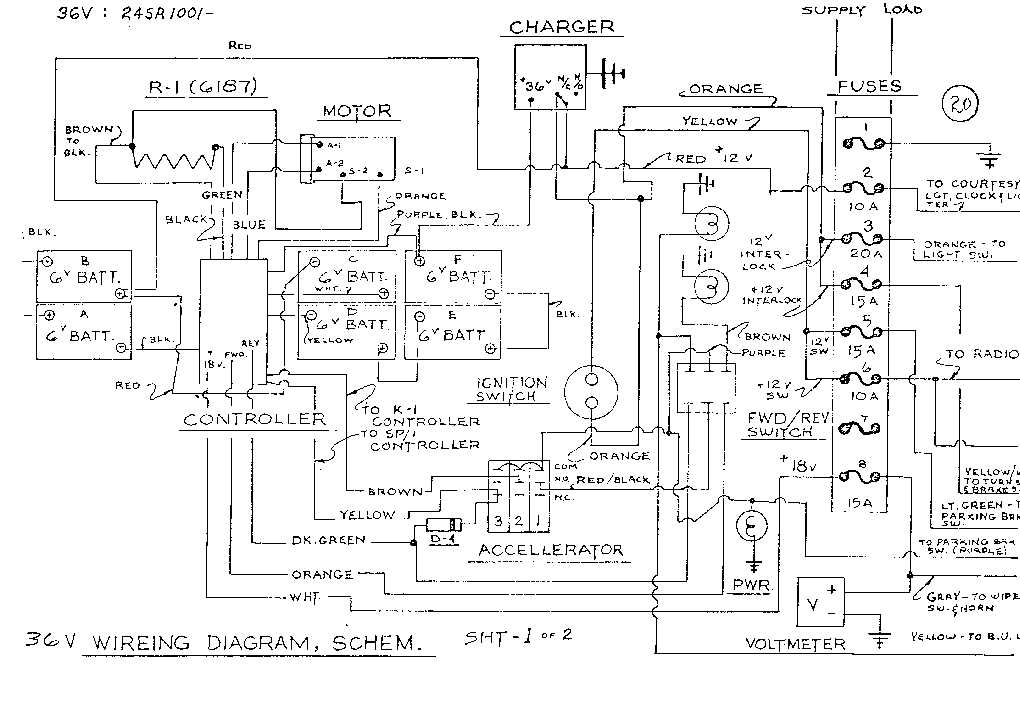
Accessory systems such as lights, charger port connections, and the key switch often draw power from specific points within the pack. Many vehicles route a lower voltage supply through a reducer module that converts the pack output to twelve volts for lighting and small electronics.
Inspect cable lugs, corrosion around terminals, and insulation damage before energizing the system. Loose connections cause voltage drop and heat buildup during acceleration. Tightening terminals to the recommended torque and cleaning oxidation improves current delivery from the battery pack to the controller and motor.
36V Club Car Wiring Diagram Battery Pack Solenoid and Controller Connections
Connect the six traction cells in a strict series chain before attaching the main power cables. Each unit supplies roughly six volts. Linking six together raises the total pack output to about thirty six volts, which feeds the traction electronics. The first unit in the chain provides the system ground, while the last unit delivers the high potential supply to the contactor.
Series battery pack layout
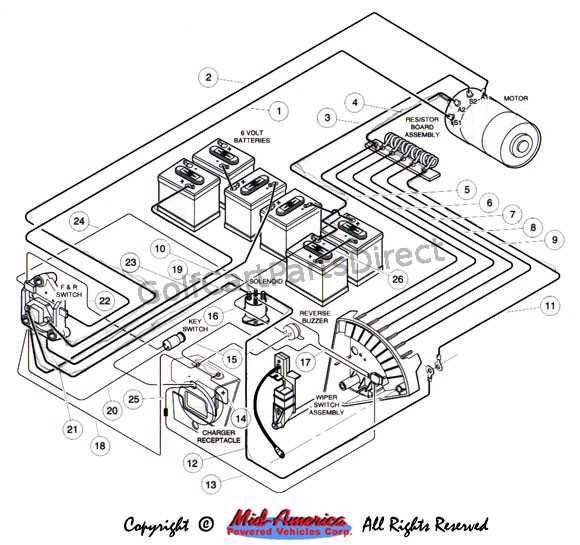
The interconnection pattern follows a simple order where each cell links to the next through short jumper cables.
- Cell 1 negative terminal → vehicle ground
- Cell 1 positive → Cell 2 negative
- Cell 2 positive → Cell 3 negative
- Cell 3 positive → Cell 4 negative
- Cell 4 positive → Cell 5 negative
- Cell 5 positive → Cell 6 negative
- Cell 6 positive → main power cable to the solenoid
This chain creates a single high current source for propulsion components. Large gauge cables carry this energy through the contactor and into the speed controller.
Solenoid and controller power path
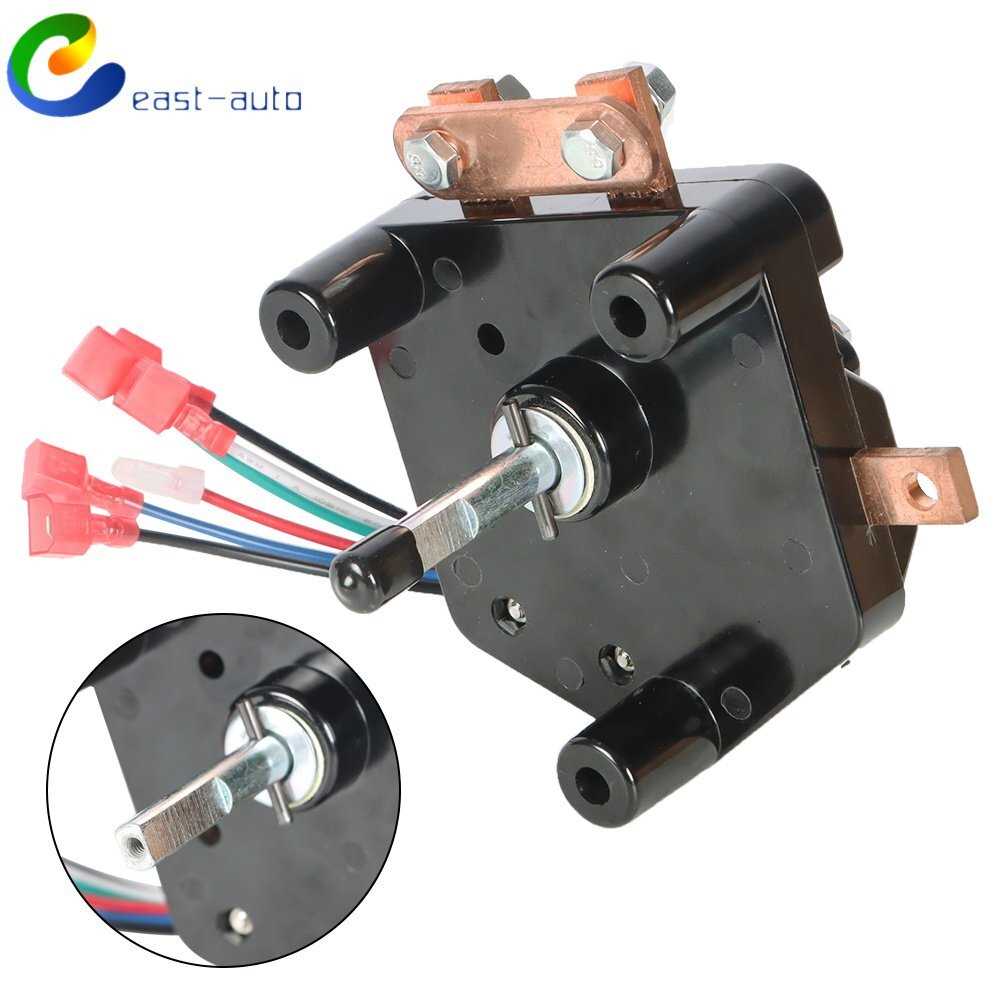
The solenoid acts as an electrically controlled switch placed between the pack and the controller. When the ignition key closes the control line, a small coil inside the solenoid pulls a metal plunger that joins the high current contacts.
- Main pack output → large solenoid terminal
- Opposite large terminal → input of the speed controller
- Controller output → traction motor terminals
- Key switch and pedal switch → solenoid coil terminals
Inspect cable connections for corrosion or loose hardware. High current flowing through partially tightened terminals produces heat and voltage drop during acceleration. Clean the posts, tighten nuts to manufacturer torque values, and replace cables with damaged insulation.
36 volt Club Car battery pack series connection layout with six 6V batteries
Link six six-volt lead acid units in series so their voltage values add together. The connection pattern starts with the first unit acting as the system ground point. A short jumper cable connects the positive post of the first unit to the negative post of the second. The same pattern continues through all remaining units until the final unit provides the high potential output feeding the propulsion electronics.
Series pack structure
Each jumper cable connects opposite polarity posts between neighboring units. For example, the second unit connects to the third in the same way, then the third links to the fourth, continuing through all six. The final arrangement forms a single chain where the negative post of the first unit becomes the main ground and the positive post of the last unit becomes the pack output. This arrangement produces roughly thirty six volts across the two main terminals.
Use thick copper cables rated for high current between the pack and propulsion components. Tighten terminal nuts securely and keep metal surfaces clean. Oxidation on lead posts increases resistance and causes heat during acceleration. Inspect jumper cables regularly and replace any with cracked insulation or loose crimp lugs.