Locate the polarity marks on the power cell before connecting any load. Most DC sources include a plus symbol and a minus symbol stamped near the terminals. The plus contact connects to the supply line feeding the device, while the minus contact connects to the return path. Reversing these connections may damage semiconductors, voltage regulators, and charging modules.
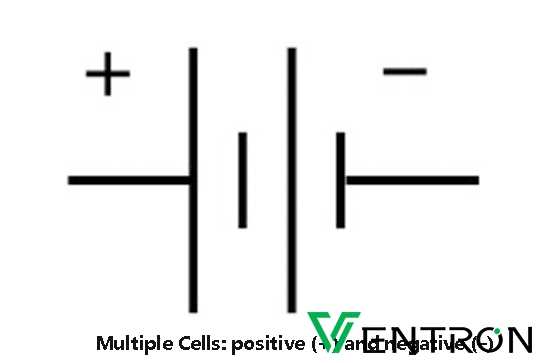
Electrical drawings usually represent a cell with two parallel lines of different lengths. The longer plate indicates the higher potential side, while the shorter plate marks the return terminal. When multiple cells appear in a schematic, they may be arranged in series to raise voltage or in parallel to increase capacity measured in ampere-hours.
Current travels from the higher potential terminal through the load and returns through the lower potential side. In a simple DC layout the path may include a switch, fuse, and protection diode before reaching the device. These components control power delivery and protect equipment from overload or polarity reversal.
Portable electronics commonly use lithium cells rated at 3.7 V nominal with a full charge level near 4.2 V. Alkaline cells typically provide about 1.5 V each. When several units connect in series, their voltages add together. For example, four alkaline units supply about 6 V across the output terminals.
Always verify polarity with a multimeter set to DC voltage mode before soldering wires or attaching connectors. The red probe touches the higher potential contact and the black probe touches the return terminal. A positive reading confirms correct orientation, while a minus sign on the display shows reversed probe placement.
Battery Circuit Diagram Positive and Negative Terminals and Current Flow Explained
Check the polarity symbols printed on the power cell and match them with the supply and return lines in the electrical layout. The terminal marked with a plus sign connects to the line feeding the load, while the opposite contact connects to the return path that completes the electrical loop.
In technical drawings, a single cell appears as two parallel plates with different lengths. The longer plate represents the higher potential side and the shorter plate indicates the return terminal. When several cells appear together, they may connect in series so their voltages add together, or in parallel where capacity increases while voltage stays the same.
Current leaves the higher potential contact, travels through components such as switches, resistors, regulators, or motors, and returns through the lower potential line. Protection parts often appear between the source and the load. These may include a fuse for overcurrent protection, a diode preventing reverse polarity, and a switch that interrupts the path during maintenance or storage.
Measure polarity with a multimeter before attaching wires. Set the meter to DC voltage, place the red probe on the supply terminal and the black probe on the return contact. A reading with a minus sign shows the probes are reversed, which helps confirm orientation before final assembly.
How to identify positive and negative battery terminals in circuit diagrams and real devices
Look for polarity symbols stamped near the terminals before making any connection. Most power cells include a plus mark near the higher potential contact and a minus mark near the return contact. In cylindrical formats such as AA or 18650, the raised metal button usually indicates the higher potential side, while the flat surface forms the return terminal.
In technical drawings, a single cell appears as two parallel lines with different lengths. The longer plate marks the higher potential side, while the shorter plate represents the return connection. When multiple cells appear together, their orientation shows how they combine. If the long plate of one cell connects to the short plate of the next, the cells form a series chain that increases voltage.
Use a digital multimeter when markings are unclear. Set the device to DC voltage measurement, touch the red probe to one terminal and the black probe to the other. A reading without a minus sign means the red probe touches the higher potential contact. A reading with a minus sign indicates the probes are reversed, revealing terminal orientation before attaching wires or connectors.