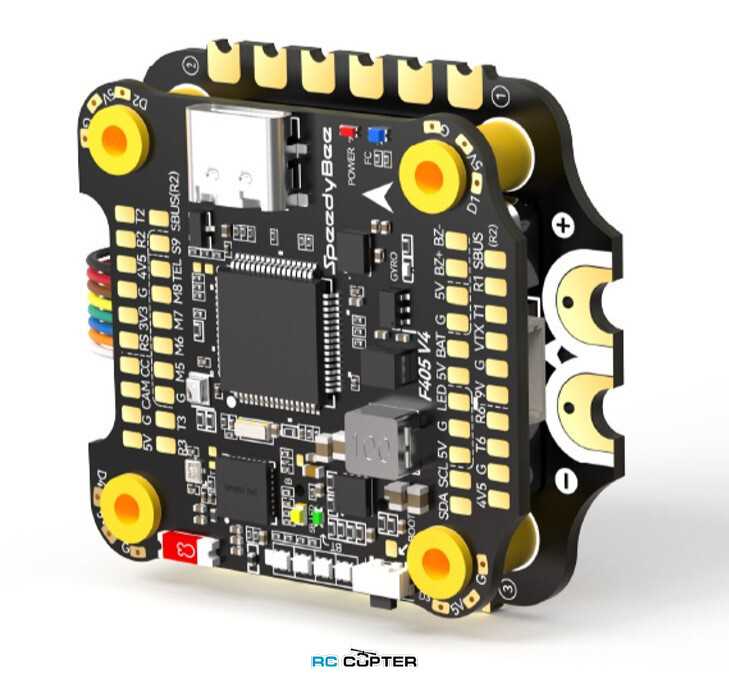
Check the flight controller pin labels and voltage pads before soldering any component. A typical FPV quad build depends on correct pad selection for ESC signal, receiver UART ports, video transmitter power, camera input, and telemetry lines. Many builders damage electronics by connecting a 5V device to a battery voltage pad or by mixing signal and ground lines. Reading the board layout carefully prevents these problems.
This controller board based on an STM32 F4 processor includes several UART ports, dedicated motor signal outputs, regulated 5V and 9V pads, and battery voltage input for a 4-in-1 ESC. The ESC signal cable usually carries ground, current sensor, telemetry, and four motor signals through a JST connector. When soldering directly, match each motor signal pad with the ESC harness wires while keeping the ground reference connected.
Receiver installation depends on protocol. Serial receivers such as ELRS, Crossfire, or SBUS connect through a UART pair using TX and RX pads along with 5V and ground. A reversed TX/RX pair prevents data transfer, which leads to no stick response in Betaflight. Builders often dedicate UART1 or UART2 to radio input while leaving additional ports available for GPS modules, Bluetooth configuration, or telemetry.
Video equipment follows a different layout. The camera sends analog video to the video input pad, which routes through the onboard OSD chip before reaching the video transmitter output pad. Power lines depend on the device specification. Many transmitters operate from a filtered 9V regulator on the board, while compact units accept 5V. Connecting the transmitter to raw battery voltage without checking the rating can permanently damage it.
Additional peripherals such as GPS modules require four connections: 5V, ground, TX, and RX. The module TX pad connects to a controller RX pad, while module RX connects to controller TX. Builders also mount the GPS antenna away from carbon fiber plates and high current motor leads to avoid signal loss. Proper cable routing and clean solder joints reduce electrical noise that interferes with telemetry and positioning data.
SpeedyBee F405 V4 Wiring Diagram with Pinout and Connection Guide for FPV Drone Build
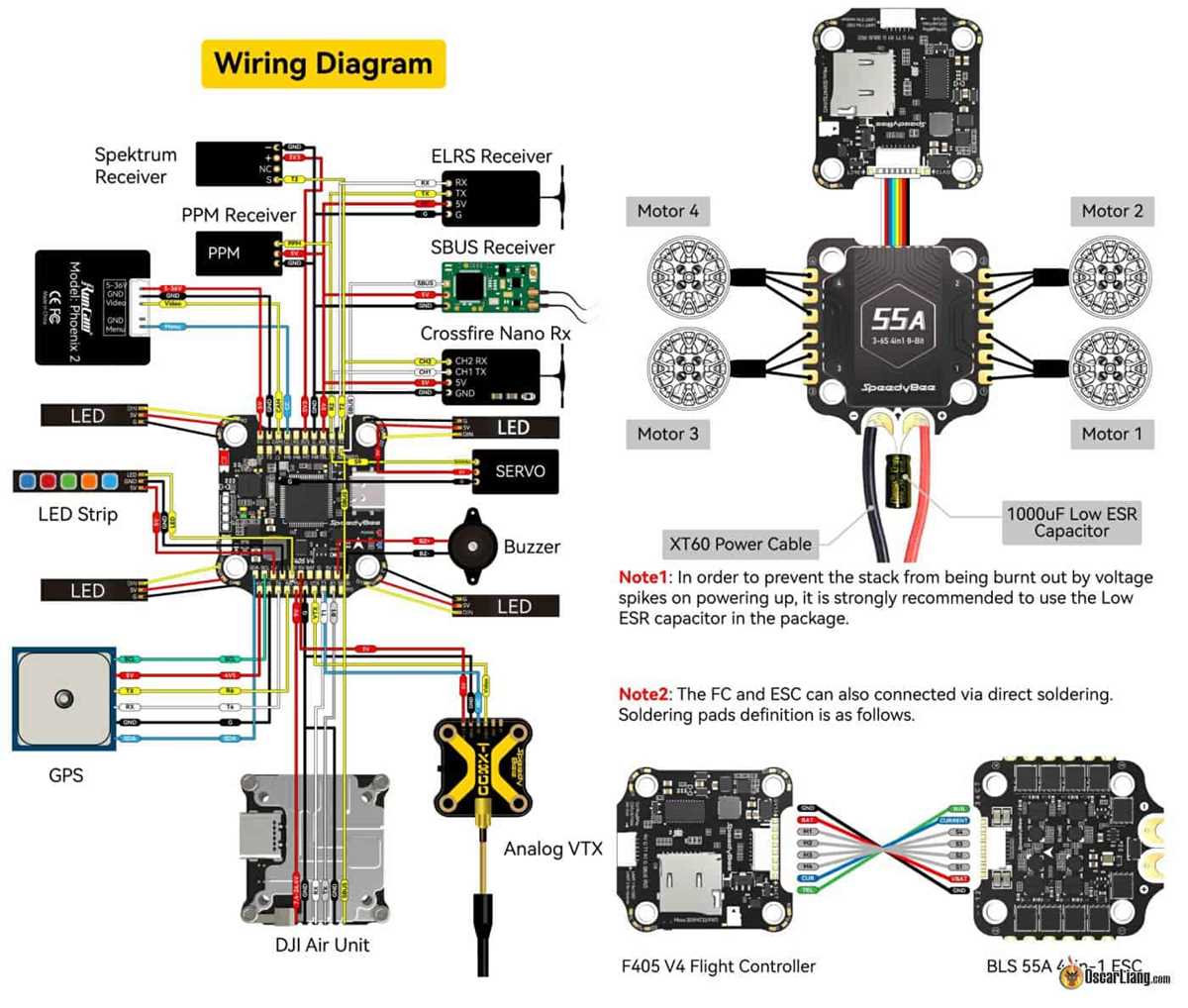
Match every device with the correct voltage pad before soldering. This flight control board contains several power outputs including 5V and 9V regulators along with direct battery input. Motors and ESC electronics receive battery voltage through VBAT pads, while receivers, GPS modules, and many cameras require 5V. Supplying higher voltage to low-power peripherals leads to permanent damage within seconds.
The central board uses an STM32F4 processor and exposes multiple UART interfaces. Each port contains TX and RX pads that support receivers, telemetry modules, GPS units, or digital configuration tools. Correct pairing follows a simple rule: device TX connects to controller RX, while device RX connects to controller TX. Reversing this pair blocks communication.
Motor control signals usually connect through a 4-in-1 ESC harness. If soldering directly, follow this layout:
- M1 pad → front right motor signal
- M2 pad → back right motor signal
- M3 pad → back left motor signal
- M4 pad → front left motor signal
- Ground pad shared with ESC ground line
- Current sensor pad connected to ESC telemetry output
Video components follow a separate path that routes through the onboard OSD chip. The camera sends analog video into the video input pad, and the processed signal exits through the transmitter output pad.
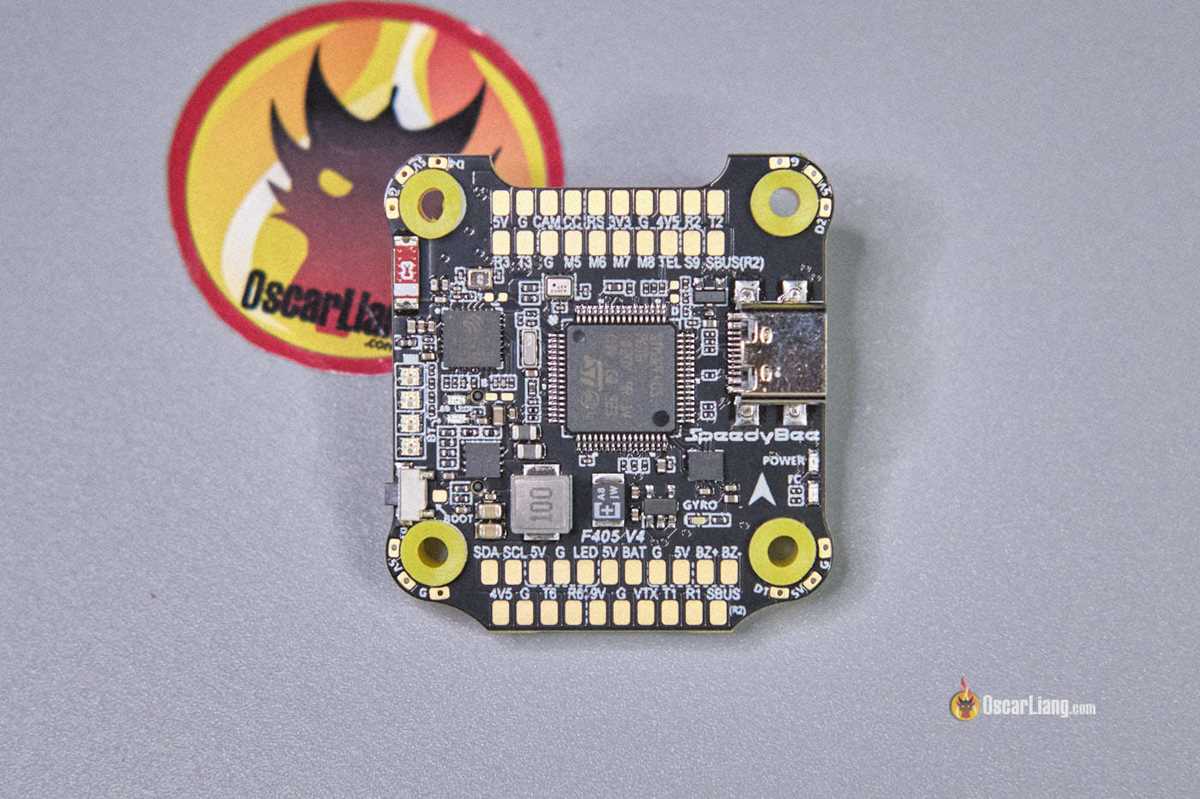
- Camera video wire → video input pad
- Camera ground → ground pad next to video input
- Transmitter video wire → video output pad
- Transmitter power → 5V or 9V regulator depending on hardware rating
Radio receivers using ELRS, Crossfire, or SBUS typically connect through a single UART interface. Builders often use UART1 or UART2 for radio control.
- Receiver 5V → regulated 5V pad
- Receiver ground → ground pad
- Receiver TX → controller RX pad
- Receiver RX → controller TX pad
GPS modules require four wires and a free UART port. Position the antenna module away from high-current motor leads and carbon plates. Metal and electrical noise reduce satellite lock speed and accuracy.
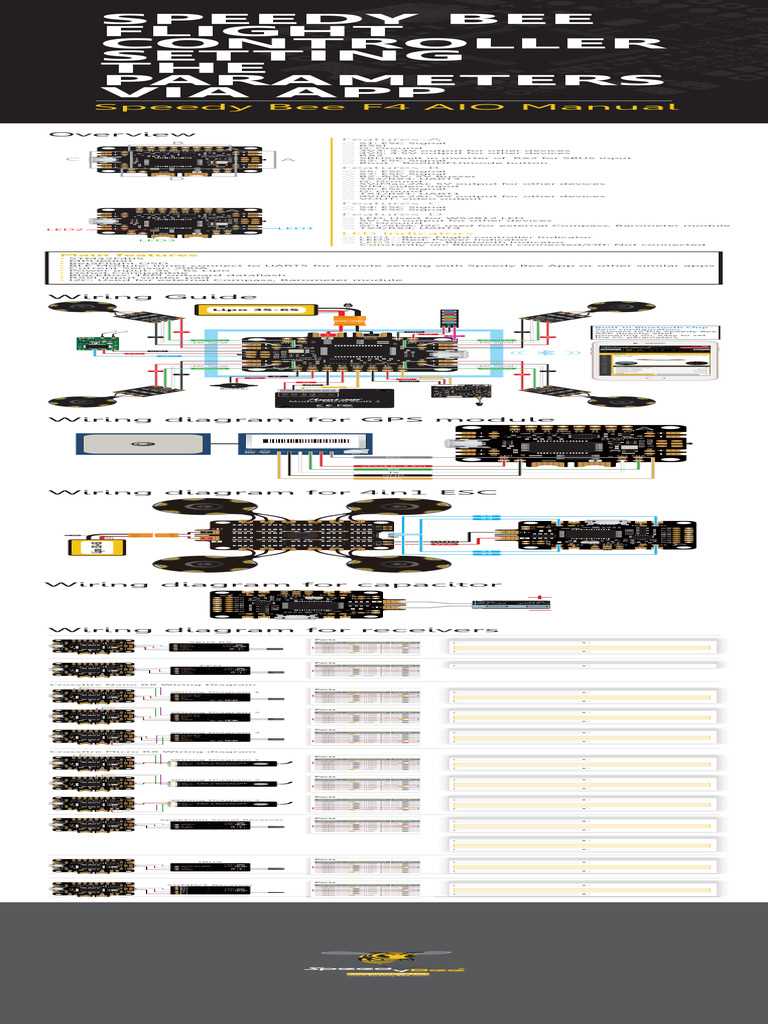
- GPS 5V → regulated power pad
- GPS ground → ground pad
- GPS TX → controller RX pad
- GPS RX → controller TX pad
Check solder joints under magnification before connecting a battery. Bridges between signal pads or voltage rails cause short circuits. A multimeter in continuity mode helps detect unintended connections between ground and power rails.
Secure signal cables with heat-resistant tape or small cable ties after soldering. Loose wires moving near the gyro chip or power lines introduce electrical noise, which may lead to unstable flight behavior or intermittent sensor readings.