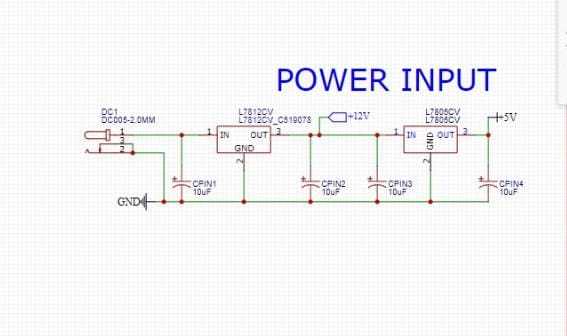
Use a heat sink on the regulator to prevent thermal shutdown during continuous operation. Ensure the input supply voltage remains between 14V and 35V to maintain a consistent 12V output. Capacitors at both input and output terminals reduce voltage ripple and improve load response.
Connect a 0.33µF capacitor at the input and a 0.1µF capacitor at the output close to the regulator pins. This arrangement stabilizes transient spikes and prevents oscillations when driving sensitive electronics. Keep all connections short and soldered firmly to minimize resistance and noise.
Verify the output voltage under various loads before integrating with your project. Test with resistive loads up to 1A to confirm thermal performance and steady voltage supply. This step prevents component failure and ensures long-term reliability of your power setup.
Mount the regulator on an insulated surface if placing near conductive materials. Proper insulation avoids short circuits and maintains safety in high-current applications.
Label the input, output, and ground terminals clearly to prevent wiring errors. Incorrect connections can lead to overvoltage, overheating, or permanent damage to connected devices.
Step by Step Guide to Building a 12V Voltage Regulator Setup
Begin by securing a three-terminal regulator onto a small heat sink to avoid overheating. Ensure the input voltage is at least 14V and does not exceed 35V. Use short, solid connections to reduce resistance and prevent voltage drops.
Attach a 0.33µF capacitor between the input and ground terminals to stabilize incoming fluctuations. On the output, connect a 0.1µF capacitor to maintain a smooth voltage under load. Place these components as close to the regulator as possible.
Connect the input to the positive side of your unregulated supply, the output to your load, and the ground to the common reference. Double-check polarity before powering the setup to avoid component damage.
Test the assembly by gradually increasing the load current while monitoring the voltage. The regulator should maintain approximately 12V, and the heat sink should remain within safe temperature limits.
If the output fluctuates under heavier loads, increase the output capacitor value to 1µF or add a small series resistor before the load. These adjustments reduce ripple and improve transient response, ensuring stable operation.
Selecting Components and Preparing the Circuit Board
Start by choosing a three-terminal voltage regulator rated for 12V output and capable of handling the maximum load current. Ensure the package includes a small heatsink tab to dissipate heat efficiently.
Pick input and output capacitors with voltage ratings at least 25% higher than the supply voltage. Typical values include 0.33µF on the input and 0.1µF on the output, both with low equivalent series resistance.
Use a standard printed board or perfboard with well-spaced copper traces. Mark locations for all components before soldering to prevent layout errors.
Include a heatsink or thermal pad under the regulator if your load exceeds 1A. This prevents thermal shutdown and maintains steady voltage.
Arrange capacitors close to the regulator terminals to minimize trace inductance. Use short, direct paths for connections to reduce voltage ripple.
Secure the regulator and capacitors using nylon spacers or insulating washers to prevent shorts and improve mechanical stability. This also allows airflow around the regulator.
Before final soldering, double-check the polarity of all polarized components. Incorrect placement of electrolytic capacitors can lead to component failure and unstable operation.