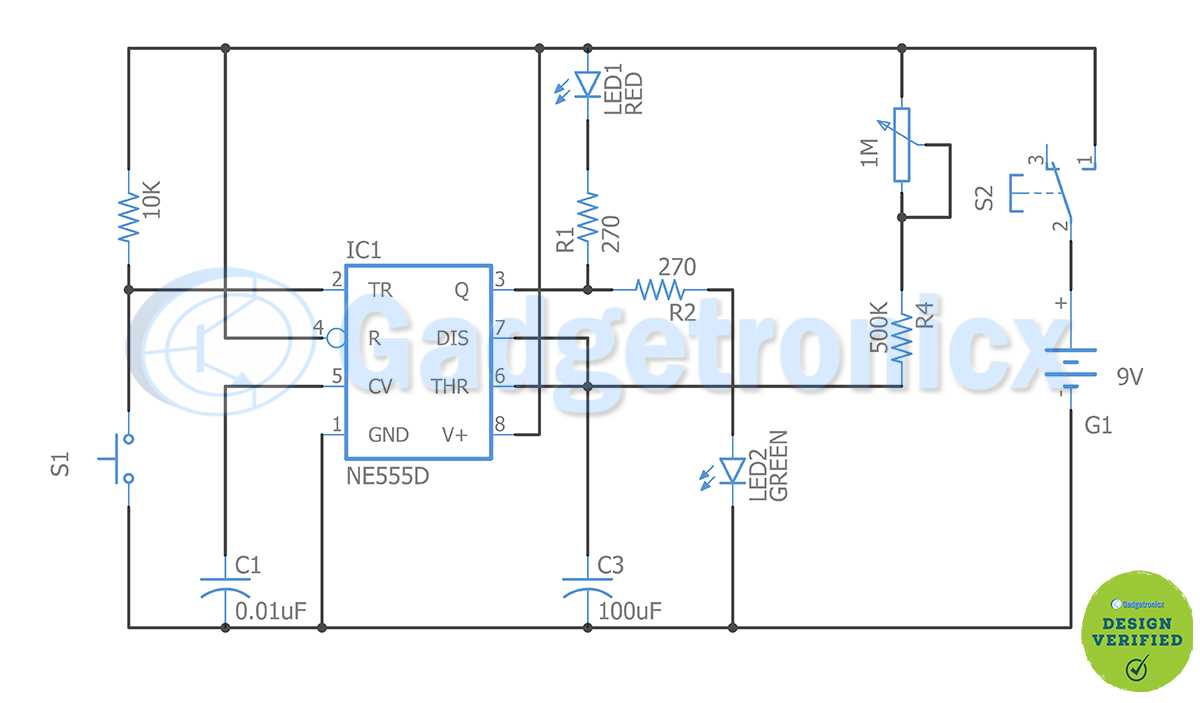
Use precise resistor and capacitor values to achieve accurate pulse durations when configuring the IC in monostable mode. A standard setup with a 10kΩ resistor and 100µF capacitor produces a one-second output pulse with stable voltage levels.
Ensure proper supply voltage by maintaining a 5V to 15V input, depending on the specific IC variant. Exceeding this range can damage the internal flip-flop and comparator sections.
Place decoupling capacitors close to the power pins to prevent voltage fluctuations from affecting output consistency. A 0.1µF ceramic capacitor between VCC and GND significantly reduces transient spikes.
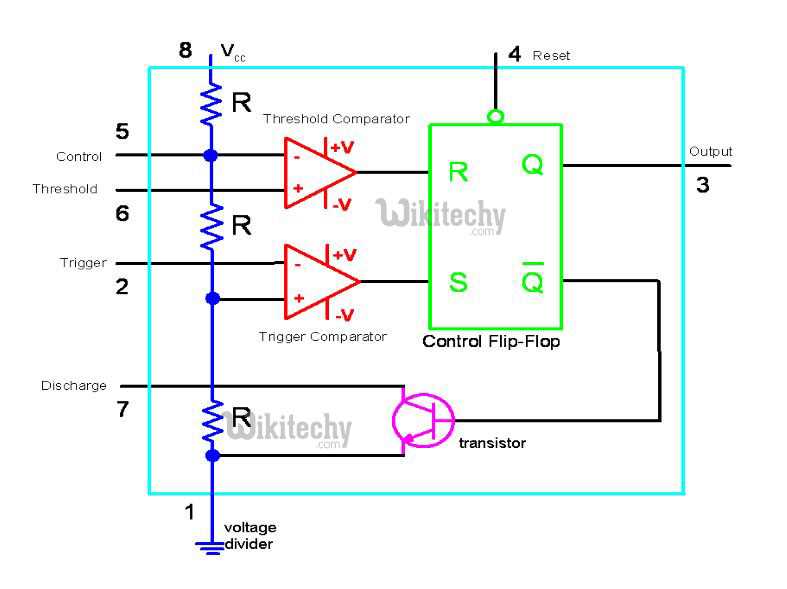
For astable configurations, calculate the high and low periods using accurate resistor-capacitor combinations. For instance, using a 1kΩ resistor with a 10µF capacitor yields a 7Hz frequency with a 50% duty cycle.
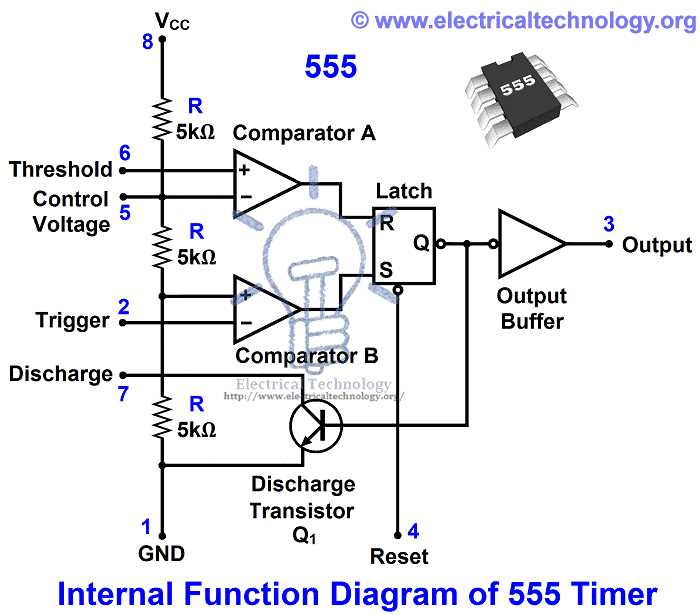
Connect trigger and reset pins correctly to avoid unintended oscillations. Keep the trigger input below one-third of the supply voltage for reliable pulse generation, and hold the reset pin high to maintain normal operation.
555 IC Timer Layout and Connection Guide for Practical Applications
Position the IC on a compact breadboard ensuring all supply and ground connections are secure. Connect the control input through a 0.01µF capacitor to stabilize voltage and prevent false triggering. Use short, direct jumpers to link resistors and capacitors for predictable pulse width and frequency output. Ensure the reset pin is tied high unless external control is required.
For generating oscillations, choose resistor and capacitor values carefully. Example: R1 = 2kΩ, R2 = 22kΩ, and C1 = 4.7µF produces a 2Hz square wave with a 60% duty cycle. Route the discharge connection directly to the timing capacitor and avoid overlapping signal paths to reduce interference. Test each stage incrementally to confirm expected behavior before connecting loads or additional modules.
Setting Up Monostable Mode with Correct Resistor and Capacitor Values
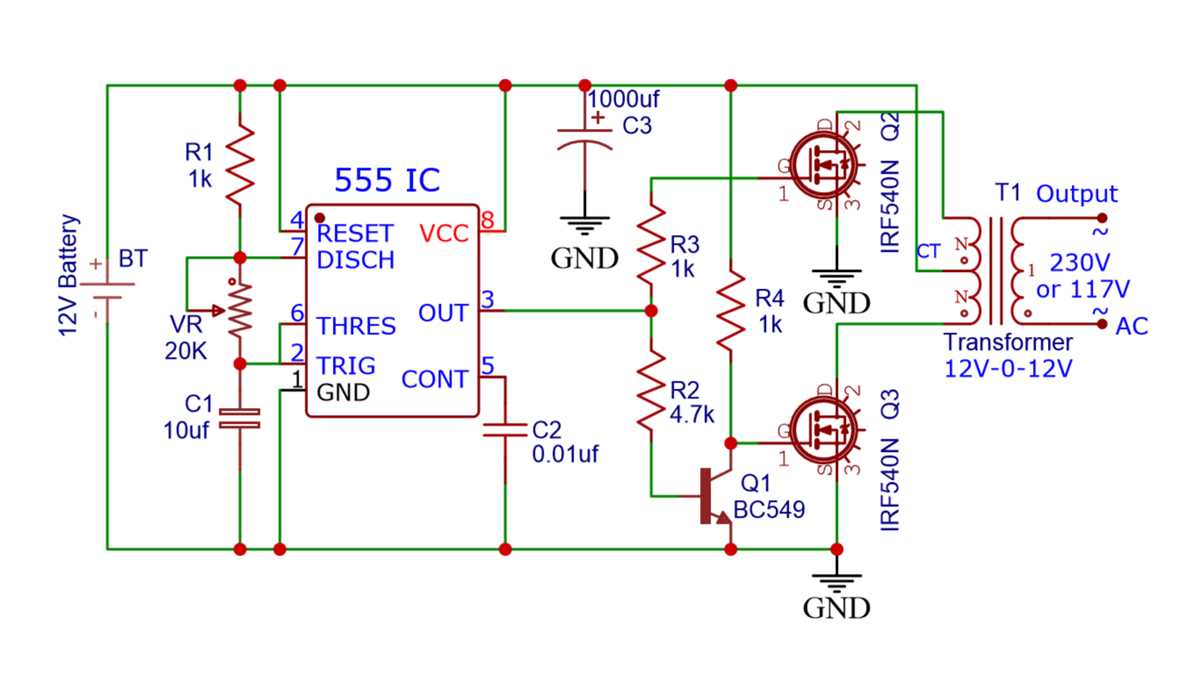
Connect the pulse generator output to the trigger input of the IC module using a clean signal line. Ensure the threshold and discharge terminals are connected to a single timing capacitor, which determines the output pulse duration. A 10kΩ resistor with a 100µF capacitor yields a 1-second pulse with minimal variation.
For shorter pulses, select lower capacitance values such as 1µF and pair them with resistors between 1kΩ and 5kΩ. Check for voltage stability across the timing capacitor to prevent premature pulse termination, especially if supply voltage fluctuates.
Use a pull-up resistor of 10kΩ on the reset pin if no external control is applied. This keeps the module from unintended resets during transient spikes or signal noise. Direct routing of connections minimizes parasitic capacitance and ensures reliable monostable operation.
Verify pulse width using a digital oscilloscope or logic analyzer. Adjust resistor and capacitor values incrementally to fine-tune the timing. Remember that the pulse duration is calculated approximately as T = 1.1 × R × C, where R is in ohms and C in farads.
Ensure that the trigger pulse is shorter than the intended output pulse. A longer trigger can cause retriggering or inconsistent pulse timing. For precise applications, ceramic or polyester capacitors are recommended due to their low leakage and stable characteristics.
After initial testing, secure all components on a prototyping board or solder onto a small PCB to prevent connection shifts. Confirm that the output stage can drive the intended load without introducing voltage drops that could alter pulse width. Consistent component selection and layout stability are key for repeatable monostable performance.