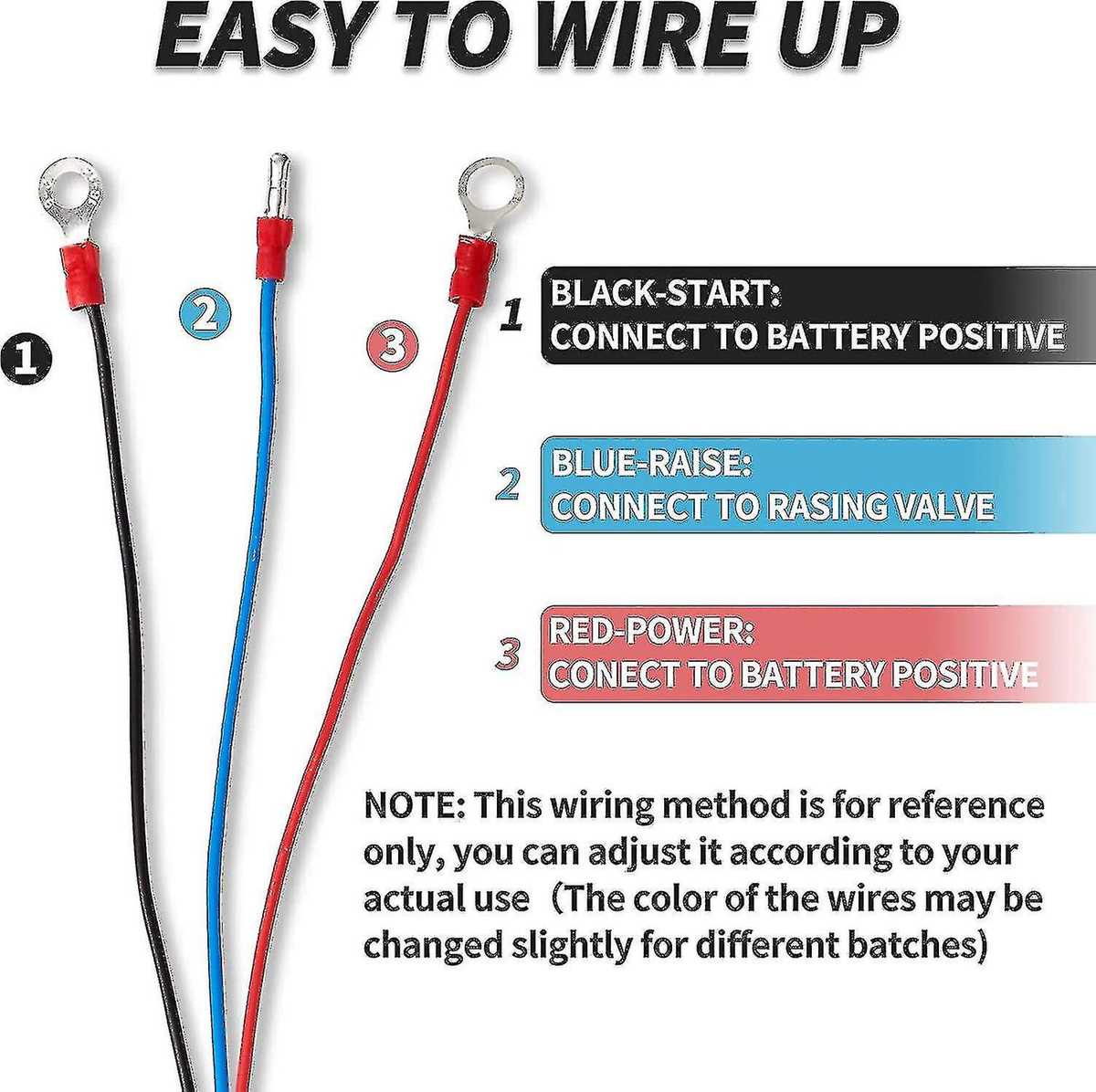
Connect the four-conductor control cable so that each lead activates a specific hydraulic function. One conductor carries positive power from the battery, one provides ground return, and the remaining two control the lift and lower solenoid valves. Using a multimeter set to DC voltage helps confirm polarity before any connection is attached to the pump control box.
A typical hydraulic hoist control system relies on a handheld switch unit linked to the pump assembly through a compact harness. Red commonly carries battery positive, black handles ground, while the remaining pair triggers the raise and lower coils. When the operator presses the lift button, current flows through the raise lead and energizes the motor relay, which powers the hydraulic pump.
Use a 12-volt test light or digital meter to identify conductors if colors differ between manufacturers. The lift circuit usually energizes both the motor relay and the up-valve coil, while the lowering circuit sends power only to the down-valve coil. Incorrect conductor placement can cause the bed to rise without command or prevent lowering, so each lead should be verified against the pump terminal labels before tightening any terminal screws.
Protection against moisture and vibration improves reliability. Seal the cable entry at the control box with a rubber grommet, route the harness away from sharp frame edges, and secure it with insulated clamps every 30–40 cm. These steps reduce signal loss, prevent insulation damage, and keep the hydraulic lifting system responsive during repeated loading cycles.
4 Wire Dump Trailer Remote Wiring Diagram With Pin Layout and Hydraulic Pump Switch Setup
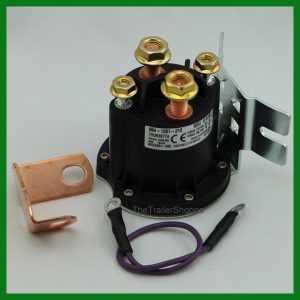
Connect the four-conductor control cable so that each lead serves a dedicated role: battery positive, ground return, lift command, and lower command. Attach the power lead to the pump relay input terminal, connect the ground lead to the chassis ground stud on the hydraulic unit, and route the remaining two conductors to the raise and lower solenoid coils.
A common pin arrangement inside a handheld control plug uses four terminals aligned in a square pattern. Terminal 1 carries +12V supply from the battery line, terminal 2 is ground, terminal 3 activates the lift valve and motor relay, and terminal 4 energizes the lowering valve. Confirm each terminal with a digital multimeter before attaching the control cable to the pump assembly.
Use 14-gauge conductors for control signals and protect the supply lead with a 15–20 amp fuse placed within 20–30 cm of the battery connection. Hydraulic pump relays normally draw 2–4 amps on the control side, while solenoid coils typically require about 1.5 amps during activation.
The lift button inside the handheld controller sends positive voltage through the lift conductor toward two components at once: the motor relay coil and the up-valve coil. This dual activation allows the electric motor to spin while hydraulic fluid flows toward the lifting cylinder.
The lowering button performs a simpler task. It sends power only to the down-valve coil, allowing hydraulic fluid to return to the reservoir while the pump motor remains inactive.
Install weather-sealed connectors between the handheld control cable and the pump control box. Rubber-sealed 4-pin connectors reduce corrosion and prevent intermittent contact that can interrupt lift commands during operation.
After installation, test each function separately. Press the lift control and verify relay activation with an audible click and rising bed movement. Press the lower control and confirm that only the down-valve solenoid activates while the pump motor stays silent.
Pin Functions and Color Codes in a 4 Wire Dump Trailer Remote Cable
Assign the four conductors according to their electrical roles before connecting the handheld controller to the hydraulic hoist system. One lead delivers battery positive, another provides ground return, and the remaining pair carries control signals for lifting and lowering the hydraulic cylinder.
Red insulation commonly marks the +12V supply line. This conductor feeds power from the battery through the control switch toward the relay coil and valve circuits. A fuse rated between 15 and 20 amps should protect this line near the battery terminal.
Black insulation typically identifies the ground return. This lead connects directly to the negative battery terminal or to a chassis grounding point on the hydraulic pump frame. Poor grounding often causes slow solenoid response or intermittent lift operation.
Green insulation is often used for the raise command. When the operator presses the lift button on the handheld control unit, voltage flows through this conductor toward the up-valve coil and motor relay coil. Both components activate at the same moment.
Yellow insulation frequently marks the lowering command line. Pressing the lower button sends voltage through this lead to the down-valve solenoid only, allowing hydraulic fluid to return to the reservoir while the pump motor remains off.
Color standards may vary between manufacturers. Some harnesses use white instead of green for the lift signal or blue instead of yellow for the lowering signal. Confirm conductor roles with a digital multimeter set to continuity mode while pressing each button on the handheld controller.
The four-pin connector normally uses a square or circular layout. Power and ground occupy opposite terminals, while the lift and lower signals fill the remaining two positions. This arrangement reduces accidental cross-connection during maintenance.
Label each conductor near the connector housing with heat-shrink markers after identification. Clear marking shortens diagnostic time during hydraulic system service and prevents incorrect connections during future repairs.