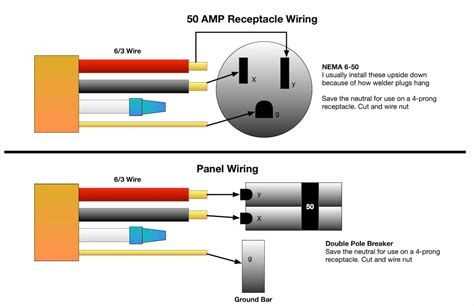
Use a heavy-duty three-prong connector rated for thirty amperes on a two-pole high-voltage branch circuit and connect each conductor exactly to its marked terminal. The typical layout contains two hot lines and one equipment ground. The hot conductors–often colored black and red–attach to the paired brass or copper screws, while the green or bare copper lead secures to the grounding point. No neutral conductor is present in this configuration, which distinguishes it from four-prong appliance connectors.
The internal terminal scheme follows a simple path: each hot line carries power from opposite phases of the breaker panel, creating the full potential difference required by heavy equipment such as shop compressors, welders, and industrial heaters. Strip insulation to roughly 12–14 mm, insert the copper core beneath the clamp plate, and tighten the terminal screw firmly. Loose connections raise resistance and heat buildup, which may damage the connector housing.
Choose conductors with a cross-section equivalent to 10 AWG copper for this current level. Thicker insulation rated for at least 75 °C helps tolerate sustained load. Route the cable through the strain-relief collar of the connector body so mechanical tension never pulls directly on the terminals. After assembly, check that each lead sits fully beneath the clamp and that no copper strands extend outside the contact area.
A clear schematic representation normally shows two parallel hot terminals opposite the grounding point, forming a triangular arrangement inside the housing. Align the black lead with the left power terminal, red with the right power terminal, and the green grounding conductor with the central or upper ground screw depending on the connector model. This orientation simplifies troubleshooting and keeps conductor paths short within the enclosure.
30A 250V Plug Wiring Diagram: Step-by-Step Connection Guide
Disconnect the circuit breaker and confirm zero voltage with a tester before opening the connector housing. Inside a typical industrial connector rated for 30-amp 240-volt service, three terminals appear in a triangular layout: two current-carrying contacts marked X and Y, plus a grounding point labeled G. Attach the black conductor to terminal X and the red conductor to terminal Y; both deliver phase power from a two-pole breaker. The green or bare copper conductor must be secured to the grounding screw. Strip insulation about 11/16 inch and tighten terminal screws to roughly 25 lb-in (≈3 N·m) for reliable contact pressure. :contentReference[oaicite:0]{index=0}
Select a cable with copper conductors sized #10 AWG for a 30-amp circuit. Insert the jacket through the strain-relief clamp before attaching the conductors so the outer sheath–not the internal conductors–absorbs mechanical stress when the cord moves. Industrial connectors of this class use a 2-pole, 3-conductor grounding configuration, meaning only two energized lines and one protective earth are present; no neutral conductor participates in the circuit. The energized conductors may connect to either of the two brass terminals because both supply phase lines of equal potential difference relative to each other. :contentReference[oaicite:1]{index=1}
After fastening each conductor, align internal insulation barriers and close the housing firmly so the cord clamp grips the cable jacket without pinching individual wires. Check that the grounding conductor remains slightly longer than the phase conductors; if the cord is pulled, the earth connection stays intact longer. Once assembled, verify continuity between the grounding pin and the equipment frame, then energize the circuit through a dedicated double-pole breaker rated for the same current level.
::contentReference[oaicite:2]{index=2}
Identifying Hot, Neutral, and Ground Terminals on a 30A 250V Plug Before Wiring
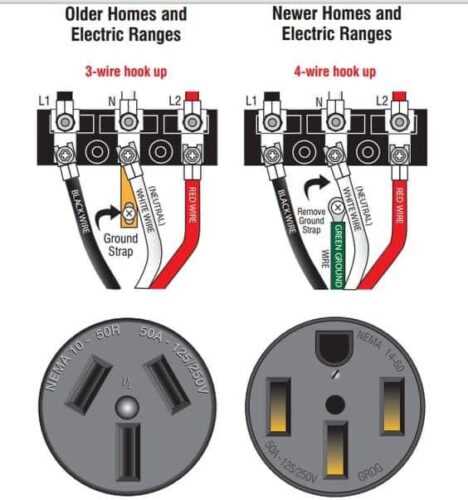
Check the terminal markings on the connector body before attaching any conductors. Manufacturers stamp small letters near the screw posts: “X” or “L” usually marks the energized line, “W” indicates the neutral connection, and a green screw or a ⏚ symbol identifies the grounding point. Use a flashlight and magnification if the molded letters are shallow or partially hidden by the housing.
Observe the color of the terminal screws. The brass-colored post is normally intended for the energized conductor, while a silver-colored screw is reserved for the neutral path. The green screw connects to the protective ground. If all screws appear identical due to oxidation or manufacturing style, rely on stamped symbols rather than color.
Inspect the internal layout after loosening the rear clamp and separating the casing halves. The ground terminal is typically positioned slightly offset from the pair used for the main circuit. It often connects directly to a metal strap or frame that bonds with the outer shell of the connector.
Physical Orientation Clues
Look at the blade arrangement on the front face. The grounding prong usually differs in shape or orientation from the current-carrying blades. For example, many heavy-duty connectors place the ground prong as a rounded or L-shaped contact while the energized blades appear straight and parallel. Aligning the housing so the ground contact is at the top helps identify which internal screw corresponds to it.
Trace each internal conductor path. The screw linked to the blade that supplies energy to the appliance will be the hot terminal. The one leading to the return blade is neutral. This tracing can be done visually by following the molded brass strips that run from the screw posts to the contact blades.
Verification with Measuring Tools
Use a multimeter set to continuity mode before attaching cables. Touch one probe to the ground prong on the face and the second probe to each screw inside. The terminal producing a tone or zero-ohm reading belongs to the grounding point. Repeat the test between the flat blades and the remaining screws to map the line and neutral paths.
Another practical check involves examining insulation channels inside the casing. The grounding route frequently sits in a separate molded channel or uses a thicker metal tab that bonds with the cable clamp. Manufacturers design this path to handle fault current safely.
After identifying each post, label them temporarily with small adhesive tags or a marker. This prevents confusion during conductor installation and tightening of the strain relief, especially when the internal chamber is narrow and the screws become harder to see once the cable is inserted.