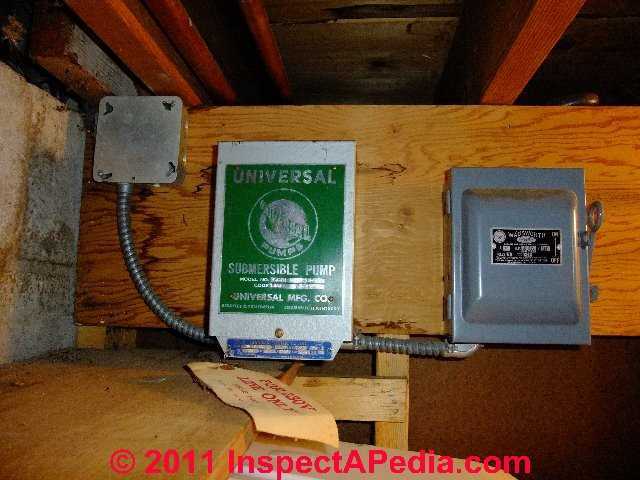
Connect the motor leads from the well unit to the control box using the correct color mapping and capacitor terminals. In most residential systems rated for 230 volts, three conductors from the submerged motor link to the control enclosure through red, yellow, and black leads, while a separate ground conductor attaches to the metal housing. Inside the control enclosure, these conductors attach to terminals marked R, Y, and B, which route power through a start capacitor and relay during motor startup.
The three-lead motor layout differs from two-lead systems because the starting components sit in an external control enclosure rather than inside the motor housing. This design allows easier replacement of the start capacitor or relay without pulling the submerged unit from the well. Typical residential installations use motors between 0.5 and 1.5 horsepower, drawing about 7–12 amps during normal operation and significantly higher current during the first second of startup.
Accurate conductor placement prevents several common failures. Reversing the red and yellow leads can cause the motor to hum without rotation, while a loose terminal often produces repeated start attempts followed by thermal shutdown. Use copper conductors sized 12 AWG or 14 AWG depending on motor current and total cable length from the service panel to the control enclosure. Long runs above 100 feet may require thicker conductors to reduce voltage drop and avoid overheating of the start components.
A proper connection layout also improves troubleshooting speed. By checking the control enclosure first–testing the capacitor, relay, and terminal voltage–you can determine whether the fault sits in the surface equipment or the submerged motor assembly. This approach prevents unnecessary well extraction, which often requires specialized lifting tools and several hours of labor.
3 Wire Pump Wiring Diagram With Control Box Connections and Installation Steps
Connect the three motor conductors from the well unit to the control enclosure terminals labeled R, Y, and B while the power supply remains disconnected at the breaker panel. The red lead attaches to terminal R, the yellow lead connects to Y, and the black lead connects to B. A separate grounding conductor must be secured to the metal grounding screw inside the enclosure to prevent electrical fault hazards.
Mount the control enclosure on a dry vertical surface within 3–6 feet of the pressure switch and pressure tank. Most residential systems operate on 230-volt single phase power. Two supply conductors from the electrical panel connect first to the pressure switch, then continue to the L1 and L2 terminals inside the control enclosure. This routing allows the pressure switch to activate the motor automatically when system pressure drops below the set point, commonly 30 or 40 PSI.
Inside the enclosure, the start capacitor and relay manage motor startup. During activation, the relay briefly connects the capacitor to provide higher starting torque. After the rotor reaches operating speed, the relay disconnects the capacitor and the motor continues running on the main winding. Typical start capacitors range from 88–108 µF for smaller 0.5 HP units to 189–227 µF for motors near 1.5 HP.
Route the submersible motor cable through a sealed conduit from the well head to the control enclosure. Use waterproof splice kits where the submerged cable meets the surface cable. Each joint should be heat-shrunk and filled with insulating compound rated for underwater electrical connections. Poor sealing allows moisture entry, which often leads to insulation breakdown and motor failure.
After completing all conductor connections, restore power and test system operation by lowering the tank pressure below the switch cut-in value. The motor should activate immediately and raise pressure to the switch cut-off level, typically 50–60 PSI. If the motor hums without moving water or trips the breaker, disconnect power and inspect terminal placement, capacitor condition, and grounding continuity.
Identification of red yellow and black wires in a 3 wire well pump system
Match each colored conductor from the well motor to the correct terminal inside the control enclosure before applying power. Three insulated leads–red, yellow, and black–carry different motor circuit roles that control starting and running operation. Mixing them can cause loud humming, overheating, or repeated breaker trips.
The three colored leads normally correspond to the following motor connections:
- Red – start winding lead connected through the start capacitor
- Yellow – common return lead shared by both motor windings
- Black – run winding lead connected directly to the power line
The black conductor carries the primary operating current once the motor reaches speed. During normal operation, this lead remains connected directly to the supply through the control enclosure terminals. In many residential installations using 230-volt motors between 0.5 and 1.5 horsepower, the run circuit draws approximately 6–12 amps depending on motor size and water lift depth.
The red conductor links to the start circuit through a capacitor and relay located inside the control enclosure. This temporary circuit provides additional torque during motor startup. After rotation stabilizes, the relay disconnects the capacitor and removes the start circuit from the electrical path.
The yellow conductor acts as the shared return path for both motor windings. Because it carries current from both the start and run circuits during startup, secure terminal tightening is required. Loose contact at this point often produces heat buildup and insulation damage.
Color identification may vary slightly between manufacturers, though most North American submersible motor assemblies follow the same pattern. If insulation colors appear faded or contaminated with mineral deposits from the well environment, verify conductor function with a multimeter instead of relying on color alone.
Resistance testing helps confirm lead identity before connecting to the control enclosure. Measure resistance between each pair of conductors using a digital multimeter:
- Measure between red and yellow
- Measure between black and yellow
- Measure between red and black
The highest resistance reading normally appears between the start and run leads (red and black). The lowest value usually appears between run and common (black and yellow). These measurements confirm correct identification before attaching each lead to its terminal.
Always label each conductor with heat-resistant tags before routing the cable through conduit or the well cap. Clear identification prevents mistakes during future maintenance, capacitor replacement, or motor testing.