Connect the line conductor from the power source to the input lead of the light-sensing controller, attach the neutral line directly to the lamp circuit, and route the load lead from the controller to the fixture. This three-lead setup allows the sensor module to interrupt power to outdoor lighting once daylight is detected.
The light-sensing controller usually contains three color-coded conductors. A black lead often carries incoming power from the electrical supply. The red lead typically routes switched power toward the lighting fixture. The white lead connects to the neutral return shared by the lamp and the supply circuit. Confirm these colors on the device label before making any connections.
Mount the sensor housing where it receives open daylight, such as the side of a building or the top of a lighting pole. Avoid placing the unit near the lamp beam, because reflected light can keep the sensor from activating after sunset. Install the controller in a weather-sealed junction box rated for outdoor use.
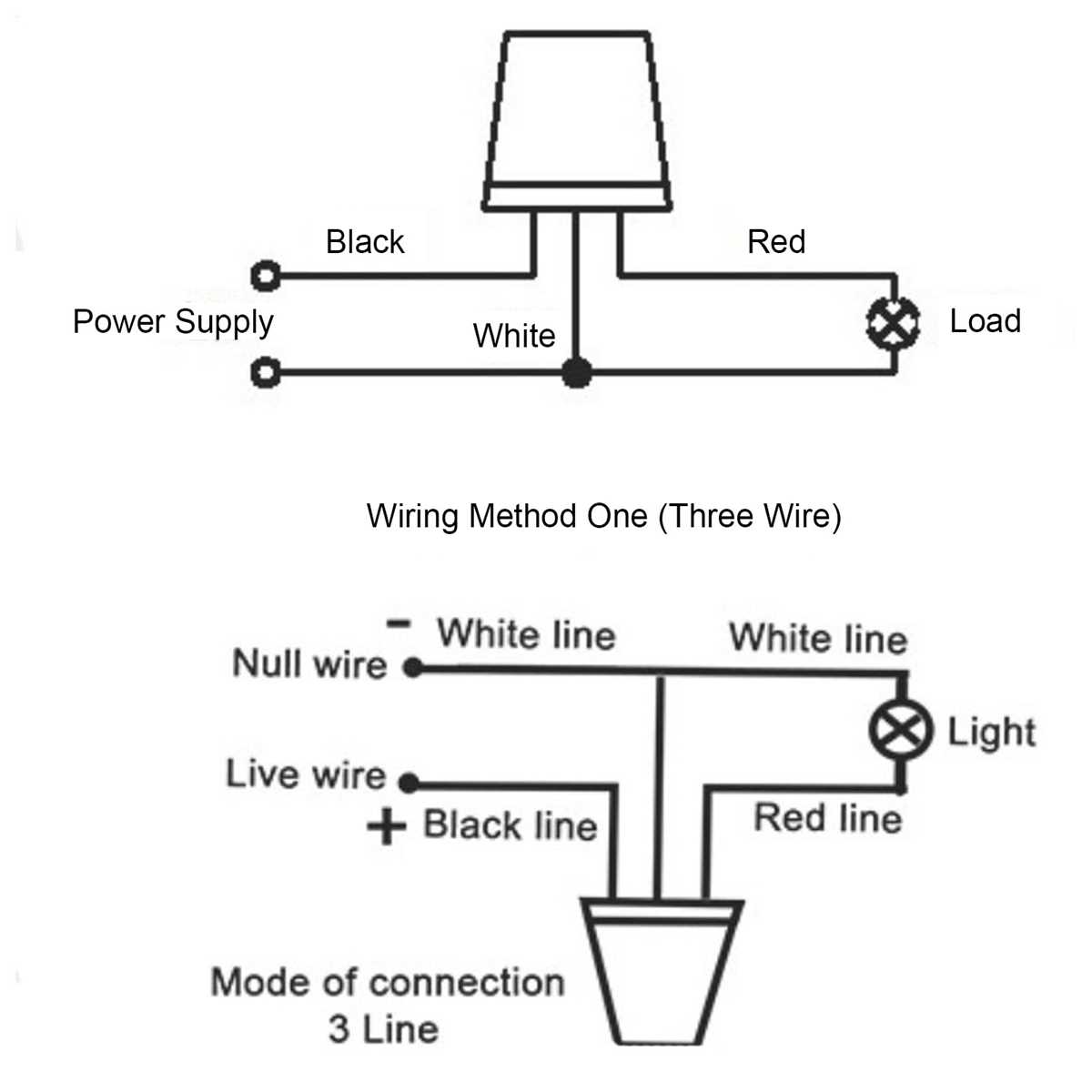
Check voltage with a multimeter before attaching conductors. Residential outdoor systems normally supply about 120 volts between the line and neutral conductors. After installation, cover all splices with approved connectors and secure them inside the electrical box to prevent moisture exposure and accidental contact.
3 Wire Photocell Wiring Diagram With Line Load and Neutral Connections for Outdoor Lighting
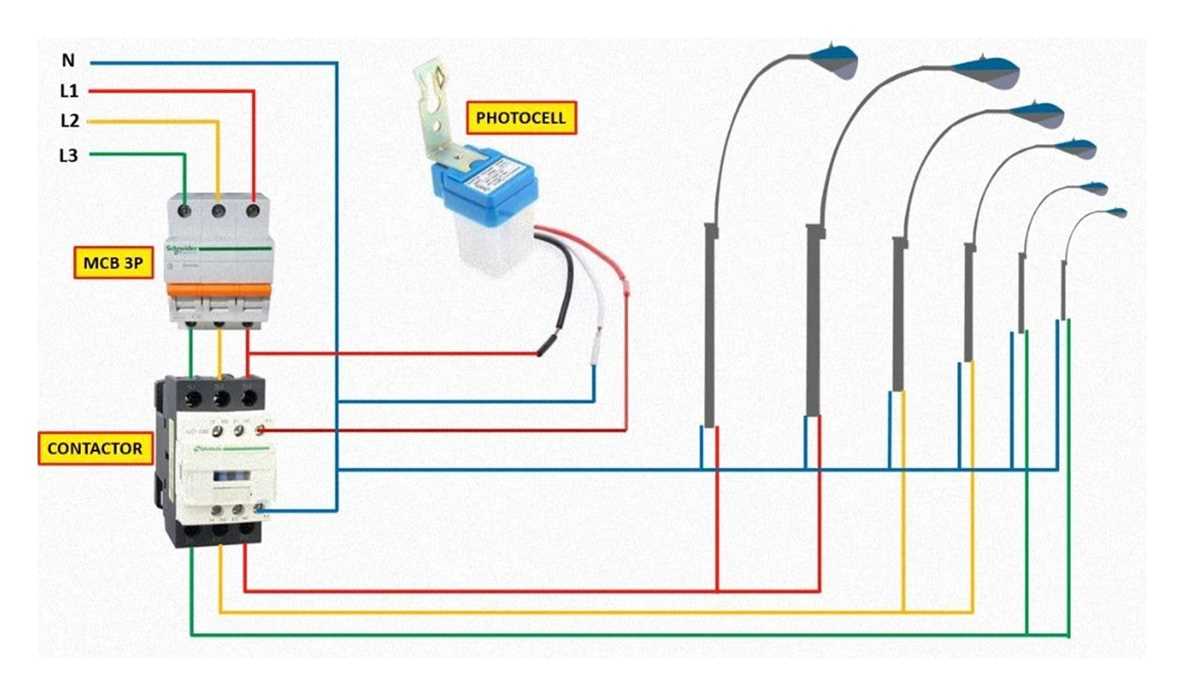
Connect the incoming power conductor to the dark-sensing controller input, attach the outgoing load lead to the lamp circuit, and join the neutral return from the supply with the fixture neutral. This three-lead layout allows the controller to interrupt current to outdoor lights after sunrise and restore power once daylight fades.
The incoming power line normally arrives from a wall switch, breaker panel, or junction box. This conductor feeds the sensing module so it can monitor daylight conditions while maintaining constant electrical supply. In most residential lighting systems the supply carries about 120 volts between the live conductor and the neutral return.
The outgoing load lead carries switched current toward the exterior lamp. When darkness reaches the sensor threshold, an internal relay closes and connects the supply conductor to this load lead. The lamp then receives full voltage and illuminates automatically.
The neutral return remains connected at all times. Both the lighting fixture and the sensing controller share this return path. Join the neutral conductors with a sealed connector inside the electrical box to prevent corrosion or loose connections.
Outdoor lighting installations often place the sensing module on the top or side of the junction box that supports the fixture. Position the sensor window toward open sky. Avoid aiming it toward the lamp itself, because reflected light can keep the device from turning the lamp on after sunset.
Confirm conductor identification before making connections. Many controllers use black for the power input, red for the load output, and white for the neutral return. Labels printed on the device housing provide the final reference.
After completing connections, restore power at the breaker and cover the sensor with opaque tape or a hand for several seconds. The lamp should activate once the sensor detects darkness. Removing the cover allows daylight detection and the lamp should turn off shortly afterward.
Seal all connections inside a weather-rated junction box and tighten the mounting gasket. Outdoor lighting circuits remain exposed to moisture, temperature changes, and vibration from wind, so proper enclosure protection prevents corrosion and intermittent electrical contact.
How to Connect Line Load and Neutral Wires on a 3 Wire Photocell for Dusk to Dawn Lights
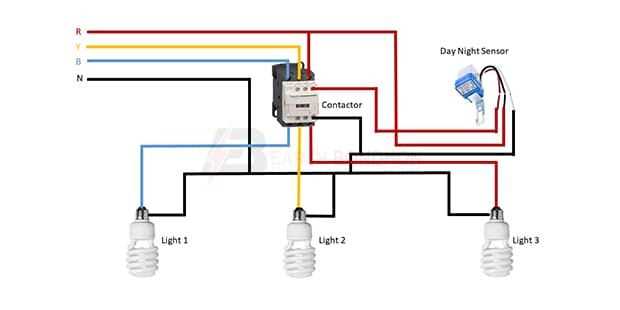
Attach the incoming power conductor to the sensor input lead, connect the outgoing load lead to the lamp circuit, and join the neutral return from the power source with the fixture neutral. This arrangement allows the daylight sensor module to interrupt or restore current to the light fixture automatically.
Before making connections, switch off the circuit breaker and confirm absence of voltage with a multimeter. Outdoor lighting systems in most residential installations operate around 120 volts between the live conductor and neutral return.
- Power source live conductor → sensor input lead
- Sensor output lead → lamp live terminal
- Neutral from supply → neutral from lamp and sensor
The neutral path remains permanently connected. Both the light fixture and the daylight sensor share this return line, allowing the internal relay inside the sensor module to control only the live conductor feeding the lamp.
- Route the supply cable into the outdoor junction box
- Join the supply live conductor with the sensor input lead using a sealed connector
- Attach the sensor output lead to the lamp live terminal
- Connect the neutral conductors together with a weather-rated connector
- Secure all splices inside the enclosure
Mount the daylight sensor where it receives open sky illumination. Avoid placing it directly under the lamp beam or near reflective surfaces such as metal siding, which may cause false light detection and prevent night activation.
Restore power after sealing the enclosure. Cover the sensor window briefly to simulate darkness. The lamp should activate within several seconds, confirming that the live supply, load connection, and neutral return are arranged correctly.