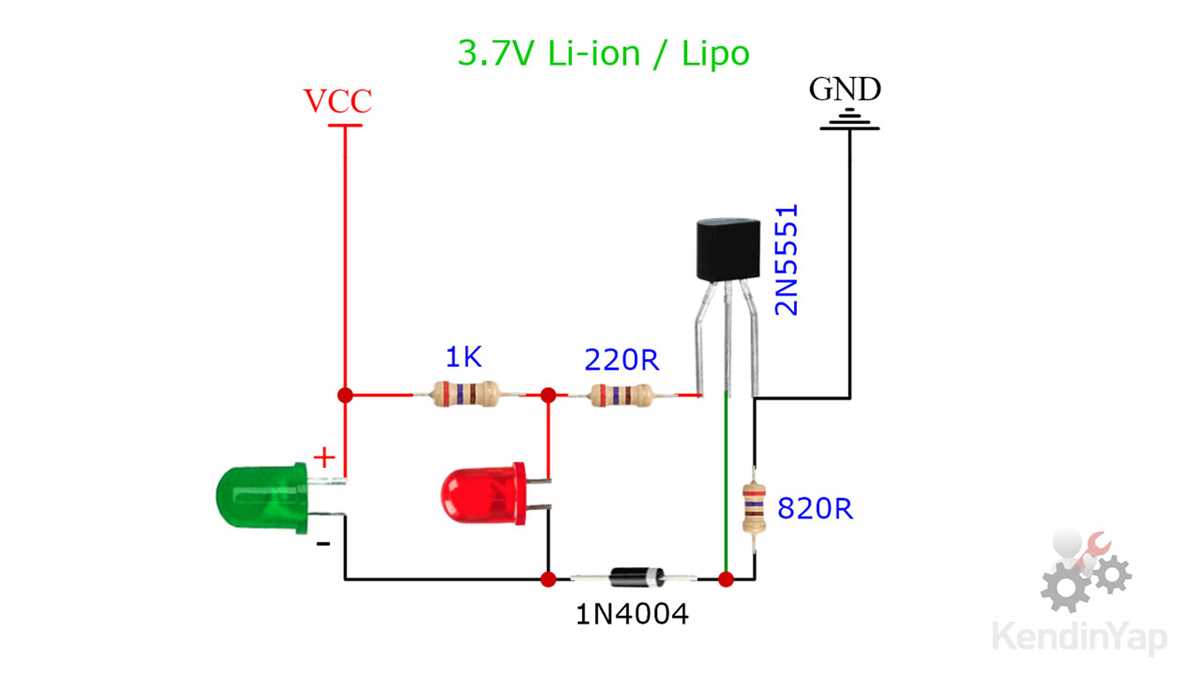
Use a constant-current and constant-voltage charging method for a single cylindrical or pouch power cell rated around 4.2 V full charge. Set the current between 0.5C and 1C of the cell capacity. For example, a 2000 mAh unit should receive about 1000 mA or less. This approach limits heat and keeps the electrochemical structure stable during the charging phase.
A small charging module based on a linear controller such as TP4056 is widely used for single-cell packs. The board usually requires a 5 V input source such as USB. The chip regulates current during the first stage and switches to voltage regulation near 4.2 V. A programming resistor connected to the control pin sets the charging current. For instance, a 1.2 kΩ resistor typically configures the module for about 1 A.
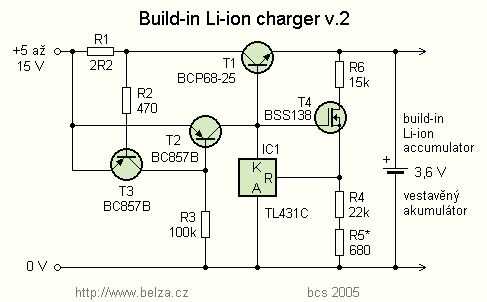
Another approach uses an adjustable linear regulator like LM317. With a resistor network, the regulator limits current and caps the final voltage. A common setup uses a 240 Ω reference resistor with a variable resistor or fixed value divider to reach 4.2 V output. Add a diode and current-sense resistor to prevent reverse flow and to maintain stable current during the first charging stage.
Thermal behavior should always be checked. Linear regulators dissipate power as heat. With a 5 V input and a nearly empty power cell at about 3.0 V, the regulator may dissipate over 2 W at 1 A. A small aluminum heatsink or reduced current level keeps the temperature within safe limits. Include protection boards with over-charge, over-discharge, and short-circuit cutoff for portable electronics and DIY power packs.
3 7V Li Ion Battery Charger Circuit Diagram with Components and Connection Guide
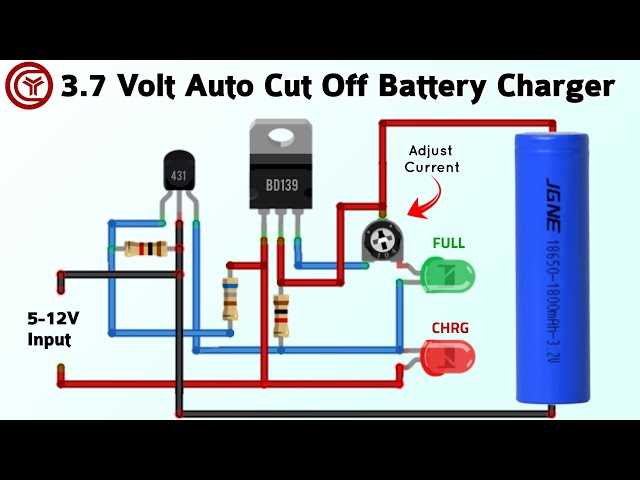
Use a linear charging controller such as TP4056 with a regulated 5 V input source. Connect the positive terminal of the power cell to the module output marked B+, and the negative terminal to B−. Input power usually comes from a USB connector or regulated DC supply. Keep the supply within 4.5–5.5 V to prevent instability in the control IC.
Typical components used in a single-cell charging board include the following parts:
- TP4056 charging controller IC
- Programming resistor for current selection
- Two indicator LEDs for charge and full status
- Protection IC such as DW01 with dual MOSFET
- Input capacitor around 1–10 µF
- Micro-USB or Type-C power connector
The programming resistor connected to the PROG pin defines current level. Lower resistance raises current. Several common values appear in practical designs:
- 10 kΩ → about 130 mA
- 5 kΩ → about 250 mA
- 2 kΩ → about 580 mA
- 1.2 kΩ → about 1 A
Place the charging board close to the power cell holder to minimize voltage drop across wires. Use short conductors with cross-section around 22–24 AWG. A longer cable can cause inaccurate voltage sensing, which may push the termination level above 4.2 V. Excess voltage reduces service life of the electrochemical cell.
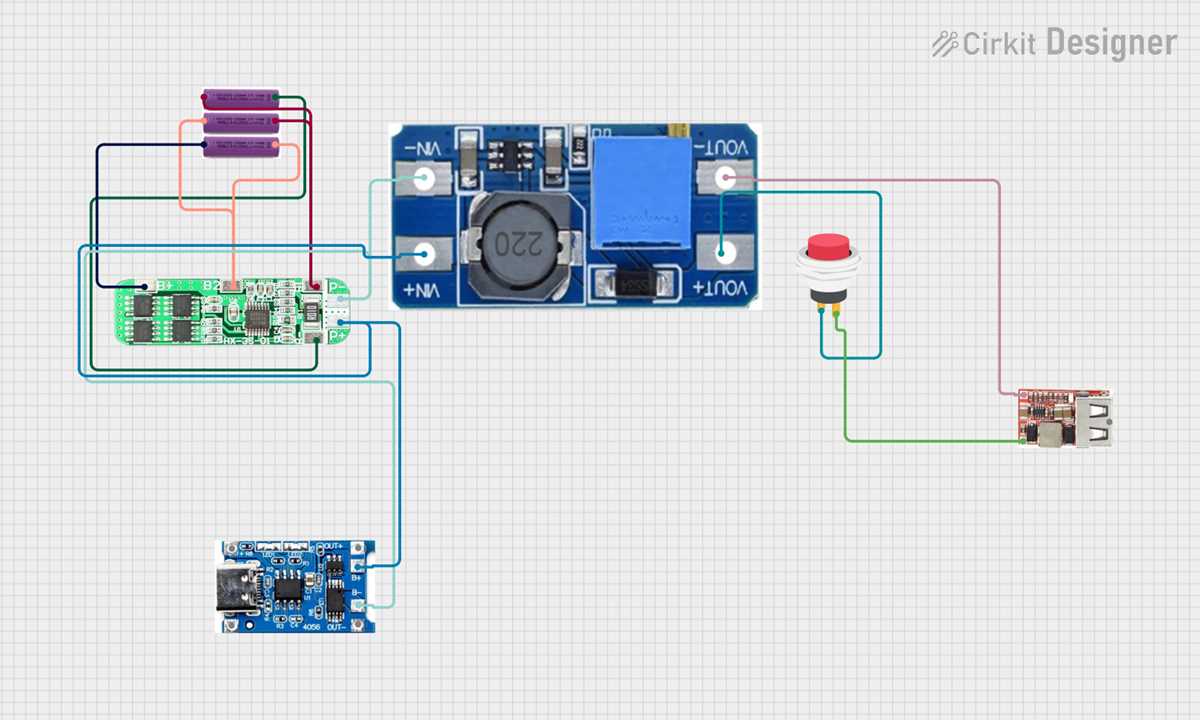
Add protection modules that disconnect the load during over-charge, deep discharge below 2.5–2.7 V, or short-circuit conditions. These boards usually contain a DW01 controller paired with dual MOSFETs such as 8205A. This combination cuts the connection once current exceeds roughly 3–5 A, preventing overheating and damage to portable electronics.
Single Cell 3 7V Li Ion Charger Circuit Using TP4056 Module Wiring and Pin Layout
Connect the TP4056 module to a stable 5 V DC source, usually through Micro-USB or USB-C. The input pads marked IN+ and IN− receive the supply voltage. The storage cell connects to pads B+ and B−. If the board includes a protection stage, the load should be attached to OUT+ and OUT−. This arrangement allows the protection IC to disconnect the pack during over-current or deep discharge.
TP4056 Pin Layout and Electrical Roles
The control IC uses a small number of pins that define the charging process. Each connection has a specific electrical role:
- VCC – input supply, normally around 5 V
- BAT – positive terminal of the storage cell
- GND – common ground reference
- PROG – resistor connection that sets charge current
- CHRG – open-drain output for red LED indicator
- STDBY – open-drain output for green LED indicator
- TEMP – optional temperature monitoring input
Programming Current with External Resistor
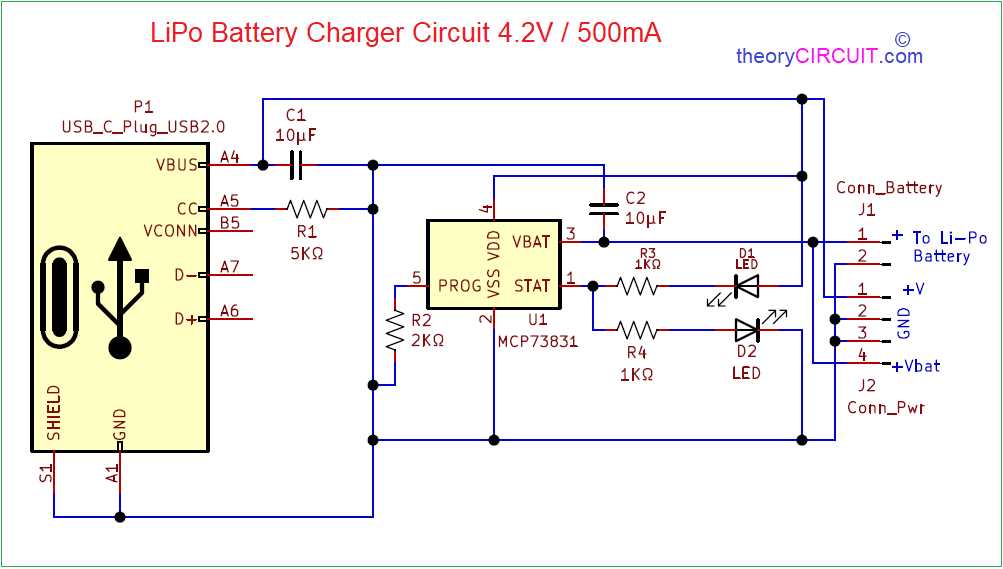
Select the resistor connected to the PROG pin according to the capacity of the storage cell. The relationship between resistance and charge current follows the approximate formula I = 1200 / R, where R is measured in kilo-ohms and current appears in milliamps. A 1.2 kΩ resistor sets about 1000 mA, while 2 kΩ produces roughly 580 mA. Lower current reduces heat on small boards without heatsinks.
Mount the module on a ventilated surface because the chip dissipates heat during the constant-current phase. With a 5 V supply and a depleted cell near 3.0 V, power dissipation can exceed 1.5–2 W at high current. Short copper traces and a ground plane help spread thermal load and keep the controller within safe temperature limits.