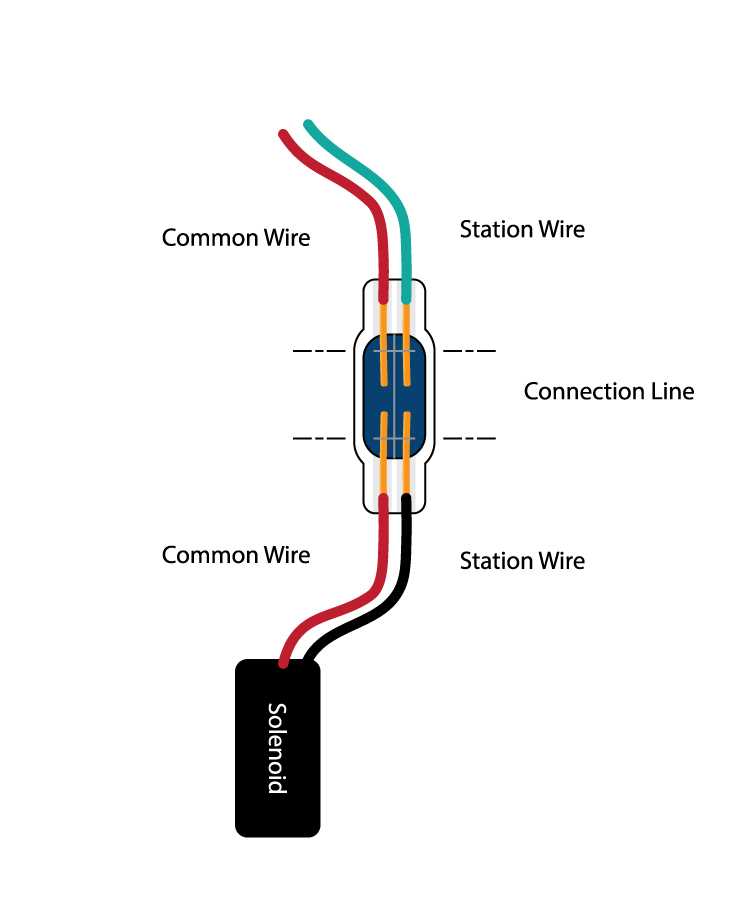
Connect the actuator coil directly to the power source through a control switch or relay. A two-lead configuration means the electromagnetic actuator has only a positive and negative terminal, so current flows through the coil whenever the control contact closes. Most small fluid control units operate on 12 V or 24 V DC, while industrial models may use 110–220 V AC.
Select conductor size according to current draw. Many compact water control units consume between 300 mA and 1.2 A at 12 volts, while larger irrigation or industrial flow regulators may require 2–5 A. Copper conductors rated 18 AWG to 16 AWG are commonly used for low voltage systems with short cable runs.
Place a fuse between the power source and the actuator coil. This protection device interrupts the supply if insulation damage or internal coil failure causes excessive current. A fuse rated slightly above the normal operating current prevents overheating and protects the control electronics.
Route the two conductors through a manual switch, relay contact, or timer module depending on the automation level required. When the control contact closes, the electromagnetic coil pulls an internal plunger that opens the fluid passage. When power is removed, the spring inside the mechanism returns the plunger and stops the flow.
2 Wire Solenoid Valve Wiring Diagram with Power Supply and Switch Control
Connect the actuator coil between the positive output of the power source and the control switch. The return line runs directly back to the negative terminal or neutral point. When the switch closes, current flows through the coil and the internal plunger moves to open the fluid passage.
Select a power source that matches the coil rating printed on the device body. Small irrigation or water control units often operate at 12 V or 24 V DC, while industrial flow regulators may require 110 V or 220 V AC. Supplying incorrect voltage can cause overheating or weak magnetic force.
Install a fuse or circuit breaker between the power source and the control switch. Many compact flow control actuators draw between 0.3 A and 1.5 A, so a fuse rated around 2 A provides suitable protection for most low voltage units.
Place the control switch on the positive supply line so the entire actuator coil becomes de-energized when the switch opens. This configuration reduces standby power consumption and prevents unwanted heating inside the coil during idle periods.
Use copper conductors with insulation rated for the supply voltage. For low voltage irrigation controllers, 18 AWG or 16 AWG conductors normally support the required current over distances up to several meters without noticeable voltage drop.
Secure the cable path along walls or inside conduit if the device operates in humid environments. Stable connections and protected conductors maintain consistent operation of the electromagnetic actuator controlling water or gas flow.
How to Connect a 2 Wire Solenoid Valve to Power Supply and Control Switch
Connect one conductor from the actuator coil to the positive terminal of the power source and route the second conductor through a control switch before returning to the negative terminal. Closing the switch allows current to pass through the coil, creating a magnetic field that pulls the internal plunger and opens the fluid path.
Basic Power Connection Layout
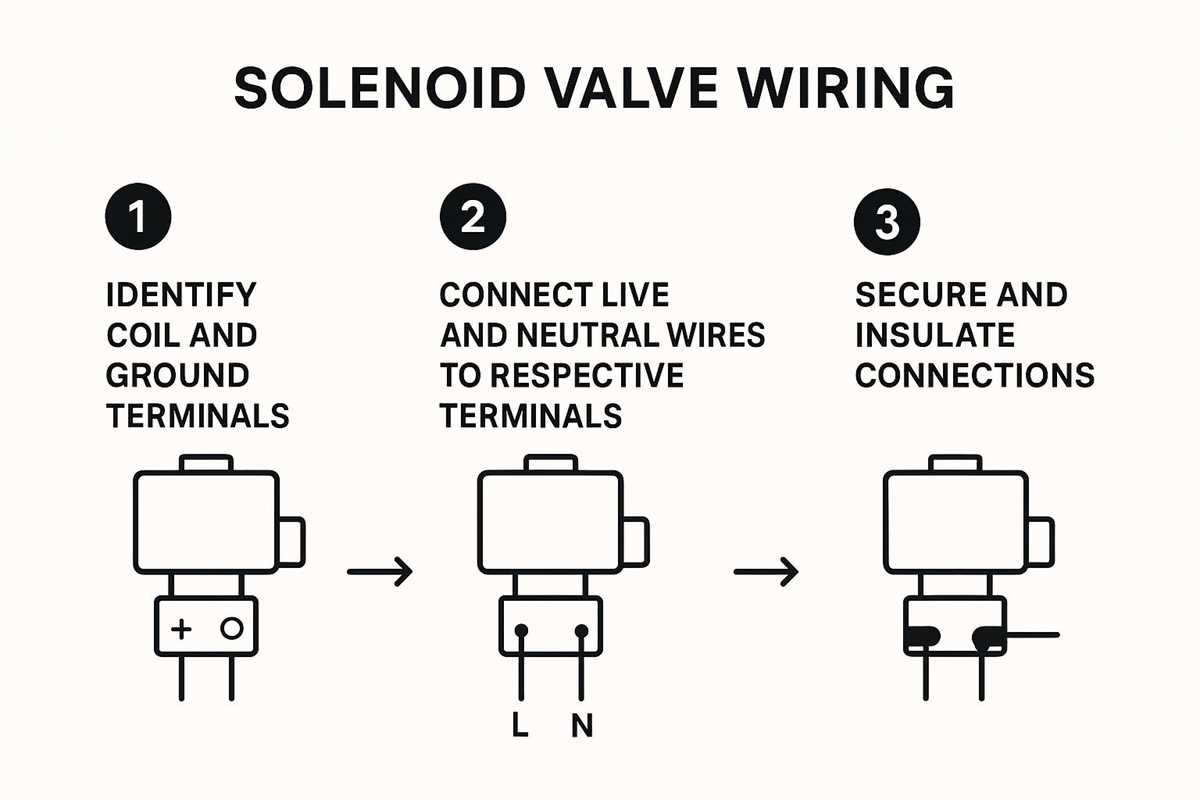
- Power source positive terminal
- Control switch or relay contact
- Electromagnetic actuator coil
- Return line to negative terminal or neutral
Place a fuse between the power source and the switch contact. Many compact fluid control units consume between 0.5 A and 1.5 A depending on coil resistance. A fuse rated around 2 A protects the supply line if the coil becomes damaged or insulation fails.
Typical Installation Steps
- Verify coil voltage rating such as 12 V DC or 24 V DC
- Connect the positive supply through a fuse
- Route the protected line to the switch contact
- Link the switch output to one coil terminal
- Attach the second coil terminal to the negative supply
Use copper conductors sized 18 AWG to 16 AWG for most low voltage installations. Larger devices drawing higher current may require thicker conductors to prevent heat buildup and voltage drop.
Secure the cable path with clips or conduit if installed near water lines or outdoor irrigation equipment. Protected routing maintains stable operation of the electromagnetic actuator controlling liquid flow.