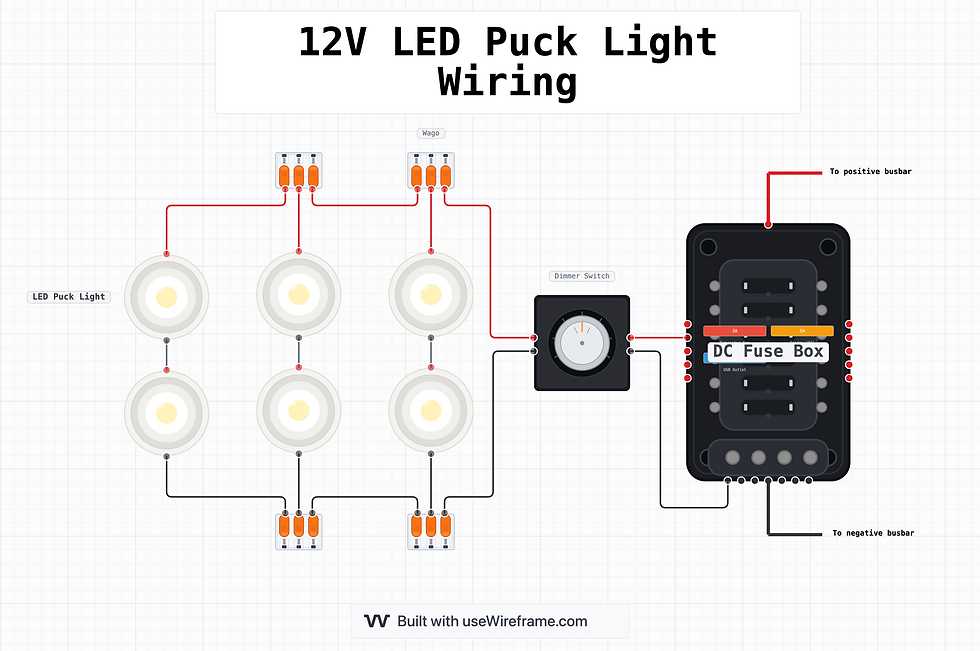
Connect positive terminals directly to a stable power source while ensuring that all negative leads share a single grounding point. Fuse placement near the source protects the assembly from overloads and minimizes voltage drops across the network.
Parallel arrangements allow multiple units to operate independently without affecting brightness uniformity. Series connections require careful calculation of cumulative resistance to avoid overheating resistors or dimming outputs.
Select wire gauge according to the total current draw and the distance from the energy supply. Thin conductors increase voltage loss and may cause flickering, while oversized cables improve performance but add bulk.
Switches and controllers should be rated slightly above the peak load of the assembly. Voltage regulators stabilize fluctuations, ensuring consistent illumination even with varying input levels.
Test each segment before final mounting. Sequential verification of connections prevents shorts, reduces troubleshooting time, and guarantees uniform function across all modules.
12V LED Light Wiring Diagram
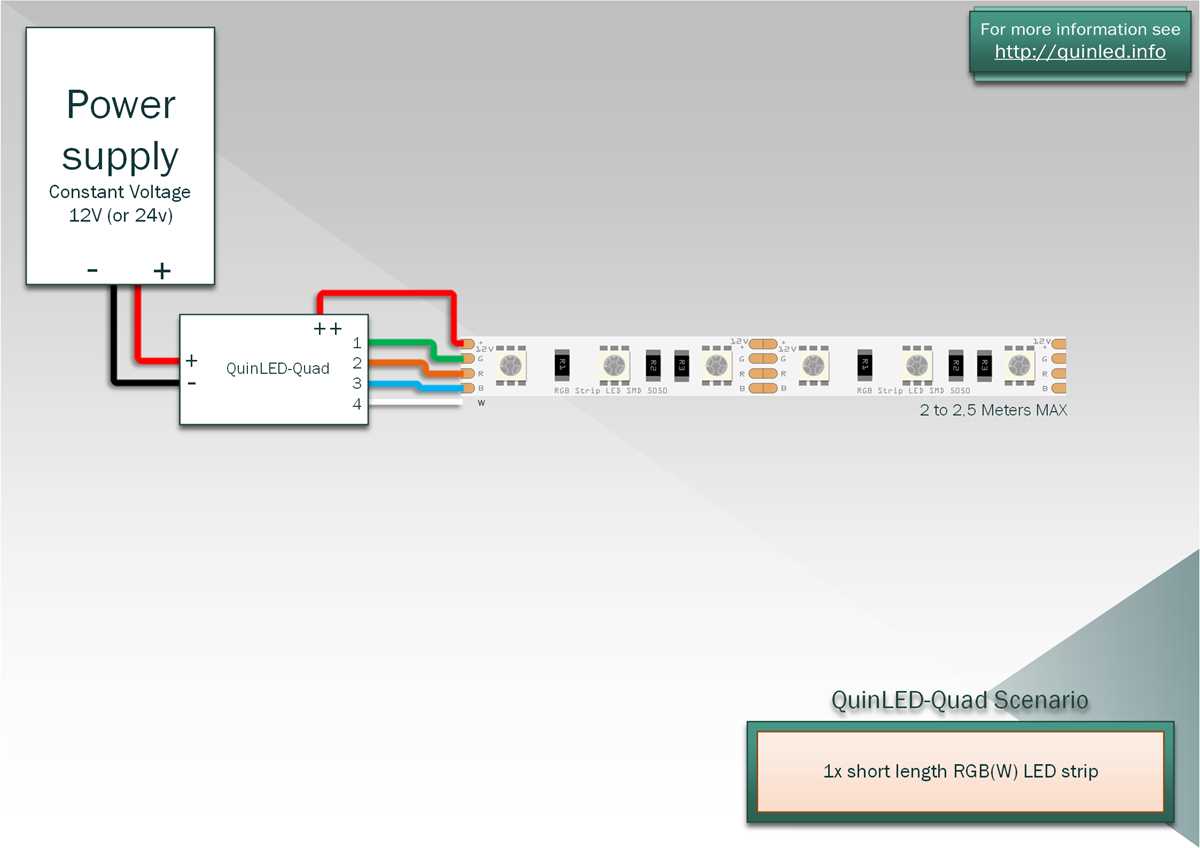
Connect the positive terminal of the power source to a fuse rated between 2–5 amps before attaching it to the anode of the illumination strip. Use stranded copper conductors no thinner than 18 AWG for runs under 10 feet, and increase to 16 AWG for longer distances to prevent voltage drop. For multi-unit chains, link the strips in parallel rather than series to maintain consistent brightness across each segment. Ensure all connectors are weatherproof if installation occurs outdoors or in damp environments.
For control, a switch or PWM controller can be installed between the power source and the fixture array. Label each conductor with heat-shrink markers to simplify troubleshooting. When combining multiple arrays, calculate total current by multiplying the amperage per segment by the number of segments; select a fuse or breaker that exceeds this total by 20% for safety. Always test connections with a multimeter for continuity and correct polarity before powering the system to avoid damage to the diodes or drivers.
Choosing the Right Fuse and Wire Gauge for 12V LED Lights
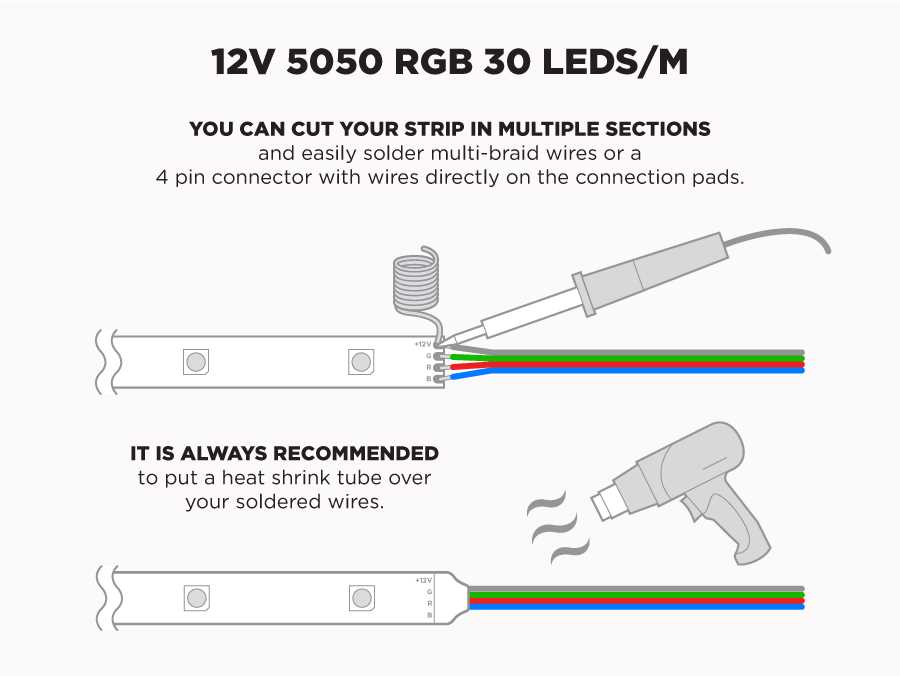
Use a fuse rated slightly above the total current draw of your fixtures. For example, a 5-amp array drawing 4 amps requires a 5-amp fuse to prevent nuisance blows while still protecting the circuit.
Wire thickness must match the amperage and run length. For short runs under 10 feet carrying up to 5 amps, 18 AWG copper is adequate. Longer distances or higher currents demand 16 or 14 AWG to avoid voltage drop and overheating.
Consider insulation type. Teflon or PVC coatings resist heat differently. Environments exposed to engine heat or sunlight benefit from heat-resistant sheathing to maintain conductivity and avoid brittleness.
Parallel connections reduce stress on a single conductor. Instead of feeding multiple modules from one wire, split the run into branches with their own fuse protection to prevent one overload from shutting down the entire string.
Calculate voltage drop carefully. Even small losses affect brightness. A formula: Voltage drop = Current × Resistance × 2 (for round trip). Keep drop below 3% for optimal performance; otherwise, upgrade the gauge.
Mount the fuse close to the power source. This prevents excessive current from reaching downstream wires during a short. Inline fuse holders with clear covers provide visual inspection without disassembly, simplifying maintenance and troubleshooting.