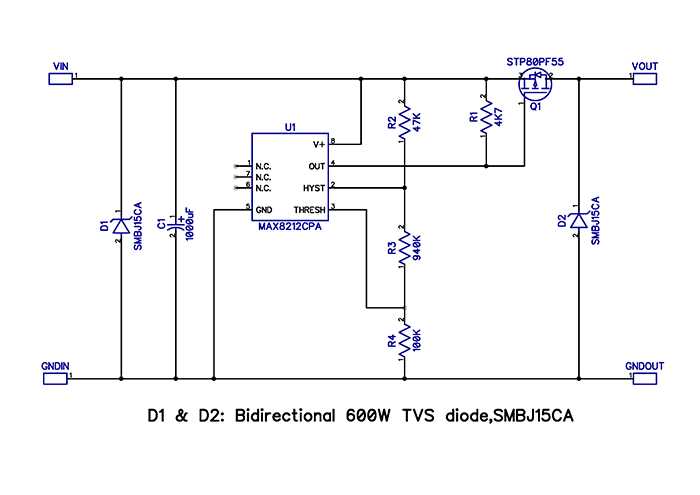
Install a voltage-sensing relay module to prevent the power source from dropping below critical levels. Connect the sensing terminals directly to the positive and negative posts to capture accurate readings under load conditions.
Set the trigger threshold slightly above the minimum safe potential, typically around 11.6–11.8 volts for lead-acid types. This margin prevents deep discharge while allowing the system to operate normally during minor fluctuations.
Include a manual reset switch to restore connection after the source has been recharged. This avoids repeated engagement of the protection mechanism and reduces stress on downstream electronics.
Incorporate visual indicators like LEDs to display the disconnect status. Clear signaling allows users to monitor the protective module and respond promptly when the source reaches the pre-set limit.
12v Battery Low Voltage Cutoff Setup and Operation
Connect the sensing terminals directly to the positive and negative posts of the energy source to capture accurate readings. Adjust the threshold to around 11.7 volts for lead-acid types, ensuring the protective switch engages before deep discharge occurs. Use insulated connectors to avoid short circuits and place the module near the main terminals for minimal signal loss.
Monitor the system with status indicators to verify proper operation. Include a manual reset option to reconnect the energy source once it reaches a safe charge level. Regularly test the engagement and release points under load conditions to confirm the protective mechanism responds consistently, and maintain wiring integrity to prevent false triggers or interruptions.
Selecting Components for Reliable Low Voltage Protection
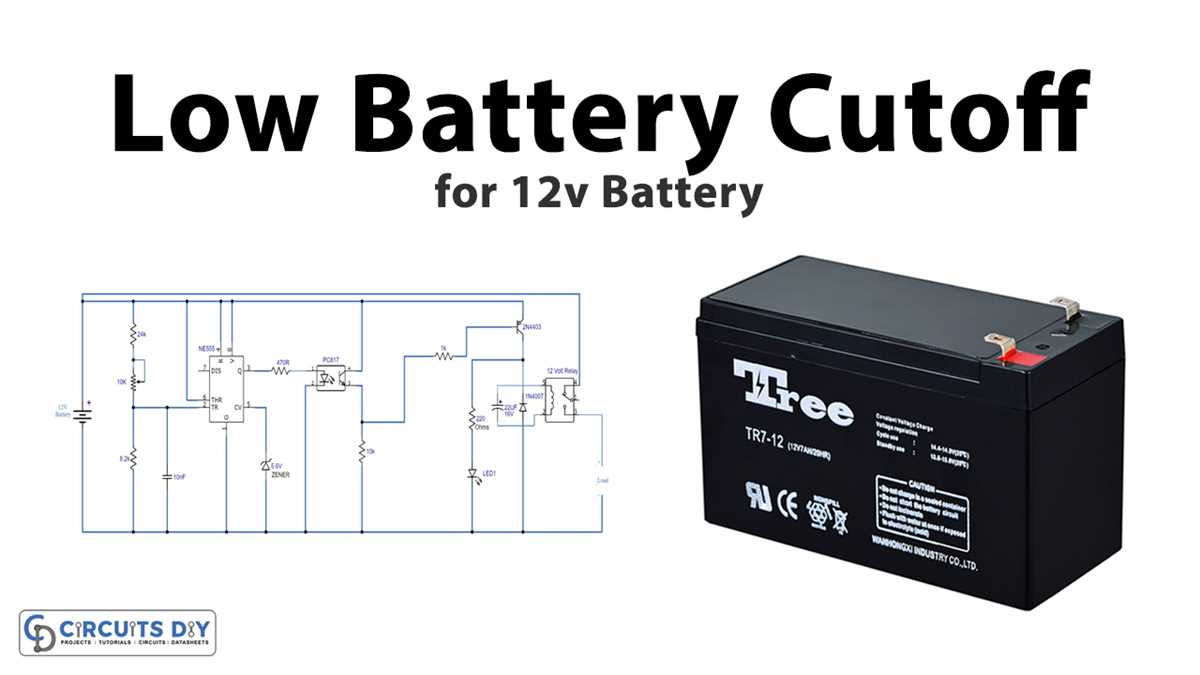
Choose a relay with a current rating at least 25% higher than the maximum load to prevent overheating under continuous operation. Opt for a relay with a fast switching response to engage protective measures without delay, and verify coil voltage matches the source for stable performance.
Use a precision voltage sensing module with adjustable thresholds and hysteresis to avoid oscillations. Ensure the sensor can operate across temperature ranges from -20°C to 60°C for consistent monitoring in varied environments.
Capacitors and resistors in the control path should have tolerance values within 5% to maintain accurate triggering points. Select components with a voltage rating at least 50% higher than peak levels to reduce the risk of failure and extend service life.
Include protective diodes and fuses to safeguard against reverse polarity and short circuits. Schottky diodes are recommended for their low forward voltage drop, and fuses should match the expected load with a slight margin for transient surges, ensuring reliable disconnection without nuisance trips.