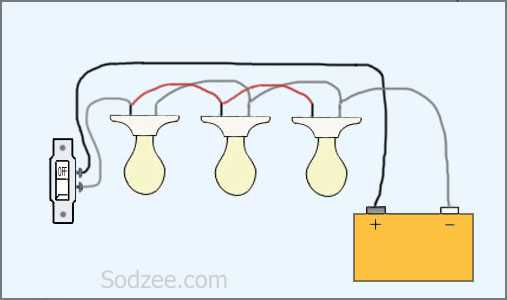
Use a clear circuit plan before connecting any household power line. A simple sketch showing conductors, terminals, and devices prevents wrong connections that can trip breakers or damage equipment. In a typical North American residential branch circuit rated around 120 volts, a hot conductor delivers current, a neutral returns it to the panel, and a grounding line routes fault current away from metal parts.
Most household power layouts follow a predictable structure. A breaker in the service panel feeds a branch line that runs through junction boxes to outlets, lighting fixtures, and control switches. The hot conductor usually appears in black or red insulation, while the neutral line uses white. The grounding conductor is commonly bare copper or green. Matching these colors correctly across terminals keeps the circuit stable and reduces the chance of reversed polarity.
A typical receptacle branch uses copper conductors sized 14 AWG for a 15-amp breaker or 12 AWG for a 20-amp breaker. Junction boxes must remain accessible and provide enough space for splices and device terminals. Each outlet connects the hot conductor to the brass terminal, the neutral to the silver terminal, and the grounding conductor to the green screw on the device frame.
Clear circuit illustrations help trace power flow between the panel, switches, and receptacles. Lines in such drawings represent conductors, while symbols show fixtures, outlets, and control devices. Following these markings allows a reader to understand how current travels through the branch and how each device interacts with the rest of the system.
110 Electrical Wiring Diagram With Circuit Layout Wire Colors and Outlet Switch Setup
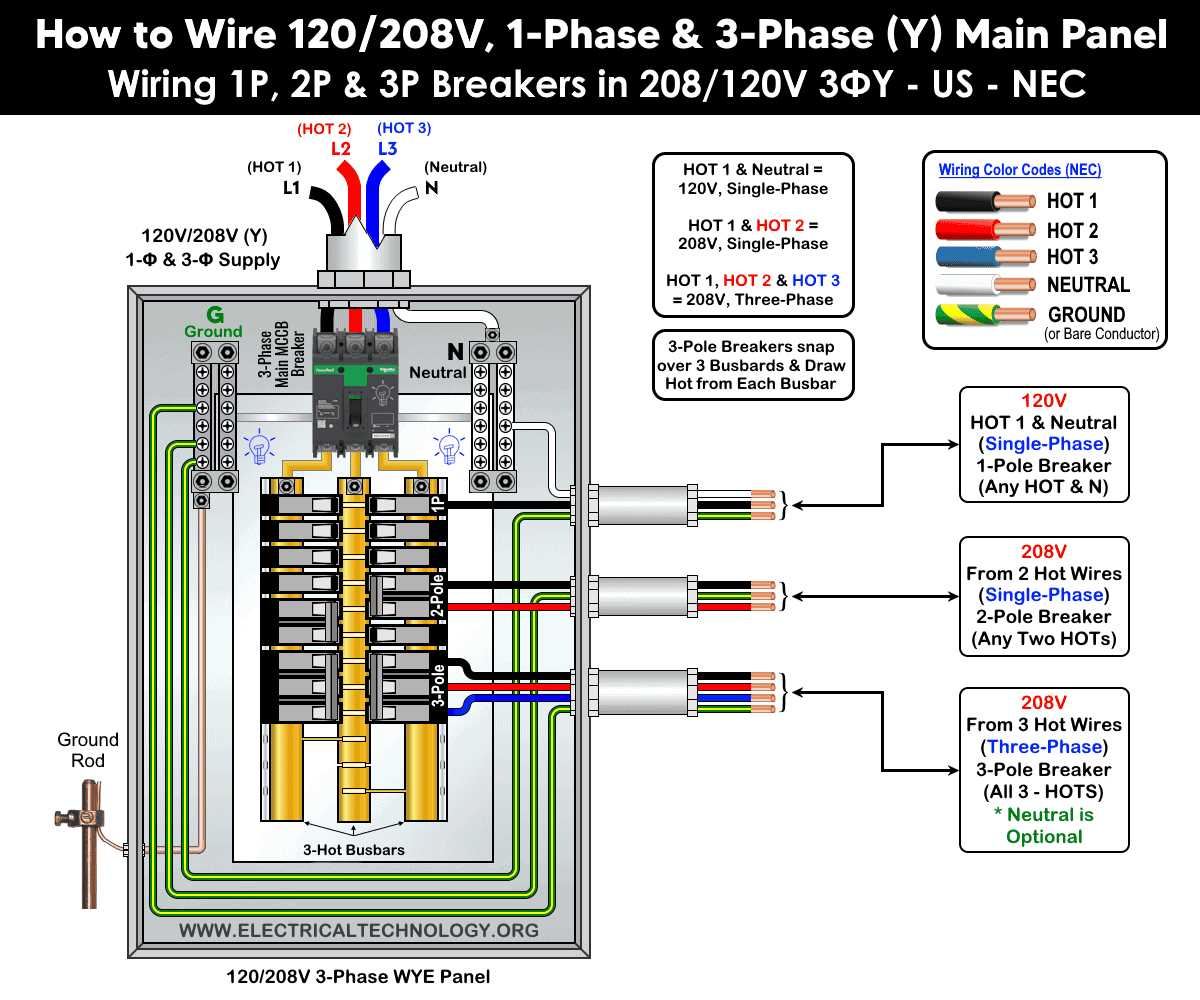
Connect the live conductor to the brass terminal on each receptacle and the return conductor to the silver terminal. A standard residential branch rated around 120 volts usually leaves the service panel through a 15-amp or 20-amp breaker and travels through junction boxes before reaching outlets and light controls. Use 14 AWG copper conductors for a 15-amp circuit and 12 AWG for a 20-amp circuit. Keep the grounding line continuous through every box and attach it to the green screw on metal devices and enclosures.
Follow the typical insulation color scheme used in North American household power systems. Black or red insulation carries the energized line, white insulation marks the return path, and bare or green conductors connect to ground. Junction boxes should contain properly twisted splices secured with listed wire connectors. Each enclosure must provide enough volume for the number of conductors present; for example, a plastic box rated at 18 cubic inches usually fits three 14 AWG cables plus a device.
A basic outlet and wall switch arrangement routes the energized conductor from the panel to the switch first, then to the light fixture, while the return conductor runs directly to the fixture. This layout keeps the lamp socket de-energized when the switch is off. In rooms with multiple receptacles, the branch line often enters the first outlet box and continues in a daisy-chain path through the remaining boxes. Mark connections clearly on the circuit sketch so each conductor path can be traced during installation or troubleshooting.
How to Read Symbols and Lines in a 110 Electrical Wiring Diagram
Trace the power path from the service panel symbol to the final device. In most household circuit drawings, a straight line represents a conductor carrying current between components. Follow that line through junction points, outlets, and control devices to understand how power flows through the branch.
A circle with two vertical slots usually marks a receptacle. A break in the line with a pivot symbol indicates a wall switch controlling a fixture. A simple lamp icon or small circle with a cross shows a light fixture. Recognizing these shapes allows quick identification of how each device connects within the circuit layout.
Understanding Line Intersections and Connections
Watch the difference between crossing lines and joined conductors. If two lines intersect with a filled dot, they connect at that point. When lines cross without a dot, they pass each other without contact. This small detail changes the entire circuit path and determines whether devices share the same conductor.
Parallel lines often represent cable runs containing multiple conductors. Labels near these lines may indicate conductor size such as 14 AWG or 12 AWG and may also include markings for hot, neutral, and grounding paths. These labels help determine breaker rating, current capacity, and routing between boxes.
Reading Device Labels and Circuit Direction
Device tags placed near symbols identify the function of each component. A marking like S1 usually refers to a single-pole switch, while R indicates a receptacle. Arrows or short reference marks sometimes show cable direction or continuation onto another page of the drawing. Following these indicators keeps the circuit path clear and prevents misreading of conductor routes.